Welcome!

Welcome to the Bookshelf Detective, a site packed with tricks and tips for readers and writers of children's literature. Thank you for visiting!
Cheers,
Kim Tomsic

Saturday, June 8, 2013

Two 2013 Scholarships Available: One for Children's Book Writer and One for Children's Book Illustrator


Children’s Book Writers and Illustrators Can Receive a Free Opportunity:
Attention children’s book writers and illustrators—would you like a free chance to attend a conference and meet agents, editors and Newbery Award winning authors? Only two weeks remain to apply for the VICKIE FERGUSON MEMORIAL SCHOLARSHIP. Scholarship recipients will receive fully paid tuition to the 2013 RMC SCBWI Letters and Lines Fall Conference, plus a manuscript or portfolio review (as indicated on the free application). The scholarship will be awarded to one writer as well as one illustrator—please apply if you’re actively committed to your craft.  Application deadline is June 22, 2013. 
To apply, please click link for application: [2013VF_ScholarshipApplication.pdf]

More about the conference: The Rocky Mountain Chapter of the Society of Children’s Book Writers and Illustrators (SCBWI) is excited to host the annual Letters and Lines Conference at a new location; this year we will be at the Denver Marriott West in Golden, Colorado on September 28 and September 29. This weekend conference will include two unforgettable days packed with valuable learning and networking opportunities.  Attendees will find many opportunities to connect on a personal level with our speakers during break-out sessions, intensives, individual critiques, pitch sessions, query workshops, first page readings, and more. If some of these terms are foreign to you, it’s all the more reason to attend. You’ll not only learn how to elevate your work, but you’ll also learn the business side of your craft.  This year’s lists of distinguished speakers include:
Linda Sue Park
  • Newbery Award winner Linda Sue Park
  • Arianne Lewin, executive editor, G. P. Putnam’s Sons (Penguin Young Readers Group)
  • Kelly Barrales-Saylor, editorial director, Albert Whitman & Company
  • Wendy Loggia, executive editor, Delacorte/Random House
  • Brianne Johnson, agent, Writers House
  • Terrie Wolf, agent, AKA Literary Management
  • Bitsy Kemper, author and PR Queen!
  • Illustrator Michael Garland
Take a look at last year’s scholarship recipient: click here
You must be a member of the SCBWI in order to apply for the scholarship. Members get a gazillion benefits (a.k.a. a bunch). JOIN NOW.

Thank you Vickie Ferguson. The Vickie Ferguson Memorial Scholarship honors the memory of Vickie Ferguson, long-time member of RMC-SCBWI, who passed away in May 2005. Vickie was dedicated to her writing. This scholarship seeks to support those writers and illustrators who are committed to their craft and are actively writing and/or illustrating.

Wednesday, June 5, 2013

A Fresh Perspective on How to Write a Query Letter

I’ve seen a lot of “Query Letter” posts, but none like the one Chuck from Writer's Digest features on his blog at Writers Unboxed. His article focuses specifically on writing that last paragraph—the bio section—of the query letter, and he gives a fresh perspective on the “do’s and don’ts”. It’s definitely worth a read:

HERE’S A QUICK LOOK AT THE COMPOSITION OF A QUERY:

There are many many many…many blog posts on how to write a query (I’ve listed several links at the bottom of this post) But if you’re craving a quick rundown, here we go:

I.                    Firstly, personalize your letter—Dear, Jen. NOT Dear, Agent.

II.                 Secondly, limit your query to one page. Have white space so it looks reader-friendly; and break it down to three simple paragraphs—the hook, the book, and the cook.

A.     Paragraph One (the hook):
Your first line can tell the agent why you queried them: Thank you for speaking at Big Sur in the Rockies. I blah blah blah w/you. Or: I enjoyed your interview on such-and-such blog and …
The next line is where you include your hook, title, genre and the word count of your book.  Please consider my 70,000 word count YA novel THE UNACCOUNTED. It's teenage Jason Bourne meets The Prisoner of Zenda.
(In addition to saying if your book is YA or Middle Grade, include if it is fantasy, magical realism, paranormal, science fiction etc. as relevant).

B.     Paragraph Two (the book):
Write a paragraph about your manuscript that reads like jacket flap copy (present an exciting glimpse of the story without giving up the ending). A jacket flap describes the story in such a gripping way that book store browsers slap down some cash to buy the book. Agents may use this copy to help present your book to a publishing house, so create a compelling and tight paragraph.

A.     Paragraph Three (the cook):
This is your biography, and nobody explains the “how’s” better than Chuck, so please visit his blog.

III.              Thirdly, be professional, know the business, be courteous, and close with your name and contact information. 

Good Luck!!! 
Bonus info:
The above “hook” was an actual pitch by David Lipsky and Darin Strauss's for THE UNACCOUNTED and this title will be available in bookstores winter 2013. 
More on "high concept" hooks, please visit my link about high concept hooks and pitches. 

 More discussion on queries can be found:

How to write a query links:
Query Shark (this is a great blog where writers can receive feedback)


Monday, April 15, 2013

The Long Awaited Pulitzer Winner in Fiction


Pulitzer Prize Winners 2013

The act of not naming a Pulitzer winner in the fiction category caused a bit a drama last year. There's nothing like discussing the great Pulitzer novel to get book buzz flowing and cash registers ringing, but 2012 saw none of that glory. Book sellers were upset, independent bookstore owners were disappointed, and authors were...hmmm, disheartened. But the woes of 2012 are finally behind us, because 2013 has a winner, and his name was announced today:

FICTION – winner is Adam Johnson for THE ORPHAN MASTER’SSON
NONFICTION – by Gilbert King -DEVIL IN THE GROVE:  Thurgood Marshall, the Groveland Boys, and the Dawn of a New America
HISTORY-winner Fredrik Logevall for EMBERS OF WAR
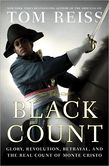
BIOGRAPHY – Tom Reiss wins for  BLACK COUNT
POETRY – Sharon Olds wins for STAG’S LEAP


Thursday, March 21, 2013

It Takes a Village to Create a Great Book


It Takes a Village to Create a Great Book

Boulder, Colorado—On May 3-5, 2013, Literary Agent and Executive Director of the Big Sur Writing Workshops Andrea Brown and the RMC-SCBWI will bring a writing clinic to the Chautauqua conference center in Boulder, Colorado. Registration deadline is April 3, 2013.

The workshop is designed for children’s book writers who have a finished or partially finished manuscript (picture book, chapter book, middle grade novel, young adult novel, or nonfiction). It takes a village to create a great book. At Big Sur in the Rockies writers will receive critiques, industry tips, editorial help, and guidance in a personalized setting.

Big Sur in the Rockies offers an intimate workshop experience. The faculty to participant ratio is a maximum of 6:1. For that reason registration is limited to a small number of participants. For more information or to register by the April 3rd registration deadline please visit the EVENTS page at the Rocky Mountain Chapter SCBWI website, or follow this hyperlink for the registration materials.

Faculty members include Lisa Yoskowitz, editor at Disney-Hyperion, Sarah Shumway, senior editor at Katherine Tegen Books (an imprint of Harper Collins Children’s Books) and three representatives from the Andrea Brown Literary Agency, including the President of the agency, Andrea Brown, agent Jennifer Rofé, and associate agent Lara Perkins. Furthermore the faculty includes an amazing cast of award-winning authors: Laura Backes, Terri Clark, Julie Danneberg, Dian Curtis Regan, Jean Reidy, Denise Vega, and Linda Arms White. For more information about the faculty visit the faculty biography page.

Big Sur in the Rockies gives writers tools to help prepare their work for publication in a highly competitive industry. Daniel Nayeri, Houghton Mifflin Harcourt’s Digital Editorial Director, says there are 180,880,000 unique books in the world. When the average American reads 17 books a year, it’s important for writers to make every effort to perfect their craft.

Friday, March 8, 2013

The Black Rabbit Easter Debut

If you love creating unique Easter baskets for your kids, then you should definitely top this year's basket with THE BLACK RABBIT by Philippa Leathers, illustrations by Dan Yaccarino (Candlewick, January 2013).

When White Rabbit leaves his home he is stalked by a giant Black Rabbit. Readers are in on the joke, as we know it's just his shadow following him.  But White Rabbit runs in fear, with Black Rabbit on his tail, and he lands in the dark forest. Read on to discover how White Rabbit overcomes the trouble ahead.  

This isn't an Easter story, but I'm in love with the rabbit (s). The text is cute, clever, and fun and the the illustrations make me smile (of course they do, it's Dan Yaccarino!).

My yammering about how great this book is shouldn't be longer than than the sparse and perfect words Philippa Leathers presents, so just trust me, read it, and enjoy THE BLACK RABBIT for yourself.


  • The Black Rabbit ($14.00)
  • Reading level: Ages 3 and up
  • Hardcover: 40 pages
  • Publisher: Candlewick (January 22, 2013)
  • Language: English
  • ISBN-10: 076365714X
  • ISBN-13: 978-0763657147

Wednesday, March 6, 2013

Latest News in Children's Book Publishing


March 2013

BEA has announced the books to be featured on the convention's three "buzz" book panels for adult, young adult, and middle grade books. Convention will take place at the end of May 2013.  During the Children’s Book and Author Breakfast, Octavia Spencer will serve as Master of Ceremonies. Rick Riordan, Mary Pope Osborn, and Veronica Roth will also be at this event.
Children's Book & Author Breakfast
8:00 am - 9:30 am
Special Events Hall


Octavia Spencer
Randi Rhodes, Ninja Detective: The Case of the Time-Capsule Bandit
Simon & Schuster Books for Young Readers
(October 15, 2013)
Mary Pope Osborne
Magic Tricks from the Tree House
Random House Books for Young Readers
(July 23, 2013)
- - - - - - - - -
Magic Tree House #50: Hurry Up, Houdini!
Random House Books for Young Readers
(July 23, 2013)
Rick Riordan
The Heroes of Olympus, Book Four: The House of Hades
Disney-Hyperion
(October 8, 2013)
Veronica Roth
Divergent: Book III
Katherine Tegen Books, an imprint of HarperCollins Children's Books
(Fall 2013)


BUZZ BOOKS!!

Adult
All Joy and No Fun: The Paradox of Modern Parenthood by Jennifer Senior (Ecco, January 2014)
Knocking on Heavens Door: The Path to a Better Way of Death by Katy Butler (Scribner, September)
Five Days at Memorial by Sheri Fink (Crown, August)
The Affairs of Others: A Novel by Amy Grace Loyd (Picador, August)
Hitler's Furies: German Women in the Nazi Killing Fields by Wendy Lower (HMH, October)
The Facades by Eric Lundgren (Overlook, September)
Young Adult
Fangirl by Rainbow Rowell (St. Martin's Griffin, September)
Tandem by Anna Jarzab (Delacorte, October)
All Our Yesterdays by Cristin Terrill (Hyperion, September)
Entangled by Amy Rose Capetta (HMH Children's, October)
If You Could Be Mine by Sara Farizan (Algonquin Books for Young Readers, August)
Middle Grade
A Very Nearly Honorable League of Pirates #1: Magic Marks the Spot by Caroline   Carlson (HarperCollins, September)
Counting By 7s by Holly Goldberg Sloan (Dial, September)
The Fantastic Family Whipple by Matthew Ward (Razorbill, August)
Nick and Tesla's High-Voltage Danger Lab by Bob Pflugfelder and Steve Hockensmith (Quirk, November)
The Time Fetch by Amy Herrick (Algonquin Books for Young Readers, August)

Awards
Finalists announced for the 2013 PEN/Faulkner Award for Fiction.  The winner will be announced on March 19, and the 33rd Annual PEN/Faulkner Award for Fiction Ceremony & Dinner will be held on Saturday, May 4 at the Folger Shakespeare Library. The PEN/Faulkner Award for Fiction is awarded annually by the PEN/Faulkner Foundation to the authors of the year's best works of fiction by living American citizens.[1] The winner receives US $15,000 and each of four runners-up receives US $5000.The finalists are:
Amelia Gray, Threats (Farrar, Straus)
Laird Hunt, Kind One (Coffee House Press)
T. Geronimo Johnson, Hold it 'Til It Hurts (Coffee House Press)
Thomas Mallon, Watergate (Pantheon)
Benjamin Alire Sáenz, Everything Begins & Ends at the Kentucky Club (Cinco Puntos Press)
Barnes & Noble also announced the winners of their annual Discover Awards:
Fiction: Amanda Coplin, The Orchardist (Harper)
Nonfiction: Cheryl Strayed, Wild (Knopf)


People
Simon and Schuster UK Children's has appointed Elv Moody as the new editorial director for children's fiction, starting in early June. She is currently editorial director at Puffin UK.
At HMH Children's, Mary Wilcox has been promoted to the newly-created position of vp, editor in chief.  In addition,  Adah Nuchi has been promoted to associate editor.

News from Writers House:
Writers House announced that Geri Thoma and Lisa DiMona have joined the agency. “Thoma, who joins on March 18, was previously partner at Markson Thoma, while DiMona, who will start on April 8, was founder and sole proprietor of Lark Productions, a literary agency and book development company established in 1998. "We are delighted that Geri and Lisa are joining our growing team of agents. Their expertise in nonfiction will complement our list and enlarge the scope of the agency," said Writers House chairman Amy Berkower in a statement. In addition, Stephen Barr was recently promoted to senior agent, while Brianne Johnson moves up to agent”.


Business:
The Wallstreet Journal reveals that Len Riggio plans to buy Barnes and Noble.  Per the Journal, Riggo, "notified the board...he plans to propose to purchase all of the assets of the retail business"--comprising the BN superstores, and the BN.com web site. "Riggio plans to make the proposal in order to facilitate the company's evaluation of its previously announced review of strategic options for the separation of its investment in Nook Media."

Tuesday, February 26, 2013

Traditional Publishing vs. Self Publishing


Statistics indicate 85% of people would like to write a book. A much smaller percent of that sampling actually sit down and invest mental and creative energy in the process. And an even smaller percent actually see their publishing dream come to fruition.

Some people call the publishing executives “The Gatekeepers” and they’re said to run an exclusive club, inviting in only a select few. It’s why Self-Publishing has been around for decades. Self-published authors bypass these “Gatekeepers” and present their work directly to the public.

In the past, self-publishing didn’t garner a large amount of respect, mostly because some quality steps used in big publishing houses were skipped by the solo author. Things like editing, cover art, and layout were too expensive for the independent author of the past. This is no longer the case. Today’s self-published authors are better able to take the time to go through the same processes a traditional publishing house administers because of accessibility to quality and affordable freelance artists and editors .

It takes a team to produce a great book, and self-published authors are on board. It’s why the reputation of the self-published industry has grown to popular status. Today self-publishing is a respected, and it’s sometimes a savvy move for an author, but only if the author puts its business house in order.


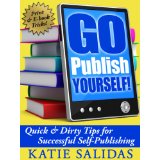
In this guest post by Author Katie Salidas, you can learn what you get from a traditional publishing house vs. what you need to set up if you decide to successfully take the self-publishing route. She knows first-hand the in’s and out’s of self-publishing and has sold thousands of self-published books through Amazon, Kindle, Nook, Barnes & Noble, Indie Bookstores, etc.  If you decide to choose the self-publishing track, please pick up a copy of her book Go Publish Yourself! so you can save yourself a lot of grief, time and money. She’ll teach you mistakes to avoid and steps to take in this simple-to-follow manual. 

 Guest Blog:  Building Your Self-Publishing House vs. Traditional Publishing HouseBy Katie Salidas

Traditional Publishing:  What a Publishing House does for their authors

To understand what a publishing house does for an author, you have to take a look at some members of the publisher’s team. Your manuscript will travel through the hands of each of these players.

Some of THE PLAYERS and some of THEIR JOBs:

Editor-falls in love with your writing and wants to take it to market, but first helps author with plot and character development to make sure you’re presenting your best work.

Managing editor-manages time tables of team members below to get product to market as planned.

Copy editor-checks for grammar, accuracy of your details (dates, descriptions, etc), and brings a set of fresh eyes to the manuscript.

Proof reader-checks for final mistakes.

Designer-oversees artwork, typeface, size, style, page layout, chapter layout and (if qualified) prepares jacket design (if not qualified, oversees an illustrator to do so).

Production Manager-determines which paper to use, printing company, binding, and evaluates cost effectiveness, printing schedule, and deals with printer on any errors.

Distributors- manages how finished books get into the retail market (big box bookstores, ebooks, and independent bookstores) and does periodic quality control checks.

Sales reps-secures sales for books by talking to book buyers, teachers, museum shops, specialty shops, and specialized clubs.

Marketing manager-sends manuscript out to print, radio, TV, industry bloggers and submits book for awards as well as for school visits.

Publicity manager-sets up interviews

And there is an even bigger team (all with staff) not mentioned (i.e. reprint manager, copyright manager, foreign service managers, etc.).


Self-Publishing: What an Indie Author must do for their book
Just like with Traditional Publishing, certain jobs must be done to produce and sell a good book. Though Self-Publishing is often a solo production, there are jobs that can and often should be delegated to others in order to produce a good quality book. Please note that some jobs can be done by the author, but most shouldn't.  

THE JOBS:

Proof Reader/ Critiquing Partner(s): A person or a group of people who read and offer feedback and editing advice on some or all of an author’s manuscript. This is done by a third party (not the author) before editing.

Line/Copy Editor:  This editor intensively edits for continuity as well as grammar and spelling. You will have to hire a freelance editor to do this job. (It cannot be done by the author.)
Cover Artist: A graphic artist with an eye for the specific needs of book covers. They should be able to match your genre with the art. There are many freelance artists ready and willing to create covers for you; however authors often take a stab at doing it themselves.

Interior Formatter: A person (this can be the author) who can alter the original word document into ebook and print formats for publishing. (e.g. Epub, Mobi, PDF, Print, etc…)

Publicist: A person (always the indie author) who sets up blog tours, interviews, appearances, book signings, radio promotions, etc…

Sales Manager: A person (always the indie author) who arranges for the distribution of their work through various channels like: Createspace, LSI, Amazon KDP, Barnes & Noble Pubit!, Smashwords, etc…

Being a Self-Published author is not an easy job. As you can see, you are responsible for every aspect of the work that you produce. However, there are some benefits to going it alone. A Self-Published author has 100% control of how their product looks. In Traditional Publishing cover art, interior format, and even editing are not under the author’s control. You could be asked to delete entire chapters if your assigned editor feels they are not good (your proof reader and critiquing group may suggest the same thing with your self-published work) .

But, the biggest benefit to Self-Publishing is the ability to gain a higher royalty. Yes, you do have to foot the cost upfront, but if you are a savvy Self-Publisher, you can find the most cost-effective ways to do things. Once those initial investments are paid, the rest of the money earned is all yours.

Self-Publishers earn as much as 70% of the price of their book on Amazon. That’s significantly more than what a traditionally published author can expect per book. The reason is, less overhead. As you’ll see in the list below, Traditional Publishing employs quite a few people. Those people need to be paid, too.  Self-Publishing cuts out a lot of middle-men. But that also means the author has a bigger job to do.

It can seem overwhelming at first, but Self-Publishing is a viable form of publishing for the highly motivated author!

Katie Salidas is a Las Vegas native. Wife, mother, and independent author, she’s made a career out of producing successful self-published titles.

Go Publish Yourself – Quick and Dirty Tips for Self-Publishing Success
The Immortalis Series
The Consummate Therapy series
Vampire Bites – Erotic vampire anthology
And many more….

Each of her books were created in the DIY (Do It Yourself) style, without the aid of author service companies. Through trial and error she has gained the knowhow to successfully publish print and ebooks.


Monday, February 11, 2013

Looking for the Next J.K. Rowling


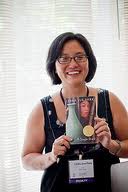
Photo of Ruta Septys at SCBWI Conference ...now an award winning author!

Looking for the next J.K. Rowling 

On March 2, 2013 three power-house literary agents will team together to help aspiring children's book writers discover how to break into publishing.  Those who register for the event will enjoy a rare opportunity to move beyond the veil of the internet and meet three agents: Sara Megibow from Nelson Literary, Kate Schafer Testerman of KT Literary, and Terrie Wolfe of AKA Literary.

J.K. Rowling, the popular author of the Harry Potter series, was rejected twelve times before she found her publisher.  Furthermore most publishers won’t even engage with authors without an agent representing them. The Rocky Mountain chapter of the SCBWI (Society of Children’s Book Writers and Illustrators) has arranged for the three agents to offer a workshop at the Broomfield Public Library.  

Aspiring Middle Grade and Young Adult writers will learn the in’s and out’s of publishing including how to pitch their project. This is a quick way to move past the slush pile. After learning the art of the pitch, each writer will be afforded the valuable chance to pitch directly to an agent, and then receive immediate feedback on what works and what doesn’t.  Furthermore, the agent panel will read the first page of each participant’s manuscript in a session called “First Pages” and again participants will receive immediate feedback. This is an incredible opportunity to meet
executives in the industry, and it’s a valuable chance to ask questions and learn.
The event takes place on Saturday March 2nd from 9:30am-4:30pm at the Mamie Dowd Eisenhower Public Library located at 3 Community Park Road in Broomfield, Colorado. Space is very limited and pre-registration is required (registration deadline is February 25, 2013).  The cost is $79 for SCBWI members and $100 for non-members.

To register please visit http://tinyurl.com/ak8j5b2 or contact the registrar, Carrie Seidel, at whispurr_s@hotmail.com.  To learn more about the Rocky Mountain Chapter of the Society of Children’s Book Writers and Illustrators, please visit www.scbwi.org more on Agent day at http://www.scbwi.org/Resources/Documents/2013%20AGENT%20DAY.pdf

Blog Archive