Welcome!

Welcome to the Bookshelf Detective, a site packed with tricks and tips for readers and writers of children's literature. Thank you for visiting!
Cheers,
Kim Tomsic
Showing posts with label picture book. Show all posts

Sunday, April 13, 2025

3 Things You MUST Do When You Write a Story in Rhyme


Rhyme, Scansion, and Metric feet:

I admire authors who successfully write in rhyme. It's not easy! If you love writing in rhyme, make


sure you've followed this three-step check list before you send it to agents and publishers.

Avoid “Yoda-speak” and/or awkward sentences. Delete anything that sounds forced or backwards for the sake of the rhyme –also known as forced rhyme. The STORY must be the star of the book over the rhyme.

Rhyme is not successfully by simply matching syllables. You have to know if the syllables are stressed or unstressed. You must track metric feet. Take a scansion test to track if your rhythm/meter is on pointed throughout your story? (Scansion definitions and links are below).

Make sure the rhyme moves the story forward. No gratuitous words for the sake of matching the rhythm. The rhyme must drive the reader from act i to act ii to act iii without a forced pause. 

SCANSION: Scansion or “scanning” a poem is the act of tracking stressed and unstressed (strong and weak) syllables.  For example, the word “emphasis” is pronounced [ em-fuh-sis ], not em- FAH-sis – the middle section is unstressed. It doesn’t pause or linger or receive special emphasis. Readers should be able to read a poem with natural emphasis on syllables.  

EMPASIS: A strong syllable is pronounced with more emphasis than a weak syllable. Scansion helps writers see and establish the rhythmic structure (the meter). A good PATTERN (to my ears) makes the rhythm and rhyme work. The pattern of stressed and unstressed is what forms the metric feet.

How do you know if a syllable is stressed or unstressed beyond listening to speech rhythm. You could check dictionaries – the stressed syllable is marked with an accent or is in bold type. Like “mu-sic” meaning the first syllable is stressed. Yes – it is a lot of work!  Some tricks beyond listening to natural patterns include:

  • Nouns and adjectives: Often, the first syllable is stressed (e.g., TA-ble, HAP-py).
  • Verbs and Prepositions: Usually, the second syllable is stressed if the word has two syllables (e.g., “become”= be-COME; “reply”= re-PLY).
  • Compound words – a phrase will follow a pattern.

·       Here is a link for How to Scansion a poem: 

METRIC FEET: How do you know if your rhythm is working – track the metric feet.

What might tracking metric feet look like? Check out this link.

You can mark stressed and unstressed to track your metric feet (e.g., you can mark stressed syllables with “x” and unstressed with “o” ).

Check out Tim McCanna's books for examples of rhyme done well!

Also note, picture books don't have to rhyme. There are other beautiful (and other poetic) ways to write a story. Check out this article in Writer's Digest.

Saturday, October 26, 2024

53 Sure-Fire Ways to Make Your Picture Book Manuscript Ready for Submission: The Ultimate Editing and Revising Checklist!


53 Tricks to Make Sure Your Picture Book is Submission Ready: Kim's Editing and Revising Checklist

By Kim Tomsic

Huzzah! You've written a picture book, you've worked with a critique group, and now you're wondering if it's ready to submit. Work through this checklist. Revise and edit if necessary. Then bring this checklist to your next critique meeting, so they can help you see the cleanest answer to each of the following: 


Is My Picture Book Ready? Final Checklist:

Did you keep your story’s theme/ “aboutness” present and alive in the beginning, middle, and end? Name what your story is about________________________

If you are writing about a character, do you have reasons for readers to identify with the character (will readers root for this character because of sympathy, empathy, likability, competency, super-power quality)?

Is this story for a child?


Is there a placeholder for the child’s emotions?

Is there a hook and is the hook compelling (this applies to both journey stories and concept books – remember a concept book is an “early learning concept” like the alphabet, shapes, colors, numbers, seasons, days of the week, etc.)?

Is there a reason for the reader to become invested during early pages?

If your story has a character, is the reader able to track the character’s emotions/how the character feels during the story?

If you are writing a hero’s journey, do you have a clear reason why TODAY is the day that sends the hero on the journey? Why must the story question or story problem be answered TODAY of all days? _________________________________ If you can’t answer this, your readers might ask, “So what? Why does any of this matter right now? Why not just do it another day?”

Is there a clear goal?

Are there meaningful stakes (what is at risk or what happens if the protagonist doesn’t achieve their goal)?

Is there room for a ticking timeclock in your story; and if so, have you used it to the best of your abilities?

Are you bringing a new and vibrant angle to a story that has been told before? If you are


creating a concept book or journey, what fresh and new ways are you adding to the conversation? ______________________________________

If you are creating a concept book or a journey, is there a piece of YOU that you can uniquely bring to this story?

(Journey and Concept) Does this story have BOTH meaning and music (a captivating, meaningful story told with fresh and delightful words) such that the reader wants to open this book a second, third, and fourth time?

Do the verbs in your story match the vibes you are trying to create (if not, upgrade those verbs)?

Is your story a piece of theater that the reader can perform for the child? Does your story have performance quality for the read aloud (e.g., pace + important page turn moments matched with gorgeous language or funny language or rhythmic or musical language or onomatopoeia or something else)?

Do you have rising action and/or rising tension or an escalation?

Did you reach a clear midpoint in the story and at the right pace?

Did you delete all darlings?  “Darling” words/lines or “darling” characters are ones that if deleted, nothing about the story would change. *Note – a darling might be something taking up too much real estate in your story without contributing as a “foil” or to the aboutness, story beat, emotional state, character reveal and reason to root, stakes, goal, or rising tension. A darling might also be something that takes your readers down an unintended different path.  

Have you checked the pace of your story by making a pb dummy? My favorite picture book dummy templates are provided for FREE by author/illustrator Debbi Ridpath Ohi. 

Here is Debbie Ridpath Ohi's link to her Free Dummy Templates.


After you make your dummy have you searched for ways to be more concise?

Have you successfully included more “showing” moments than “telling” moments? Have you made decisions around each moment to note if it is best to show, tell, or show and tell?

Have you highlighted your manuscript to see if you have a good balance of action + dialogue? You can track more than that, too; you might see if you have too much exposition and if so, consider how you might transform some of it into action and dialogue.

Have you searched “to be” verbs (am/ is/ are/ was/ were) to see if you can upgrade some of these into action verbs?

Did you choose strong and fresh verbs (yes – so many checkboxes around verbs, and that’s not an accident. That’s to show how important they are)?

Did you delete any unnecessary intensifiers or filler words (just, always, usually, very, etc.) – the key is “unnecessary”. If the word goes away and nothing changes, you don’t need it.

Have you considered each time you say “began” or “started” and considered deleting. Try the sentence without that hesitation word (for example, I began to run vs. I ran; I started to rush up the stairs vs. I bolted up the stairs) and see if you achieve the same vibe.

Does your protagonist or narrator have a flaw and/or would the story benefit if your


character was flawed or slightly flawed (know-it-all, persnickety, bossy, nosy, stubborn, grumpy, selfish, proud, braggy, miserly, spendthrift, lacks boundaries, etc.)?

Do you have the right narrator and/or the right protagonist?

  Have you considered your story in a variety of ways (1st person, second person, 3rd person, prose, verse) to make sure you have the best vehicle for this story?

If you are choosing rhyme, have you made sure to avoid “Yoda-speak” and/or awkward


sentences. Delete anything that sounds forced or backwards for the sake of rhyme –aka make sure you don’t have forced rhyme. The must be the star of the book over the rhyme.

If you are choosing rhyme, have you tried a scansion test to track if your rhythm/meters are on pointed your story?

Here is a link on what is scancion and "how to scansion" from Master Class.

For any story - is each sentence the right length for the moment? Make sure you aren’t cramming several ideas into one sentence. Avoid overly long sentences, especially at the beginning when a reader is just discovering the story – try your best not to go past 17 words in a sentence unless there is a compelling reason to do so (e.g., perhaps a long sentence is purposeful to add to the mood, energy, comedy, hysteria, or character’s personality).

Are you (mostly) using invisible tags over effusive dialogue tags? Would the characters


shine brighter and the story flow smoother if the tags become invisible - e.g., he said/she said/they said (these are called “invisible tags”). Most writing advice says invisible tags are the way to go – sure, you can do something different occasionally; but if you do it on every page, it might weigh down your story.

Are you making sure to delete stage directions that can be left to the illustrator? A stage direction can be a wasteful use of storytelling text (and you only have a 500-word budget).  An example might be something like, “Madeline opened the door, walked down the hall, and turned left.” You don’t have to say this since the illustrations will orient the reader. Delete a stage direction when it doesn’t add any meaning or music to the scene, character reveal, plot, or theme enhancements.

Are you making sure to hold on to a stage direction when it adds to the pace and delight of the read aloud performance (e.g., slowing down the pace and stretching it out in a dramatic moment).

Are you leaving space for the illustrator to be creative?


Can you delete any or all illustration notes? Trust illustrators to their craft and try not to step in their lane.

Are you making sure that your story can be enjoyed and understood even by the most active child who is listening in the back of the library or classroom during story time? (Yes – it’s important to have space for the illustrator, but don’t let the pendulum swing too hard. It is also important that the text captivates, connects, and engages the listener).

Are you trusting your reader rather than overwriting? Remember, a picture book is a balance of the writer, the illustrator, and the readers – each bring something to the experience.

Have you tracked your transitions (concept and journey stories)? Take another look and see if you are using the best transitions possible to thread moments together (bridges) that flow naturally while still shining a light on the trajectory of your story’s aboutness?

  Have you searched for moments when the exposition can be better delivered through dialogue instead?

Is your character in agency – driving the plot and or affecting the world around them (journey story).

Is the aboutness present in Act I?

Is the aboutness present in Act II and is your break into act ii a “squeeze the toothpaste”
moment?

Is the aboutness present in Act III?

Are you leaving space for the reader’s brain to work such that you are not delivering a story that is that is too “on the nose”? 😊Discoveries and engagement are parts of reading enjoyment.

Did you avoid being didactic, lesson-y and/or preachy?

Is the emotional state at the beginning of the story different than at the end of the story (the situation or the protagonist in a journey story; the sense of wow or awe or knowledge at the end of a concept book)?

Have you avoided unsatisfactory repeating (this is different than poetic and purposeful


repeating)? Go line-by-line (or perhaps paragraph by paragraph) and ask yourself if the line/paragraph achieves any of the following. Does it:

·       reveal character (revealing something about character to contribute to the reasons to root for this character in terms of sympathy/ empathy/jeopardy, likability, competency or power)

·       or does it contribute to moving the plot forward in a new way that hasn’t yet happened

·       or does it appear in the right order in terms of rising action

·       or does it illuminate goals or stakes

·       or is the repeat intentional to add musicality or emphasis or a refrain

·       or does it enhance the “aboutness” or theme of the story with meaning (aboutness) and music (the best choice of words)?

Do you feel satisfied by the “so what” questions like why does this story matter and why will it be meaningful to a reader and why does it matter right now?

Have you ended on a surprising yet inevitable note or discovered a “wow” ending or provided an ending that will keep the reader thinking about the story even after the last page has been turned?

Were you able to achieve everything above in 500 words or less?

P.S. A few parting tips:

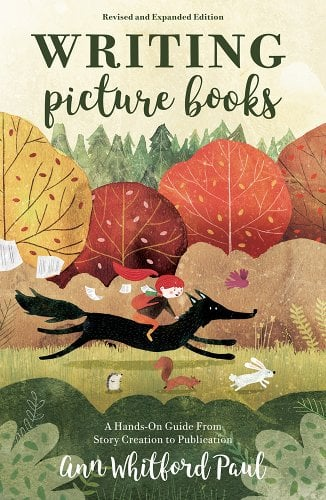
Have you read Ann Whitford Paul's book, On Writing Picture Books: The Revised and Expanded Edition? If not you should!

Have you looked for mentor texts? That helps, too.

Have you been reading and reading and reading in the genre that you'd like to be published? If yes, A+ to you!

Monday, May 8, 2023

The Elephants Come Home: A True Story of Seven Elephants, Two People, and One Extraordinary Friendship


Winner of the Keystone to Reading Award!

Winner of the Norman A. Sugarman Honor!

Nominated for the2023-2024  California Young Readers Award!

Nominated for the 2024 Beehive Award!

Nominated for the 2024 Nutmeg Award!

The Elephants Come Home (ISBN: 978-1452127835) is the amazing true story of a herd of elephants, the man who saved them, and the miracle of love that brought them home.

DO YOU DO SCHOOL VISITSAbsolutely! I'd love to your speak to your students in person live or via ZoomContact me here. We can customize a visit, or you can check out my menu of school visit options here.


One day in 1999, Lawrence Anthony and Françoise Malby Anthony receive word that a herd of wild African elephants need a new home. They welcome the elephants to their wildlife sanctuary—Thula Thula—with open arms. But the elephants are much less sure they want to stay. How will Lawrence prove to them that they are safe and loved? What follows is a gorgeously illustrated real-life story of friendship . . . and the story of the miraculous way that love given freely will return—greater and more wonderful than it began.

Critical Praise:

“[A] moving true story. . . (Have tissues handy.) [The Elephants Come Homes] flawless, gentle pacing [and] pages with saturated, eye-catching teal, copper, and emerald hues. . . . heighten the story’s emotional impact. . .”The Horn Book Magazine

“In brief action-packed sentences, Tomsic informs readers of all the steps taken to bring [the elephants] back, with the text placed against Hooper’s beautifully realized illustrations of African animals and the vast, gorgeous landscape…with its focus on the elephants and the protagonists, this book is lovely, tender, and moving.”       Kirkus Reviews

 This touching true story portrays conservationist Lawrence Anthony’s relationship with a frightened, hunted herd that found a home at his reserve in South Africa, Thula Thula..The importance of conservation shines through the friendship story here, and both themes are beautifully complemented by Hooper’s detailed, atmospheric drawings of the elephants and their surroundings.”—Booklist

The illustrations are expansive with a limited color palette of warm oranges and cool greens and blues. The animal characters are dynamic, humorous, and emotive. . . . A sentimental but high-­interest story based on true events of the bond between wild animals and the humans who care for them, suitable for early elementary students.”         School Library Journal

Copies are available at Changing Hands Bookstore


• TOUCHING ANIMAL FRIENDSHIPS: Owen and Mzee, Tarra and Bella, Rescue and Jessica . . . touching true stories of the emotional bonds possible between species are charming, and speak to the limitlessness of love.
ELEPHANTS: Elephants are one of the most fascinating and charming wild animals in all of nature. This heartwarming true story will intrigue & inspire children, turning the most reluctant readers into elephant enthusiasts.
• CONSERVATION THEME: This book tells the true story of caring for one of the world's most beloved endangered animals: the African elephant. This book is a great, upbeat jumping-off point for discussions of the importance of preserving endangered species and their environments.
• ENGAGING NONFICTION: There's no better way to get readers hooked on factual books than to offer them real-life stories with heart and meaning.
• STRONG CURRICULUM CONNECTIONS: The Next Generation Science Standards (NGSS) emphasize learning about animal habitats/biomes in K–2 curriculums, while later grades address topics like conservation and endangered species. With a depth of research and an engaging, highly visual narrative, this book is an excellent resource for librarians and primary school educators.

Perfect for ages 4-9:
• Kindergarten and elementary school teachers           Lovers of animals, wildlife, and the natural world
• Parents and grandparents                                         Zoo and natural history museumgoers
• Librarians                                                                  Parents and Kids of all ages

Thursday, September 24, 2020

10 Ballet Dancers: An Interview with Author Amanda Malek-Ahamdi


Today, on the blog we welcome debut picture book author Amanda Malek-Ahamdi


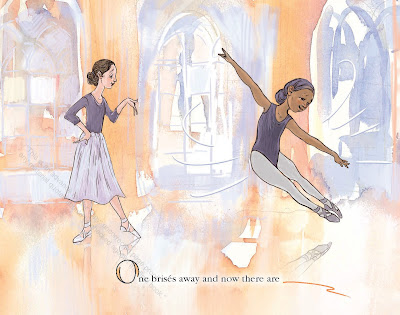
Amanda, Congratulations your upcoming beautiful debut picture book 10 Ballet Dancers . It is delightful, entertaining, and inclusive. Parents will love it! Kids will love it! Furthermore, the art by Kathrine Gutkovskiy is gorgeous! Thank you for agreeing to this interview. I’m excited to hear about your inspiration and about your fun launch project and launch party plans. Let’s get started!


1.I hear you're one of the most sought-after dance teachers in Arizona. Tell me more about your inspiration to write this book.


I don’t know about one of the most sought-after dance teachers in Arizona, but I do love teaching dance and have taught at various places around the valley. I started teaching dance when I was 17 and have taught children ages 18 months and up.  I teach several adult classes, too. I am also fortunate to have had the opportunity to teach dance in the entire public school system spectrum, K-12. I’ve even taught at the Community College level. I love how each age group brings something different to dance.


As for inspiration to write this book…being able to combine my passion for dance, both performing and teaching, with my love of reading and life-long dream to become a published author was like two puzzle pieces coming together.


I still remember my first author visit with Mister Tom at my Elementary School. He read us his book, Messy Cat. I still own my copy. It was while I sat in awe of Mister Tom that I dreamed of becoming an author someday.


Fast forward many decades…eh hem (an era) later and here I am with my debut picture book.


For this particular book, I have the amazing Tara Lazaar who hosts STORYSTORM every January to thank for pulling 10 Ballet Dancers out of my head and onto the page. It was only the third day of the challenge, and I had written down 10-15 ideas when 10 Ballet Dancers fought for my attention, demanding to be written immediately.


The seed of the story had been in my brain for so long that when it finally fought its way to the surface it was fully formed. I made very few changes to the text from its original draft. Writers refer to this as BIG MAGIC. When I attended the SCBWI LA Conference in 2019, Mem Fox was the special guest at the luncheon. She mentioned Ten Little Fingers and Ten Little Toes only took “15 minutes” to write. I was excited to learn that I had an experience like Mem Fox.


2. I love that the art in 10 Ballet Dancers features diversity and inclusivity. Do you find that the diversity in your book represents the diversity of ballet classes or is this your dream for the future of ballet?


 One of my favorite dance quotes ever by a famous modern dancer, Jóse Limón is:

“Every man and woman has the innate ability to dance.”


As humans dance is part of us. When you look at babies and how they naturally move to the rhythm of the music it’s hard to dispute what Jóse Limón said.


I think the diversity and inclusivity represented in 10 Ballet Dancers is spot on with the world of dance today. However, not every dance class is going to be this diverse.


I would say growing up I was unaware of the dynamics of my classes. I was just there to dance with the people who were dancing alongside me.


The beauty of dance is that it is Universal and when the music is on everyone becomes one with the rhythm.


Today I am very fortunate to dance in a contemporary company, (Wight Noise Dance Company) that is both diverse and inclusive the way that 10 Ballet Dancers depicts the class. The company is slightly different than the book as the members age range is from 20-50+ years old.


Moment of TRUTH! My original title for this book was TEN BALLERINAS!


When I began to think about how I would approach a publisher with my book idea, I planned to ask the company members to take some pictures of the dance moves so I had a visual component to help explain the text for those not familiar with Ballet Terminology. 


I caught myself saying, “What am I thinking! We have two men in our company. I can’t write a book about dance that doesn’t include boys!” Luckily, it was an easy switch thanks to both Ballerinas and Ballet Dancers having four syllables!


Speaking of boy dancers: I remember being on a book thread in 2019 (before I had a publishing contract) and seeing a parent ask if a particular ballet book featured boys. The answer was “No.” I screen shot that conversation and thought I’ll get in contact with the woman who asked the question someday!


I contacted her the week of August 17. Her son is now going to participate in my project #flatballetdancers before the book releases. I just popped a postcard in the mail for him, and will be gifting him and his dance studio a signed copy of 10 Ballet Dancers.  


2a. #flatballetdancers! Tell us about this project.


I am so excited for this project! #flatballetdancers is inspired by my favorite children’s book author/illustrator Michelle Nelson-Schmidt. Back in October of 2019 she sent around these cute stuffed dogs named, Rufus and Lucy. We had the opportunity to house them for a week. It was a fantastic experience. Our boys really loved it!


To keep things simple for the project and shipping costs to only one stamp, I chose to send the characters out like a Flat Stanley. When a person receives the dancers they have an “adventure” with them and take a picture. They then post the pic to Instagram using: #flatballetdancers. If they don’t have an Insta account, they can message me via Facebook, Twitter or my website’s contact form and then I’ll post them.


When the dancers arrive at their home, they contact me, and I provide the next destination.  As the dancers travel through the USA, I will be coloring in a map for all of their stops. I can’t believe how many travel plans they have already! 26 states have been secured and 35 trips due to stopping in some states more than once.


I would love to see the dancers make it to all 50 States. They will keep traveling until the book’s One Year Book Birthday! I am all for multiple visits to states. I will be putting a tally mark in the state for each time the dancers make a visit. Anyone reading this blog is welcome to contact me to participate via Facebook (https://www.facebook.com/authormamanda),

 Instagram (authormamanda), Twitter (@authormamanda) or my website (authormamanda.com).  


3. Ballet has some tricky words, so thank you for providing a glossary and pronunciation guide at the end. What do you say to parents who might stumble over words like dégagé or glissade when reading with their children? 


Parlez-vous francais? I love to tell my students that they are getting to learn a different language—French. But instead of telling them I ask them “Do you know what language you are speaking when you say the Ballet words?


For anyone who might stumble over the words—just roll with it!


Have fun enjoying the story, gazing at the AMAZING illustrations by Kathrine Gutkovskiy, and hopefully the rhythm of the book will also help naturally guide the way you say the words.


Or…sound out the words with your children. Think of how new readers break words apart into their letter sounds and syllables. When my children and I come across a word they don’t know they begin to sound it out. Once they’ve said all the sounds, I then say, “Now SQUISH it” meaning put all those sounds together ‘quickly’ to say the word. I think that children will be in awe of their parents not knowing a word and that the modeling of how to figure out an unknown word would be an invaluable lesson.


If you’re still struggling and really want to make sure that you’ve got the pronunciation correct you can always google it.


3a. I heard you have a funny story about the rhythm of the book. Tell us!


Well…shhhhhh…it’s a secret or I at least try to keep it a secret as long as possible.


I may be a dancer, but I lack internal rhythm. Basically, when the music is on I am feeling that beat and I am “in the pocket” but as soon as that music turns off…I am not the one you should ask to lead the movement with counts alone.


 So…when I wrote this book, I wrote it in its current rhythm, but I actually didn’t recognize the rhythm!


I have an amazing critique group named Story Stitchers. We meet every two weeks. I was so excited about 10 BALLET DANCERS. I could just feel in my gut that this story, of all the stories I’d written, was the one that was the most polished.


When I read my manuscript, I read it in an excited yet unrhythmic tone. Almost as if I was reading a textbook. My critique group would say things like, “That’s a lot of words we don’t know how to pronounce,” and “Amanda, we know you’ve worked hard on this, but there just doesn’t seem to be a rhythm to it.”


Completely distraught that night I turned to my husband Mike, who is fortunately a drummer, and said, “Honey, does my story have rhythm.” He said, “Yes!”


He’d already glanced at the manuscript a few times before, but that night as he read he began to drum out the beat on his leg. We grabbed his bongos and recorded on my phone. I practiced along with him until I was able to internalize the beat.


I may not be able to teach the beats to you, however, when I am reading the text now, just like when the music is on while I’m dancing, something just clicks and everything works out.


Two weeks later I was sharing my “new-found” rhythm with my critique group and everyone agreed that it was ready for submission!


4. What do you have planned for your debut launch party in the middle of this tough year?


2020 has really thrown everyone into a new way to navigate our lives.  


Lamenting for just a moment. I was really looking forward to having an in-person event. I think my favorite part would have been seeing the smiling faces as I signed the books and watching the children handle the book as they walked away. Would they be hugging it, already flipping through the pages, or checking out their name written in the book.  I had also planned a dance class for people to learn the moves from the books. My boss, Rachel Wight, at Wight Noise Dance Company had offered to host the event and planned to invite the Arizona Commission on the Arts.


We are now going VIRTUAL!


https://www.facebook.com/events/2759186857733652/


Tuesday, October 13 at TBD, Join us on 10 Ballet Dancers Book Birthday, for a read aloud, a drum lesson on the rhythm, a Q&A and giveaways.


Wednesday, October 14 at 4:30 pm, Join my favorite author/illustrator, Michelle Nelson-Schmidt as she reads 10 Ballet Dancers during her weekly Storytime Live. She will be giving away 5 signed copies of the book.


Thursday, October 15 at 3 pm, Join WNDC director Rachel Wight and I as we chat candidly about dance and how the company helped create photos for 10 Ballet Dancers.


Friday, October 16 TBD, Join my former elementary school librarian as she reads aloud 10 Ballet Dancers.


The dance class will still be offered. It is now planned for November; a month after 10 Ballet Dancers launches. A ZOOM link will be emailed to those who have pre-ordered or order during the launch.


To see the prizes offered and any updates on the schedule check my website at www.authormamanda.com


5. What were your favorite books from when you were a child?  


As a child, you would find me in my room most afternoons and weekends curled up with a book.


My favorite series was Sweet Valley Twins! I actually still own my copies. I’m so glad I held onto them, because I will get to share that part of my childhood with our daughter who was born in February of 2020.


I also loved reading Beverly Cleary books. I am currently reading through the Ramona series with our ten-year old son. He is loving them and thinks Ramona’s antics are hilarious. We’re reading them in order and just started Ramona and Her Mother. I cannot wait until we get to the toothpaste part. It just might remind Vincent of his own five-year old brother, Antonio, who used to make “cakes” out of toothpaste in the sink last year.


I truly could go on and on about my favorite books. Instead I would like to share what I believe developed a life-long love of reading for me.


In my childhood home we had two huge bookshelves at the end of the hallway that reached from the floor to the ceiling. As a little girl I remember being in awe of its height and excited to dive into all of the books that packed the shelves. At a young age I was reading ­The Red Pony by John Steinbeck and The Call of the Wild by Jack London. I remember looking at the cover of White Fang by Jack London many times and opting to not open it because the cover looked a bit scary. Maybe now I’m old enough to read it!


Having all of those books at my fingertips led to my passion for the written word and my exploration to express myself through writing. I feel very fortunate to have both writing and dance as outlets to navigate life.


In our home we have books in every room, shelves upon shelves of books. We even have a book nook under the stairs! Vincent, Roman, Antonio, and Francesca love reading and being read to. All of our boys also make their own stories often with folded paper that they staple together. They talk about getting published someday. I hope that the joy our children find in reading and writing never leaves them.


10 Ballet Dancers available from Small-Tooth Dog Publishing Group: buying link

Indibound: buying link

Amazon: buying link


    • ISBN-10 : 1947408259
    • ISBN-13 : 978-1947408258
    • Product Dimensions : 11.02 x 0.25 x 8.5 inches
    • Publisher : Small-Tooth-Dog Publishing Group; Illustrated Edition (October 13, 2020)
    • Reading level : 5 - 10 years
    • Language: : English

    More about Amanda:

    Amanda is a native to Arizona, former elementary school teacher, mother of four, wife to a scientist, dance teacher, professional contemporary and modern dancer and now a children’s book author. Her dream of becoming a published author most likely started with experiencing her first author visit at her elementary school when she was in second or third grade. The book was Messy Cat written by Mister Tom. Amanda still owns her autographed copy. Amanda began pursuing her writing career more actively in January 2017. She joined the Society of Children’s Book Writers and Illustrators (SCBWI) in July 2017. Since then she has attended three AZ Conferences and two in LA. In September of 2017, she began taking classes via StoryTeller Academy created by Arree Chung. Amanda has learned so much from the classes and is grateful to have found an amazing critique group through the program. They are called the Story Stitchers. Now, if you asked Amanda when she started dancing, she’d laugh and say, “the womb,” but then laugh again, and say, “technically when I was five.” Amanda’s passion for dance and love of teaching children how to dance has led to the creation of many dance stories. Some dating back to when she was a new dance teacher at the age of 17. Amanda is thrilled that The Small Tooth Dog Publishing Group has accepted her debut dance manuscript about ballet dancers to be published in Fall 2020. She looks forward to all of the adventures ahead as a debut author and cannot wait to experience the joy of signing a book for a child at what might be their first author visit. 


    Blog Archive