Welcome!

Welcome to the Bookshelf Detective, a site packed with tricks and tips for readers and writers of children's literature. Thank you for visiting!
Cheers,
Kim Tomsic
Showing posts with label teachers. Show all posts

Tuesday, August 8, 2023

Classroom Activities for World Elephant Day and National Elephant Appreciation Day with The Elephants of Thula Thula

Hello and Welcome! 🐘

You have arrived at the right spot to find information, a puzzle, or fun projects for your students. I hope you enjoy celebrating two special awareness weeks:


  • August 12, World Elephant Day  
  • September 22, National Elephant Appreciation Day

Here's a list of activity ideas and links. Also, scroll down to find a printable word search puzzle as well as some ecology definitions.


Classroom Activities & Resources

image.pngimage.png

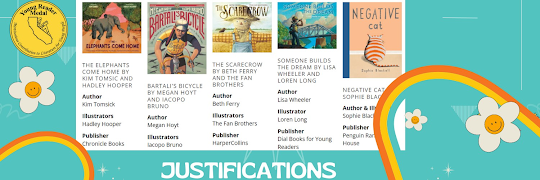
READ: I hope you enjoy reading The Elephants Come Home , a 2024 finalist for several state awards!

LISTEN: Elephant Voices How do elephants communicate with one another? What does the position of their trunks mean? Why do they flap their ears?  What is infrasound? Learn all this and more at “Communication between Elephants Voices and Sounds.” Elephants in Zoo and Circus Elephant Encyclopedia. *Bonus, scroll to the bottom of the page and hear recordings of elephants! https://www.upali.ch/communication_en.html. MORE: Ear flapping. Head Waggling. What does it all mean? Check out Elephant Voices.

WATCH: Elephants aren't puppies yet watch eco-warrior Lawrence Anthony call for the herd featured in The Elephants Come Home(seven-minute YouTube video). 

EXPLORE: The five senses: Would you like to learn more about an elephant’s vision, hearing, or their keen sense of smell?  Check out elephant senses: https://seaworld.org/animals/all-about/elephants/senses/

Warm Blooded vs. Cold Blooded CreaturesAt this link, Sea World features a classroom activity for teachers and students to discuss warm blooded vs. cold blooded animals. Make sure you add elephants to the conversation!

SPELL: Animal Spelling Bee: The SeaWorld website features another fun activity. You can host an  animal-centered spelling bee – just add “elephant” to the list. You’ll discuss words like “conservation”, “habitat”, and more. Consider adding “Zululand, South Africa” to the list, and discuss the difference between a continent and a country.

SCHOOL VISIT: ❤I love chatting with students. Please check out the “Contact” page on my website (KimTomsic.com ) for a full menu of school visit options (live or via Zoom).

MEET: “Meet” the Elephants of Thula Thula (pronounced toola toola). Learn the names of the elephants that live in the wildlife sanctuary.

BECOME AN ECO-WARRIOR: Consider a classroom fundraiser, “Pennies for Protection” and adopt an elephant.


Word Search Puzzle (High-quality Printable version at this link) :


Definitions:


Habitat –A habitat is an environment where an organism lives for normal life and growth. The habitat contains all an animal needs to survive such as food and shelter. 


Biome – biome is a large area characterized by its vegetation, soil, climate, and wildlife.” – National Geographic. A biome is a community made of all the habitats in a region and climate.


Boma“Boma” is a word borrowed from the Swahili language. It is a coral that is built as a space to help animals get used to their new home prior to letting them enjoy the entire wildlife reserve. Read more about bomas and how they are built at Our Planet, My Lens.


Reserve: A “reserve” is a managed area meant to protect wildlife and their habitats. There is no hunting on a wildlife reserve. Lawrence and Francoise Anthony started the wildlife reserve called Thula Thula.   


Thula Thula: Lawrence and Francoise Anthony started the wildlife reserve called Thula Thula. Thula Thula is a Zulu word that means “peace and tranquility”.


Elephants – seven elephants came to Thula Thula. The matriarch’s name is Nana. Her sister’s name is Frankie.


Eco Warrior –someone who makes hands-on effort to protect the environment.


South Africa: South Africa is a country just like the United States is a country. It is located on the continent of Africa.


Province: Some countries are divided into provinces which are, according to Merriam Webster,  “an administrative district or division of a country.”


MAP
: From zoomed out to zoomed in (biggest to smallest) here’s where ThulaThula and its elephants are located:

Africa is the continent.

South Africa is one of the 54 countries on the continent of Africa.

KwaZulu-Natal is one of the nine provinces within South Africa.

Zululand is the region in KwaZulu-Natal where the elephants lived on the reserve.

Thula Thula is the game reserve in Zululand where the elephants live.


Awards & Critical Praise
:


The Elephants Come Home 
by Kim Tomsic illustrated by Hadley Hooper. The amazing true story of a herd of elephants, the man who saved them, and the miracle of love that brought them home. One day in 1999, Lawrence Anthony and Françoise Malby Anthony receive word that a herd of wild African elephants need a new home. They welcome the elephants to their wildlife sanctuary—Thula Thula. But the elephants are much less sure they want to stay. How will Lawrence prove to them that they are safe and loved? What follows is a gorgeously illustrated real-life story of friendship . . . and the story of the miraculous way that love given freely will return—greater and more wonderful than it began. Chronicle Books,  ISBN: 978-1452127835

2022 Norman A. Sugarman Children's Biography Honor 

2022-23 Pennsylvania Keystone to Reading Elementary Book Award Primary Grade Winner

2023 Minnesota Comstock-Gág Book Award Winner

2022 Blue Grass Award Finalist

2022-23 Alabama Children’s Choice Camellia Award Finalist grades 2-3

2023-24 California Young Reader Award Finalist

2023-24 Iowa Goldfinch Award Finalist

2024 Utah Beehive Award Finalist

2024 Connecticut Nutmeg Award Finalist

2024 Illinois Bluestem Award Finalist grades 3-5


Resource - free!


Book available for purchase at:

The Wandering Jellyfish: Click Here

Changing Hands Bookstore: Click Here

Barnes and Noble: Click Here

Indiebound (or to check your local bookstore): Click Here

Red Balloon Bookshop: Click Here

Amazon: Click Here

Or simply ask your local bookseller!

Please reach out if you have any questions!

Monday, June 5, 2023

5 Answers That Demystifying How Librarians and Book Stores Choose Books


Demystifying the Book Selection Process: Featuring Tattered Cover buyer Stephanie Coleman, and children’s books librarians McCourt Thomas and Ida Olson

Have you ever wondered how books get chosen for bookstores or libraries? In a gathering of authors, librarians, and book buyers, attendees enjoyed the rare opportunity to hear the inside scoop - how are book buying decisions made at the corporate level? 

Our panel of experts included Stephanie Coleman, McCourt Thomas, and Ida Olson. At the time of the meeting, Stephanie served as Director of Buying at Tattered Cover Bookstores which has four brick and mortar Denver locations plus airport stores. McCourt Thomas is a librarian whose title is Head of Youth Services Lyons Regional LibraryDistrict. Ida Olson is a writer, freelance editor, and served as a middle school librarian in Cheyenne Wyoming. Each panelist talked about the book buying process, what factors influence their decisions, and what authors can do to help their books have the best chance at getting noticed.

McCourt Thomas Head of Youth Services Lyons Regional Library District McCourt was introduced first. She explained that libraries often have book selection committees, however she is the decision maker at her location in Lyons. She has a policy she must follow when making a purchase: to identify two justifications for every book she requests. Justifications can include things like popular appeal, starred reviews, good reviews in respected sources, and/or that she read it herself and strongly recommends the book.
⭐Kirkus Starred review THREE PENNIES by Melanie Crowder
McCourt finds books by reading sources like Publishers Weekly, KirkusReview, ALA Booklist, , and others respected publications. She also reads AudioFile Magazine and often checks the Earphone Award. She likes referencing magazines that provided themed lists (a themed list might be books about construction trucks, books about inventors, or even books about underpants). 

McCourt says another way she discovers books is through publishers’ webinars featuring upcoming releases. She watches those to see what grabs her attention. Furthermore, she attends conferences like ALA, PLA (Public Library Association), SCBWI, and she receives galleys from publishers or she requests early reads on Netgalley (Netgalley provides e-galleys of books to vetted readers).  

McCourt’s buying decisions are also influenced by user requests, popular relevant subject matter, and what moves off the shelf (e.g., action books move more than “issue” books).  Lastly, publishers constantly send out blurbs about their frontlist. "Frontlist” books are newly released books, or re-released older books but with new covers.

McCourt reads through to see what fits the bill. Space at her location is constrained, so she has to make informed decisions and she typically stocks only one copy of a title.
"Can the text and art of my
picture book cut through the noise and caputre
kid's attention when the primary audience includes
doezens of two, three, and four-year-olds?" BITTY BOT by
Tim McCanna and I HAVE A BALLOON by Ariel Bernstein
do just that!
McCourt’s big advice for picture book writers is to think of story time in a library, school, or bookstore, and then ask yourself, “Can the text and art of my picture book cut through the noise and capture kid’s attention when the primary audience includes dozens of two, three, and four-year-olds?” McCourt says writers should cut out the wordiness and think about strong word choices, sounds, and page-turns—they matter!
McCourt explained that librarians often buy their books through large distributors like Ingram or Baker & Taylor.

Stephanie Coleman-Director of Buying, Tattered Cover Books

Stephanie agrees with McCourt’s sources for discovering books and adds that sales representatives from the publishing houses also influence her buying decisions. When a sales rep is excited about a book, the bookstore gets excited about a book. Sales representatives are often the publishing houses’ gatekeeps. They talk up their favorites, send specific links from Edelweiss (Edelweiss is an online source that carries all publishing house catalogs), share the book specs, plus they share their markup notes(i.e. if there is a movie coming out, if there are a lot of marketing dollars behind the book, if the author is going on tour, if the author has any high profile interviews in the works, like being featured on NPR or a talk show).  When making a buying decision, Stephanie also considers how an author did in their stores in the past and/or how comparable titles performed in sales. If the bookstore doesn’t have a track record on a particular author or illustrator, they plug a comp title into their computer and tally up results to see if they believe a similar title will generate interest. Sometimes the buyer loves a book and is willing to put in time to make sure it gets noticed through good in-store handsellers.
When Tattered Cover is enthusiastic about stocking a title, they purchase three to five copies of the title (as a general rule). Stephanie noted that she finds it interesting that sometimes a book in one region is a smashing success while in another region it isn’t a hit, but there’s no standard answer on why this occurs (other than the obvious being if a book is released in the author’s hometown or if marketing specifically targets a region). 
Whereas librarians make their purchases through Ingram or Baker & Taylor, bookstores buy directly through the publishers (the receive better pricing, plus they can return with publishers).

DISPLAY:  Which books get faced out?
There’s not a clear formula for this answer, however local authors often receive a front faced
display as do authors who are offering a signing and authors with “important” books or popular appeal books. Tattered Cover also has staff who make “Staff Picks”. Under special circumstances, publishers will send a “dump” which is a display case designed specifically for a particular book because the bookstore plans to buy quite a few.

Ida Olson: writer, freelance editor, and middle school librarian in Cheyenne Wyoming.  Email: idaedits at gmail dot com
When Ida Olson isn’t winning the Sue Alexander award or writing hysterical tweets @IdaOlson, she’s a busy junior high librarian for seventh and eighth grade students. Ida acquires 300-500 titles per year for her library. She noted that signed books are a big deal to students. When making buying decisions, she agrees with McCourt and says she is obligated to find justifications such as reading the book herself or finding review sources through School Library Journal, Booklist, etc.

Like McCourt, Ida purchases through Ingram, Baker and Taylor, and also Follett (they provide books plus library management software). These websites provide useful vetting tools, for example, when considering a particular book these websites list all of the reviews in one spots: reviews from School Library Journal, The Horn Book Review, Publisher’s Weekly, Booklist, Kirkus Reviews, etc.  can all be seen on a single page so the research is easy to compare and consider. Ida admits she tends to buy books that have stars, but she also wants to know “what the people really think” and she visits Amazon reviews, too.
One thing Ida says that bothers her is when reviewers say a story is cliché, because really, “How many things are cliché to a twelve-year-old?” Though it is hard for self-published authors to land in libraries, self-published authors now have a better chance to capture librarian’s attention by meeting the required justifications of positive reviews, since Kirkus now offers unbiased paid-for reviews. If a self-published book gets a star or a positive review, librarians are able to use that as a justification.


Ida is passionate about advising librarians to “select broadly”—books need to represent everyone and help showcase various viewpoints.  Ida’s library choices represent a broad range of colors and experiences. As far as displays go at her library, she rotates to make sure everything gets displayed as eye candy for kids. She also creates seasonal displays, back to school displays, sports displays, Halloween and holiday displays, and displays to promote what the reading teacher is working on in their classrooms.

QUESTIONS:
1.      How IMPORTANT is a book cover in the buying selection process?
The answer was unanimous: it’s HUGE!
“Cover is key,” Stephanie says.
Titles: It seems like there are 50 generic one-word title, but that’s okay. Titles don’t influence as much as covers do.
Staff recommendations also influences buying decisions.
McCourt advises to avoid the curse of the brown cover and says you should check out some of School Library Journal blogger, BetsyBird (Fuse 8) to see what she says about sepia or brown covers.
2.      What about ARCS (Advance Reader Copies)? How often do you receive/read them; how do you feel about authors reaching out to you with an arc; do you have more than you have time to read?
Stephanie from Tattered Cover says they receive ARCs all the time. She considers then extremely helpful. Though she doesn’t have time to read every single ARC, she does pass many to the Teen Advisory Board or she puts them in the staff break rooms and also gives to bookstore volunteers.
McCourt says she can request ARCs through Netgalley in order to receive online copies. She often reads picture books through this source and makes fast buying decisions. Book bloggers can sign up to read ARCs through Netgalley and if approved, they too can receive preview copies to read on phone, tablet, or e reader.

3.     

Are there any factors that influence your book buying habits that might surprise  authors?
Author’s should know what the summer reading program is going to be and see if their book is a fit. Also, check out “Friends of the Library” to find out the yearly, nationwide collaborative theme. Collaborative themes for 2017,2018, and 2019:  construction (2017); music(2018); space(2019).
Authors who are willing to come do story time, author event, or teen event influence a buyer’s decision.


4.      At what point do you choose to take a book off your shelf/remaindered books
IDA: 10 years old; looks at how many times book has been checked out. Considers if a book has a niche value. Even if it is not checked out often, she considers if the book represents an unrepresented group and has an important reason to stay.
STEPHANIE:  twice a year the bookstore does returns. It’s important for a bookstore to stay fresh. Diverse books they keep in stock for a long time. They keep a core backlist.
Has to do an inventory count once a year.  Stephanie says they wait six to nine months and if the book has absolutely no activity they stop ordering completely (they do cycle counting). If books are part of a series, they keep the first book of series and the most recent release at minimum.
MCCOURT – deselection is based on if a book is damaged, has no checkout activity, or gut decision.


5.      What else should we know?

Parting fast tips: Common core is moving out and narrative nonfiction as well as STEM are the new hot thing.
Parents come in and ask for themes (bulldozers, underwear, unicorns)
Story time attracts the four and under crowd. Use catchy phrases and alliteration to keep their attention. Read your manuscript out loud and see how it sounds, then ask someone else to read it to you.  

Write a funny and a scary book!

Sunday, November 11, 2018

Starbucks and Rafflecopter Learning Curve Giveaway


Because teachers, librarians, authors, illustrators, parents, published people, pre-published people, and most humans like COFFEE, and because I need to learn how to use Rafflecopter, I'm creating this coffee giveaway!  One winner will walk away with a $10 Starbucks gift card, and I'll walk away so much wiser. Please help me as I make it through the Rafflecopter learning-curve.

Why this matters? Because I'm planning an epic giveaway in December, and I want to be ready💚💙💓

Good luck!

No matter who you are, please play along! The more the merrier. I think if a lot of people participate, I'll have a better chance at figuring out the quirks. I think Rafflecopter will select one random winner, afterwards I will verify if the winner followed these simple instructions:

1. Follow me on Twitter @bkshelfdetectiv
2. RT my tweet (it's pinned to the top of my Twitter page)
3.  Use the Rafflecopter link at the bottom of this blog post to enter: 

Umm, okay, so that's it!

p.s.  Be on the lookout:  From December 1 through December 12, 2018, you'll also have a chance to enter my epic baker's dozen STEM book giveaway to be announced on Twitter (click here for my account) . Also

Hint: My 2019 debut picture book Guitar Genius will be one of the books in the giveaway!


RAFFLECOPTER STARBUCKS GIVEAWAY


a Rafflecopter giveaway

Blog Archive