Welcome!

Welcome to the Bookshelf Detective, a site packed with tricks and tips for readers and writers of children's literature. Thank you for visiting!
Cheers,
Kim Tomsic
Showing posts with label HarperCollins. Show all posts

Thursday, March 9, 2023

An Inside Look at a Debut Deal


When I first entered the publishing world, I was surprised to discover that editors are regular human beings 😊. They eat, they sleep, they have personalized likes and dislikes. I know. I know. I was excited and intimidated, but I learned a lot with my debut sale. By the way, the above photo is a picture of me (wearing the orange scarf), my editor (next to me and in the center), and the HarperCollins marketing team all wearing the cat ears (a gift I brought to the office). 

My debut novel was sold on pre-empt, and no, I didn’t know what that meant when it was happening. I like this definition from Poets & Writers  magazine, “When a publisher wants to preempt [it means] they are choosing to make an offer that will persuade the author’s agent to take a project off the table early. The publisher is grabbing a project they love and avoiding having to compete with other publishers."

Book spinesIn my situation, my agent submitted my novel to a handful of editors, including Maria Barbo of Katherine Tegen Books/HarperCollins. When Maria said she wanted to make an offer, my agent invited her to sweeten the deal in a pre-empt to avoid an auction (an auction is when more than one house bids to buy a manuscript). But before anything was agreed upon, my agent asked me to get on the phone with Maria to see if I thought she would be someone with whom I’d like to work.

 As you can imagine, my head was spinning. I was suddenly in the driver’s seat. Long story short, this was a wise move. Making sure an author and editor have good communication chemistry is key to producing a great book. I asked Maria to tell me about her vision for the manuscript's edits, and since Maria is a genius, I was intrigued and excited about her ideas. As the cliché goes, it was match made in heaven, and we moved forward with the deal.


That's my perspective as the author. But did you notice that Maria's job as the editor was to communicate a clear vision for her editorial direction of my manuscript? If you take a job as an editor with a publisher, you'll have times when you have to compete with other publishing houses in order to acquire a manuscript. Sure, money will play a role in the bidding process but so will your editorial skills and the ability to communicate your vision. Honing these skills now will benefit you as a writer, book doctor, critiquing partner, coach, and as an editor. Even if you decide a career in editing is not for you, as an author you will have a clear understanding of the editor's role which will make you an ideal client to work with. 

Happy writing and editing!

Cheers,

Kim 

 P.S.   Writer Beware is a fantastic website. It's sponsored by the Science Fiction & Fantasy Writers of America. Here you will find a wealth of information including insights on editors and editing, writer’s services, how to avoid schmagents (fake literary agents), and more.

Sunday, January 23, 2022

Heart in Children's Literature by Kim Tomsic


Any writer trying to tackle the art of composing a children’s story will agree—it’s tough work. Whether writing a 500-word picture book or a 75,000-word novel, writers face a juggling act of theme (without being didactic), character (without being overly cutesy), story (with the perfect pace), and more all in effort to create that sweet balance of delight, entertainment, meaning, and connection.     But what makes a story good? In
Celebrating Children's Books: Essays on Children's Literature
, Arnold Lobel says, “A good picture book should be true. That is to say, it should rise out of the lives and passions of its creators.” Perhaps this statement could be pushed a step further, so it reads: A good children’s book (picture book through young adult novel) should be true. That is to say it should rise out of the lives and passions of its creators and have a placeholder for a child to insert themselves and their emotions. A good book should have heart.
In author Kate DiCamillo’s 2014 Newbery speech, she said, “…[those] working on stories, bookmaking, and art are given the sacred task of making hearts larger through story.” But what is heart and how does an author write it into a story? To figure this out, I asked three experts for their thoughts on heart in children’s books: Author Beth Anderson, Senior Editor at Chronicle Books, Melissa Manlove, and Senior Editor at HarperCollins, Maria Barbo.
First meet Beth. Not only is Beth Anderson the author of several picture books, she also writes about emotional resonance in her blog, “Mining for Heart.” Beth says, “Heart” is the treasure I’m after whenever I start a new manuscript. What will make this story more than a reporting of events? What will make the child reader think about the world a little bit differently? What will bring emotional resonance? To me, heart is not the theme or focus nugget but is much deeper and more personal. It emerges when you process the research or story through your own life experiences and passions to find a unique angle or thread. “Heart” can be nebulous, elusive, downright torture to tackle, but it’s what makes a manuscript sing!”
            Beth’s statement screams many truths, (the torture!). She also wonders, “What will
make a child reader think about the world a bit differently?” 

Kimberly Reynolds, author of Children’s Literature: A Very Short Introduction, says, “Because children’s literature is one of the earliest ways in which the young encounter stories, it plays a powerful role in shaping how we think about and understand the world.” Reynolds’ statement echoes Kate DiCamillo. In essence, they are both saying that books play a powerful role that might affect the way children understand and think about race, religion, ableism, neurodiversity, gender identity and more. No wonder DiCamillo calls it a “sacred” task.

Helping a child think about the world a bit differently happens when an author succeeds at writing a story that gets under their skin. There, inside the pulse of the story is the opportunity for a child or young adult to connect, beyond mere amusement, so that the story seeps into their pores and stays long after the last page is read. To jump-start a pulse that pushes a story beyond entertaining-but-forgettable, a book must have 💙heart💙, and to achieve heart the writer must make the reader feel something.
            The Horn Book Magazine also covers the need for children’s stories to have heart and feeling-points. In a November 2012 article titled “Making Picture Books: The Words” by Charlotte Zolotow, Zolotow emphasizes how an emotional impulse to write for children should come out of a real place and says, “Many fine writers can write about children but are unable to write for them.” She says, “The writers writing about children are looking back. The writers writing for children are feeling back into childhood.” It is the feeling-points that writers must tap into if they want to reach a child’s heart.


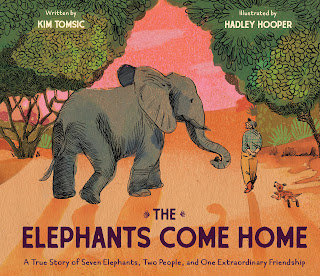
            The next step in my mission to understand heart took me to Senior Editor Melissa Manlove from Chronicle Books. I knew Melissa would be the perfect person to talk to, because she made me work to uncover the heart of The Elephants Come Home (Chronicle Books, 2021). Back in 2012, I approached Melissa with a true story about a man named Lawrence Anthony who rescued a herd of seven elephants in Zululand, South Africa--the elephants had broken out of every other wildlife sanctuary they'd lived at and had thus frightened many townfolk with their destruction. Now they had to be relocated again, otherwise they would be shot! Melissa and I were both captivated by the many details of this story, but something was missing—that nebulous “something” was the heart. It sat in the outskirts of my writing, but the heart was too buried to actually feel it. I had to work, to dig, to revise until I was able to identify the true piece of me that I was bringing to the story (for me, it was growing up as a military brat and being made to move from home to home, like the elephants).  Once I identified the heart I felt when I thought about this story, I knew I couldn’t shove it front and center because then the story would feel forced. Melissa says heart can’t be in the reader’s face. It needs to be like a treasure chest the reader works to uncover.


Actually, she says it more eloquently. Melissa says, “The writers I admire most tend to be ones that, as they draft, are following a feeling, a hunch, a question. They’re feeling out what seems right and what the story seems to want to be. And THEN from that, later, in the revision process, they figure out what that part of us that lives on story but doesn’t have words of its own to speak was trying to say.
And when you let the story come first, and let it show you by feel where the heart is, then the heart is truly buried in it, like buried treasure, and your story becomes a map for those who will follow you.”

The Elephants Come Home written by me and with gorgeous illustrations by Hadley Hooper, released in 2021 with Chronicle Books. Melissa pushed me to dig deep so that I could leave a treasure for readers to find.

Melissa is a master of theme and thesis and if you ever have the opportunity to attend one of her lectures, it will be the best gift you ever give yourself. For this article, I asked Melissa to expand on feeling points, and she explained that, “Many [stories are] disposable. And that’s because they’re entertaining in the moment, but they don’t mean anything. There’s nothing that stays with you afterward, nothing that nibbles at your imagination and pulls you back to them.” Even if a story is fiction, Melissa says a good story makes us “feel it is true.” Melissa explains that feeling in story is “the language-brain articulating what the story-brain had already known in feeling. A storyteller must evoke a universal feeling.” Melissa says for a story to go deeper, there needs to be “a human experience at the heart of that story that we all can relate to…and a truth about that human experience in the story.”
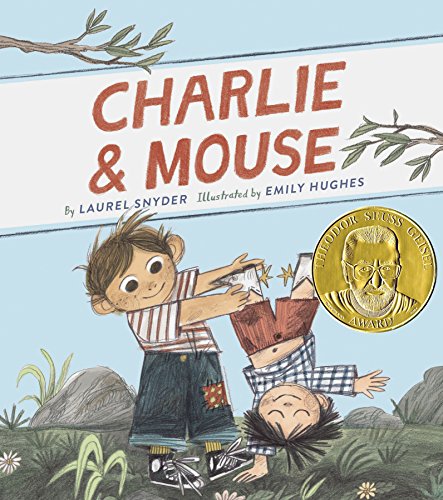
Charlie & Mouse: Book 1: Snyder, LaurelA great example of a human experience at the heart of a story we can relate to is Charlie and Mouse, edited by Melissa Manlove, written by Laurel Snyder, and illustrated by Emily Hughes. The starred review written by Elizabeth Bird in School Library Journal starts out with a negative tone, “Only the jaded should write reviews of children’s books.” The reviewer goes on to say, “If I am a parent and there is any danger AT ALL that my child is going to ask me to read and reread and reread again a piece of tripe that calls itself a children’s book, I at least want some forewarning. I have great love for the sardonic stripe of reviewer. Anyone who has honed their teeth on the literary darlings of sweetness & light.” Elizabeth Bird says she is sick and tired of reading overly-sweet books and goes on to add, “So I sometimes wonder if having my own kids has made me more inclined towards books with a glint of true emotion amidst the adorableness. With that in mind, I guess I could be forgiven for initially thinking that Charlie & Mouse wouldn’t work for me. Heck the eyeballs of these kids take up half their heads as it is. Yet when I read this story what I found was a quietly subversive, infinitely charming, eerily rereadable early chapter book not just worth reading but worth owning.” Though Bird set out to dislike Charlie and Mouse, she felt the heart and says, “my tolerance for the cutesy is distinctly low. So it was with great pleasure that I discovered that while the characters of Charlie and Mouse are undeniably cute, they are not cloying. They are not vying for your love. They are living their lives, doing what they want to do, and if what they do happens to be cute, so be it, but that is not their prerogative.”  Heart won the day.   
            I circle back to Kate DiCamillo, because Flora and Ulysses is a great example of a book with heart, and it was a very human and universal experience that led DiCamillo to write this Newbery Award winning bookthe experience of love, grief, and loss. DiCamillo says her truth rose out of her deep love for her mother who often asked who would take care of her Electrolux vacuum cleaner when she passed away. In January 2009, her 86-year-old mother fell, broke her hip, and died less than a week later. DiCamillo’s heart ached, and she grieved as painfully and deeply as anyone who loses a loved one grieves. In her 2014 Newbery speech, she says she wrote Flora and Ulysses because she “wanted to excavate that grief.” She says, “I wanted and needed to find my way to joy.” This was her truth, but she doesn’t lay it on the page so literally. The truth takes on new forms and shows up in her book through characters that would have made her mother laugh—Flora, the squirrel, the giant donut, and a vacuum cleaner (remember the Electrolux), and it’s not just any vacuum cleaner, but one that gives the squirrel superpowers!
The Newbery committee called Flora and Ulysses a story of hope, joy, and love. Through this book, readers experience real feelings filtered through DiCamillo’s characters while originating from her authentic human experience—her love and grief and also her hope to regain laughter and joy. This echoes back to what Melissa Manlove said, “there needs to be “a human experience at the heart of story that we all can relate to…and a truth about that human experience in the story.” In the end of Flora and Ulysses, readers discover that Flora’s father, George Buckman, has a capacious heart. One that is very large and “capable of containing much joy and much sorrow.” And this is parallel to the truth of DiCamillo’s heart, joy, and sorrow in her mourning process. Authentic feelings that showed up on the pages.

Senior Editor Maria Barbo from HarperCollins says, “Authenticity is key for emotional resonance. That thing you do in private that you think nobody else does—someone does it. A writer or artist has to make themselves vulnerable in that way—to share the secret, raw parts of themselves because relatability stems, in part, from specificity.” She adds a reminder, “The reader’s heart isn’t going to be in it if yours isn’t.” Maria is the editor for Bubbles...Up! a love poem to swimming, written by Jacqueline Davies illustrated by Sonia Sánchez. Each reader might find a different pulse point as they read, but without a doubt this story has heart.💙 
The experts agree—a good book should have heart. Melissa Manlove says, a “good story must feel true.” Maria Barbo says that a reader’s heart can’t be in it unless the writer’s heart shows up first. Beth Anderson challenges authors to find what will cause the child reader to think about their world view. Children’s Literature: A Very Short Introduction says, “Children’s literature can also be a literature of contestation, offering alternative views and providing the kind of information and approaches that can inspire new ways of thinking about the world and how it could be shaped in other, potentially better ways.”  Heart shows up when we process stories through life and literature experiences. Writers all have something that is deeply personal to share. We have something that, as Arnold Lobel says, “…can rise out of [our] lives and passions.” The real question is: are we willing to be vulnerable and write from an authentic place and share our feeling-points so the story can come alive for a child.

At the end of Kate DiCamillo’s Newbery speech, she said that as a child, she sat with books in her tree-house and could, “Feel the stories I read pushing against the walls of my heart.” For her, those stories traveled beyond the boundaries of mere entertainment and had a lasting pulse. Again, DiCamillo says those, “…working on stories, bookmaking, and art are given the sacred task of making hearts larger through story.” Writers can only do this if they dig deep and give of themselves so authentically that a book develops a pulse—a story that not only entertains but also has a placeholder for the child to insert themselves and their emotions. Children deserve stories that have heart.


Wednesday, May 6, 2020

AUDIOBOOKS for 8-13-year-old Readers: Who, What, Which, Where, How


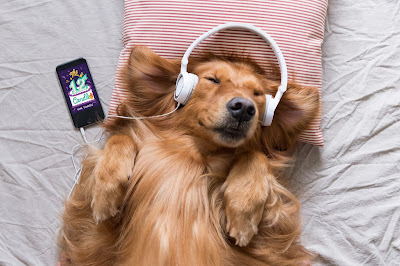
I'm excited to welcome guest blogger Michelle Pendleton. Michelle is an avid reader and one of my trusted source for book recommendations, especially middle-grade novels (books for 8-13-year-old readers).  When I saw Michelle tweet about audiobooks, I knew I had to ask her to guest blog. However, before I post Michelle's article, please allow me to shamelessly plug my new audiobook, The 12th Candle which was released by HarperCollins and narrated by the fabulous Cassandra MorrisThe 12th Candle has a funny and magical Freaky Friday-ish plot about two 12-year-olds who juggle pranks and a magic candle while risking everything to try and manage a family curse.  Now back to Michelle. You're in for a treat, so get ready to add to your "to be read" listthe family edition!
______________________________________________________________________


Audiobooks Can Make Reading A Family Affair by Michelle Pendleton
Our family has been socially isolating for seven weeks now. Like a lot of people, I thought I would be spending more time reading, but in fact, it has been very hard for me to even crack open a book, much less spend time losing myself in one. 

However, our family has still been reading with audiobooks. We have been audiobook readers for nearly four years now, and I know it has helped us read more, especially now. As a bonus, when we listen together as a family, we have a shared experience that we can talk about.
If you haven’t tried audiobooks before, this might be a great time to start. When my kids were younger, I used to read books out loud to them. It was great, and I truly enjoyed it, but when we started listening to audiobooks together, it was a whole new world. I found that I loved being read to as much as my kids did, and the professionals who do audiobook narration are amazing. In addition, our family could still enjoy a book together, but we didn’t have to find a time when I wasn’t busy. We now listen when I’m working on dinner or when we are doing other chores.

Where to get audiobooks
The first place I would start is your local library. There are several apps that connect with libraries that lend out audiobooks. The three that I know the best are Overdrive, Libby and Sora. I would say that about 80 percent of the books our family has listened to have been borrowed from the library. And because most middle-grade books are three to eight hours long in audio, it’s very easy to finish a book within the library’s loan period.
You might also look to see if your school district has a digital library. Our district does, and although it doesn’t have as many audiobooks as our city and county libraries, there are plenty of options; often, I find that there’s no wait to borrow a book, or there’s a much shorter wait list.
Sometimes a book I want to listen to just isn’t available at any of our libraries, or there’s a very long waiting list. Sometimes there’s a book that we like to listen to again and again, or a book is so long, there’s no way we can listen to it within a two-week borrowing period. That’s when it’s time to purchase an audiobook.
There are several services that sell audiobooks, and some of them offer discounts if you sign up for a subscription. If you are thinking that you might buy a book a month, I would recommend libro.fm. Their monthly subscription and discounts are the same as other services, and part of your purchase goes to an independent bookshop.

What book should I start with?
I love giving audiobook recommendations. Last summer, a friend asked for recommendations for a summer driving trip. I sent her an email, and by the time I was done, I had suggested 95 books.
Our family listens to a wide variety of books. I often start with recommendations from the Texas Library Association’s Bluebonnet List and Lone Star List. The books on these lists have been widely commended, and they cross a range of genres. They also introduce us to authors who we may have not read before. I also get a lot of recommendations from authors I follow on Twitter and through the MG Book Village. Sometimes, I have picked a book just because it was available to borrow—that happened a lot when we first began listening to books.


In addition, I look for books that would appeal to both my 9-year-old daughter and my 13-year-old son, and if we have listened to something pretty serious, we often will follow that book with something a little more lighthearted. There are also some books that are stand-by favorites that we will listen to again and again.
With that said, here are some different books to get you started.

GENTLE VIBE Perhaps with the pandemic, you need a book with a gentle vibe. Here are some great options:
     Jeanne Birdsall’s The Penderwicks series
     Karina Yan Glaser’s “The Vanderbeekers of 141st Street,” "The Vanderbeekes and the Secret Garden," and “The Vanderbeekers to the Rescue”
     "Saving Winslow" by Sharon Creech
HISTORY  If you are into history, these are awesome:
     Kirby Larson’s Dogs of WWII books: “Duke,” “Dash” and “Liberty”
     “Echo” by Pam Munoz Ryan has both fantasy and history, and I’d recommend listening to that one because the music in it is so, so good. This book is also set during World War II.
     "The Bicycle Spy" by Yona Zeldis McDonough is also set in World War II, but it takes place in France.
     Gennifer Choldenko’s Alcatraz books like “Al Capone Does My Shirts,” and its sequels are really good.
     "The Night Diary" by Veera Hiranandani is about the split of India and Pakistan when the English government withdrew from India as a colony.
FUN    Perhaps what you need is something that is just a lot of fun. Here are some series that my kids and I have thoroughly enjoyed:
     Stuart Gibbs’ series: Fun Jungle books, Spy School books and Moon Base Alpha books
     Geoff Rodkey’s The Tapper Twins series
     Mac Barnett and Jory John’s The Terrible Two series
     Suzanne Selfors’ Wedgie and Gizmo books
     Julie Falatko’s Two Dogs in a Trenchcoat books
     Honest Lee’s Classroom 13 books
     Neil Patrick Harris’ The Magic Misfits series. The first one in audio is especially good because Neil Patrick Harris narrates.
     Spencer Quinn’s Birdie and Bowser books are mysteries with a lot of action and fun, told from a dog’s point of view.
FANTASY AND SCI-FI   If you’re looking for something to get away from the real world for a while, here are some fantasy and sci-fi audiobooks:
     “Circus Mirandus” by Cassie Beasley
     "Inkling" by Kenneth Oppel
     "The Wild Robot" and “The Wild Robot Escapes” by Peter Brown
     "Sweep: The Story Of A Girl And Her Monster" by Jonathan Auxier. The last I checked, it was an Audible original but totally worth it. I sobbed for the last hour of it.
     All of the Harry Potter books with Jim Dale as the narrator are fabulous.
     "The Last Last-Day-of-Summer" by Lamar Giles is a lot of fun. After we listened to that, we listened to "The Phantom Tollbooth," by Norton Juster, which has a lot of similar plays on words.
     "The One And Only Ivan," and “Wishtree” by Katherine Applegate
     "We're Not From Here" by Geoff Rodkey
     “Bob” by Rebecca Stead and Wendy Mass
     “The Strangers” by Margaret Peterson Haddix
     “Lelani Of The Distant Sea” by Erin Entrada Kelly
     “Sal And Gabi Break The Universe” by Carlos Hernandez
     “Midsummer’s Mayhem” by Rajani LaRocca
     “The 12th Candle” by Kim Tomsic

FAIRY TALE   Perhaps a fairy tale is more what you’d like. Here are some options:

     Liesl Shurtliff’s fairy tale backstory books “Rump,” “Jack,” “Red” and “Grump” are all wonderful. If you haven’t read them, definitely read “Rump” then “Jack” because there’s a great twist that you miss if you read them out of order.
     "The Tale of Despereaux" by Kate DiCamillo

REALISTIC FICTION   Some realistic fiction that we've enjoyed:
     “The Adventures of a Girl Called Bicycle” by Christina Uss
     "Front Desk" by Kelly Yang
     "Insignificant Events in the Life of a Cactus," “Momentous Events In The Life Of A Cactus” and “24 Hours in Nowhere” by Dusti Bowling
     "The Miscalculations Of Lightning Girl" and “The World Ends In April” by Stacy McAnulty
     "The Truth As Told By Mason Buttle" by Leslie Connor
     "Save Me A Seat" by Sarah Weeks and Gita Varadarajan
     "Wonder" by R.J. Palacio
     "Song For A Whale" by Lynne Kelly
     "The Right Hook Of Devin Velma"  and “Greetings From Witness Protection” by Jake Burt
     "Shouting At The Rain" by Lynda Mullaly Hunt
     "The Remarkable Journey Of Coyote Sunrise" by Dan Gemeinhart
     "New Kid" by Jerry Craft
     "Harbor Me" by Jacqueline Woodson
     "The Science Of Breakable Things" by Tae Keller
     "Amal Unbound" by Aisha Saeed
     “Operation Frog Effect” by Sarah Scheerger
     “Hoot,” “Squirm” and “Flush” by Carl Hiaasen
     “Strange Birds: A Field Guide To Ruffling Feathers” by Celia C. Perez
     “A Wolf Called Wander” by Rosanne Parry
     “When You Reach Me” by Rebecca Stead
     Jason's Reynolds' Track series: “Ghost,” “Patina,” “Sunny” and “Lu”
I hope some of these recommendations will encourage you to give audiobooks a try. It might be a nice break from Netflix binge-watching, or it might be a nice thing to listen to while your family has dinner or does a puzzle. I know for our family, it has given us a nice break from the news and has been a way to stay connected to books.
Guest Blogger Michelle Pendleton

About Michelle:  Michelle Pendleton is a former journalism teacher who still has a love for education. She stays connected by volunteering at her children's schools (when they aren't distance learning), and her favorite work is reading with students. She is a fan of middle grade literature, the Northwestern Wildcats, and most sports. She lives in Houston, Texas with her husband, 13-year-old son, and 9-year-old daughter. You can find Michelle on Twitter at @mpendleton.

Blog Archive