Welcome!

Welcome to the Bookshelf Detective, a site packed with tricks and tips for readers and writers of children's literature. Thank you for visiting!
Cheers,
Kim Tomsic
Showing posts with label Melissa Manlove. Show all posts

Wednesday, July 5, 2023

4 Success Stories - How a Children's Book Writing & Illustrating Conference Launched the Careers of Four Authors and Illustrators

Conferences are kingmakers. It’s true! Talk to published authors and illustrators, and you'll discover that more often than not an attendee’s career moved into hyper-drive after taking part in a conference. A conference is where you meet people with a shared passion, and you develop new neural pathways for craft. Ideas bubble to mind, and important connections are made. Many publishing hopefuls met their agent or editor attending breakout sessions, getting critiques, or selecting the right seat at an open-table luncheon. 


Illustration courtesy of Brooke-Boynton Huges
Illustrator Brooke Boynton Hughes attended SCBWI's International conference in California more than a decade ago. She entered her portfolio in the illustrator showcase, didn't win but got noticed. In fact, she signed with agent Marietta Zacker and landed a book deal that same year! Furthermore, Brooke signed up for the one-on-one portfolio review. She received feedback throughout the conference weekend and learned nuanced details about craft. When she returned to the event the following year (2013), she walked away as the Portfolio Showcase Honor Award winner and the Mentorship Award winner! In 2014, she received the Portfolio Honor Award at SCBWI's Winter Conference in New York. 

    Brooke's success didn't come from one conference. She says, 

I think the most important part about attending conferences is the chance to have one-on-one portfolio critiques and the opportunity to learn about your craft.  I attended six or seven international conferences and three or four regional conferences before I was published and before my portfolio was recognized in the showcase."  
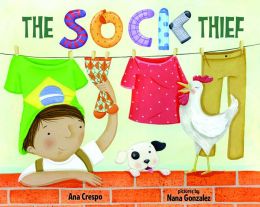
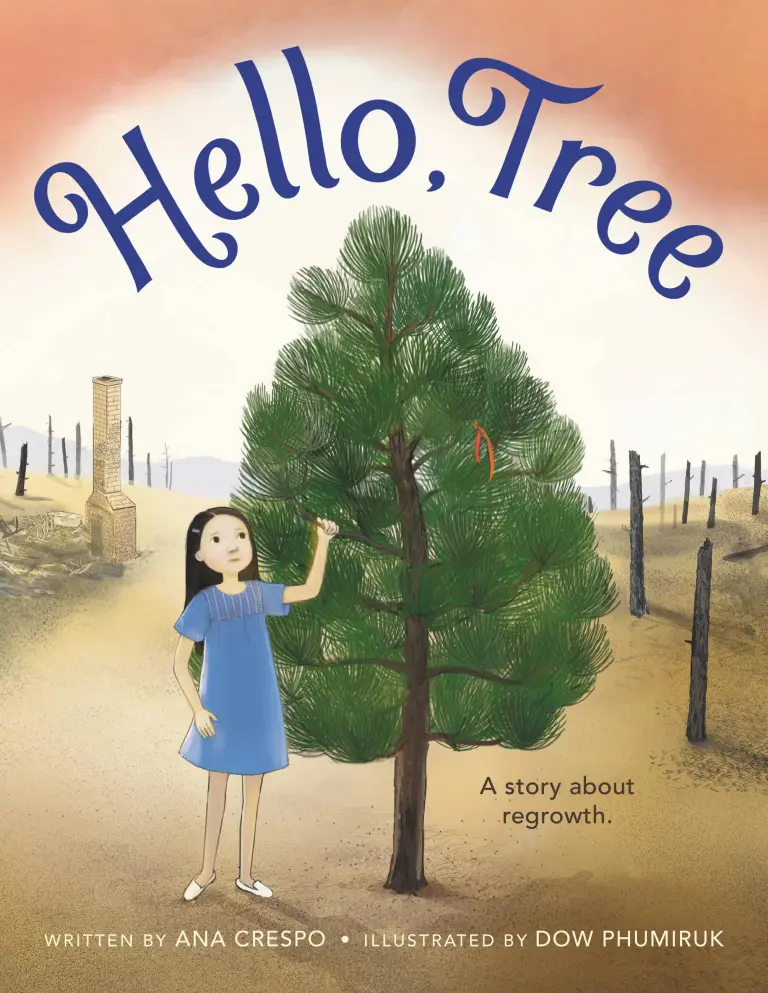
Now her illustrations are published in books with Beach Lane, Disney Hyperion, and Random House.Author turned agent Ana Crespo met her editor, Kelly Barrales-Saylor who was then an editor with Albert Whitman and Co. (she is now an editor with Sourcebooks) during the regional Rocky Mountain SCBWI conference. Ana signed up for a manuscript critique and landed a feedback timeslot with Kelly. After listening to Kelly’s edit suggestions and taking ample notes during workshops, Ana was armed with ideas to improve her writing. Ana went home, reworked and edited her story, then queried Kelly who bought and published The Sock Thief. Ana went on to sell four books to Albert Whitman in a series called JP BOOKS, MY EMOTIONS AND ME. During another conference, she met Alvina Ling Executive Editorial Director of Little Brown Books. Alvina later published Hello Tree, illustrated by Dow Phumiruk.


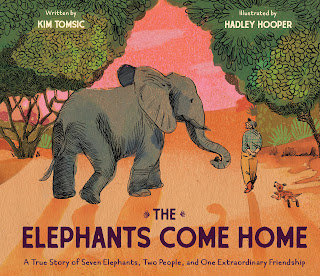
I met my editor, Melissa Manlove of Chronicle Books, at an SCBWI conference, and let’s just say it involved an unofficial scavenger hunt, an Aperol Smash, and a failed pitch. But that failed pitch was part of a connection, and in the end I received a business card and an email address. A year-and-a-half later I worked on the craft points I’d learned at the conference, I worked with my critique group, I read and drafted, and then I sent a query letter about a new manuscript—here’s where I cue the drum roll and build to a frenzy—I got a YES! That’s how I sold the award-winning picture book, THE ELEPHANTS COME HOME

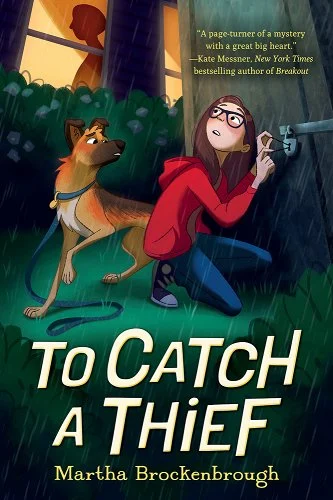
If the above three stories haven't convinced you that conferences are kingmakers, here’s one more. Author Martha Brockenbrough met the editor of her debut picture book The Dinosaur Tooth Fairy at a conference. His name - Arthur Levine of Arthur A. Levin at Scholastic (he is now an editor and founder of Levine Querido). Martha says in an interview with SCBWI, “Truly. Every picture book I’ve ever sold has come directly from my time at an SCBWI conference”. Martha has since sold many picture books and highly-praised novels. Her latest middle grade novel, To Catch a Thief, is out now!

Wednesday, June 7, 2023

6 Golden Rules - Advice From Top Agents and Editors in the Publishing Industry - What Publishers Say About Your First Page Behind Closed Doors

DREAM TEAM:  Nick Healy, Caryn Wiseman, Andrea Brown, Jennifer Mattson, Melissa Manlove

Writers want to know the secret sauce that makes editors, agents and readers turn a first page in a book. Some say authors must get the inciting incident on page one. 

Screenwriting books advise the inciting incident should land on page ten (or for books, the first 10% of a novel). Wendy Loggia of Delacorte Press/Random House once told me it’s hard to care about an inciting incident until we care about the character. She went on to say that many writers want to get to the good stuff first, but it all has to be good.

To further understand the art of the first page, I asked Andrea Brown, president of the

Andrea Brown Literary Agency (ABLA), to host a panel session during the Big Sur in the Rockies writing workshop held in Boulder, Colorado. On a rainy Saturday afternoon, participants submitted the first page of their work-in-progress and gathered to hear feedback from a dream-team of publishing professionals—Melissa Manlove from Chronicle  Books, Nick Healy from Capstone Publishing, and three ABLA agents: Andrea Brown, Caryn Wiseman and Jennifer Mattson.  The panel provided insight on what works and what doesn’t on the first page of manuscripts, everything from picture books to YA novels. 

Here’s what I heard:
1.  Don’t rob readers of experiencing the emotional state of the character. This is another reason agents and editors (and readers) want you to SHOW DON’T TELL. For example, writers should not write George was upset about his report card—that TELLS the emotional state. Write something along the lines of George wadded up his report card and shoved it to the bottom of his backpack

2.  Picture Book Writers—WATCH OUT for subjective-clause filled sentence structure. Instead, choose an appropriate sentence structure for your audience. Let sentences end so readers land on an idea. Simplify your language and let the art carry a good portion of the story's weight. (And on a sidenote, it’s a good idea to keep emotional conflict out of bedtime stories).

3.  All Manuscripts—
·        Avoid over choreography.
·        Read your pages out loud and listen for repeating words or repeating a character’s name—fix if you’re over using it and it doesn't sound natural.
·        Choose active verbs. Instead of using “to be” verbs, choose verbs powerful enough to eliminate adjective and adverbs.
·        Remember that books set in the 1980’s and 90's are now considered historical fiction.
·        Don’t lead with generic circumstances that stay generic, stay away from common storylines and add something fresh and original.
·        Don’t write a book with didactic intentions and please don’t write with a didactic tone; kids will see right through this. “We don’t go to stories for lessons,” says Melissa Manlove  (though please see Melissa’s additional feedback listed at the end of this article).
·        Be careful so that you’re not long and heavy on details. Readers don’t want to wade through the mundane to get to the good.
·        “Many editors dislike prologues and we want you to be as rejection-proof as possible so don’t use them unless you really must.” Andrea Brown
·        Some panel members are not fans of mixing anthropomorphized animals with talking humans. That’s not a rule, just a note of preferences when querying this panel.
·        The Picture Book industry is currently hot on having character-driven picture books, but characters still needs to have a motivation.   
·       

4.  Using illustration notes in picture books. Please know this varies between editors (for example, never (never ever) send an illustration note to Beach Lane Books). Per the members on this panel, illustration notes are fine, but only if it is necessary for the editor or agent to get an inside joke or a something that is not relayed in the words. Do not use illustration notes to describe your character or provide unnecessary art direction.

5.  Writing in Rhyme. If you are writing in rhyme, please take a look at any book that’s won a Geisel Award (p.s. fun fact—Andrea Brown worked with Theodore Geisel long ago!).
I’ve attended dozens upon dozens of conferences, and though many agents and editors say they don’t like rhyme, many also say it’s because they don’t like bad and forced rhyme. Furthermore, if a story rhymes in English, that doesn’t mean it’s going to rhyme in French or Spanish, so rhyming books are difficult to sell beyond the U.S.  

6.  Author/Illustrators—if you work as both an author and illustrator, you should submit a sketch dummy for your full picture book along with only a couple of pieces of finished art.

**Post workshop Melissa and I chatted, and she states there’s another side to this list of advice. To learn more, I suggest you read her interview titled “Noir and Horror for your Kindergartner” by Maggie Tokuda-Hall posted on the Boing Boing blog 


Sunday, January 23, 2022

Heart in Children's Literature by Kim Tomsic


Any writer trying to tackle the art of composing a children’s story will agree—it’s tough work. Whether writing a 500-word picture book or a 75,000-word novel, writers face a juggling act of theme (without being didactic), character (without being overly cutesy), story (with the perfect pace), and more all in effort to create that sweet balance of delight, entertainment, meaning, and connection.     But what makes a story good? In
Celebrating Children's Books: Essays on Children's Literature
, Arnold Lobel says, “A good picture book should be true. That is to say, it should rise out of the lives and passions of its creators.” Perhaps this statement could be pushed a step further, so it reads: A good children’s book (picture book through young adult novel) should be true. That is to say it should rise out of the lives and passions of its creators and have a placeholder for a child to insert themselves and their emotions. A good book should have heart.
In author Kate DiCamillo’s 2014 Newbery speech, she said, “…[those] working on stories, bookmaking, and art are given the sacred task of making hearts larger through story.” But what is heart and how does an author write it into a story? To figure this out, I asked three experts for their thoughts on heart in children’s books: Author Beth Anderson, Senior Editor at Chronicle Books, Melissa Manlove, and Senior Editor at HarperCollins, Maria Barbo.
First meet Beth. Not only is Beth Anderson the author of several picture books, she also writes about emotional resonance in her blog, “Mining for Heart.” Beth says, “Heart” is the treasure I’m after whenever I start a new manuscript. What will make this story more than a reporting of events? What will make the child reader think about the world a little bit differently? What will bring emotional resonance? To me, heart is not the theme or focus nugget but is much deeper and more personal. It emerges when you process the research or story through your own life experiences and passions to find a unique angle or thread. “Heart” can be nebulous, elusive, downright torture to tackle, but it’s what makes a manuscript sing!”
            Beth’s statement screams many truths, (the torture!). She also wonders, “What will
make a child reader think about the world a bit differently?” 

Kimberly Reynolds, author of Children’s Literature: A Very Short Introduction, says, “Because children’s literature is one of the earliest ways in which the young encounter stories, it plays a powerful role in shaping how we think about and understand the world.” Reynolds’ statement echoes Kate DiCamillo. In essence, they are both saying that books play a powerful role that might affect the way children understand and think about race, religion, ableism, neurodiversity, gender identity and more. No wonder DiCamillo calls it a “sacred” task.

Helping a child think about the world a bit differently happens when an author succeeds at writing a story that gets under their skin. There, inside the pulse of the story is the opportunity for a child or young adult to connect, beyond mere amusement, so that the story seeps into their pores and stays long after the last page is read. To jump-start a pulse that pushes a story beyond entertaining-but-forgettable, a book must have 💙heart💙, and to achieve heart the writer must make the reader feel something.
            The Horn Book Magazine also covers the need for children’s stories to have heart and feeling-points. In a November 2012 article titled “Making Picture Books: The Words” by Charlotte Zolotow, Zolotow emphasizes how an emotional impulse to write for children should come out of a real place and says, “Many fine writers can write about children but are unable to write for them.” She says, “The writers writing about children are looking back. The writers writing for children are feeling back into childhood.” It is the feeling-points that writers must tap into if they want to reach a child’s heart.


            The next step in my mission to understand heart took me to Senior Editor Melissa Manlove from Chronicle Books. I knew Melissa would be the perfect person to talk to, because she made me work to uncover the heart of The Elephants Come Home (Chronicle Books, 2021). Back in 2012, I approached Melissa with a true story about a man named Lawrence Anthony who rescued a herd of seven elephants in Zululand, South Africa--the elephants had broken out of every other wildlife sanctuary they'd lived at and had thus frightened many townfolk with their destruction. Now they had to be relocated again, otherwise they would be shot! Melissa and I were both captivated by the many details of this story, but something was missing—that nebulous “something” was the heart. It sat in the outskirts of my writing, but the heart was too buried to actually feel it. I had to work, to dig, to revise until I was able to identify the true piece of me that I was bringing to the story (for me, it was growing up as a military brat and being made to move from home to home, like the elephants).  Once I identified the heart I felt when I thought about this story, I knew I couldn’t shove it front and center because then the story would feel forced. Melissa says heart can’t be in the reader’s face. It needs to be like a treasure chest the reader works to uncover.


Actually, she says it more eloquently. Melissa says, “The writers I admire most tend to be ones that, as they draft, are following a feeling, a hunch, a question. They’re feeling out what seems right and what the story seems to want to be. And THEN from that, later, in the revision process, they figure out what that part of us that lives on story but doesn’t have words of its own to speak was trying to say.
And when you let the story come first, and let it show you by feel where the heart is, then the heart is truly buried in it, like buried treasure, and your story becomes a map for those who will follow you.”

The Elephants Come Home written by me and with gorgeous illustrations by Hadley Hooper, released in 2021 with Chronicle Books. Melissa pushed me to dig deep so that I could leave a treasure for readers to find.

Melissa is a master of theme and thesis and if you ever have the opportunity to attend one of her lectures, it will be the best gift you ever give yourself. For this article, I asked Melissa to expand on feeling points, and she explained that, “Many [stories are] disposable. And that’s because they’re entertaining in the moment, but they don’t mean anything. There’s nothing that stays with you afterward, nothing that nibbles at your imagination and pulls you back to them.” Even if a story is fiction, Melissa says a good story makes us “feel it is true.” Melissa explains that feeling in story is “the language-brain articulating what the story-brain had already known in feeling. A storyteller must evoke a universal feeling.” Melissa says for a story to go deeper, there needs to be “a human experience at the heart of that story that we all can relate to…and a truth about that human experience in the story.”
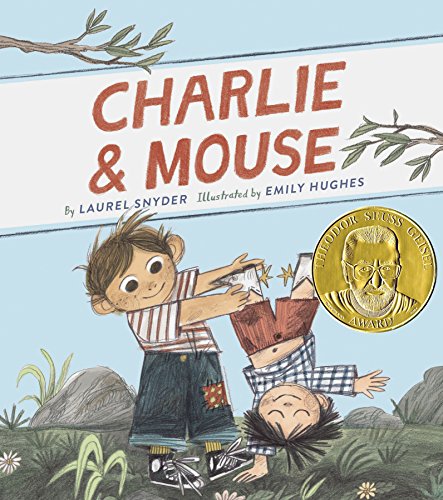
Charlie & Mouse: Book 1: Snyder, LaurelA great example of a human experience at the heart of a story we can relate to is Charlie and Mouse, edited by Melissa Manlove, written by Laurel Snyder, and illustrated by Emily Hughes. The starred review written by Elizabeth Bird in School Library Journal starts out with a negative tone, “Only the jaded should write reviews of children’s books.” The reviewer goes on to say, “If I am a parent and there is any danger AT ALL that my child is going to ask me to read and reread and reread again a piece of tripe that calls itself a children’s book, I at least want some forewarning. I have great love for the sardonic stripe of reviewer. Anyone who has honed their teeth on the literary darlings of sweetness & light.” Elizabeth Bird says she is sick and tired of reading overly-sweet books and goes on to add, “So I sometimes wonder if having my own kids has made me more inclined towards books with a glint of true emotion amidst the adorableness. With that in mind, I guess I could be forgiven for initially thinking that Charlie & Mouse wouldn’t work for me. Heck the eyeballs of these kids take up half their heads as it is. Yet when I read this story what I found was a quietly subversive, infinitely charming, eerily rereadable early chapter book not just worth reading but worth owning.” Though Bird set out to dislike Charlie and Mouse, she felt the heart and says, “my tolerance for the cutesy is distinctly low. So it was with great pleasure that I discovered that while the characters of Charlie and Mouse are undeniably cute, they are not cloying. They are not vying for your love. They are living their lives, doing what they want to do, and if what they do happens to be cute, so be it, but that is not their prerogative.”  Heart won the day.   
            I circle back to Kate DiCamillo, because Flora and Ulysses is a great example of a book with heart, and it was a very human and universal experience that led DiCamillo to write this Newbery Award winning bookthe experience of love, grief, and loss. DiCamillo says her truth rose out of her deep love for her mother who often asked who would take care of her Electrolux vacuum cleaner when she passed away. In January 2009, her 86-year-old mother fell, broke her hip, and died less than a week later. DiCamillo’s heart ached, and she grieved as painfully and deeply as anyone who loses a loved one grieves. In her 2014 Newbery speech, she says she wrote Flora and Ulysses because she “wanted to excavate that grief.” She says, “I wanted and needed to find my way to joy.” This was her truth, but she doesn’t lay it on the page so literally. The truth takes on new forms and shows up in her book through characters that would have made her mother laugh—Flora, the squirrel, the giant donut, and a vacuum cleaner (remember the Electrolux), and it’s not just any vacuum cleaner, but one that gives the squirrel superpowers!
The Newbery committee called Flora and Ulysses a story of hope, joy, and love. Through this book, readers experience real feelings filtered through DiCamillo’s characters while originating from her authentic human experience—her love and grief and also her hope to regain laughter and joy. This echoes back to what Melissa Manlove said, “there needs to be “a human experience at the heart of story that we all can relate to…and a truth about that human experience in the story.” In the end of Flora and Ulysses, readers discover that Flora’s father, George Buckman, has a capacious heart. One that is very large and “capable of containing much joy and much sorrow.” And this is parallel to the truth of DiCamillo’s heart, joy, and sorrow in her mourning process. Authentic feelings that showed up on the pages.

Senior Editor Maria Barbo from HarperCollins says, “Authenticity is key for emotional resonance. That thing you do in private that you think nobody else does—someone does it. A writer or artist has to make themselves vulnerable in that way—to share the secret, raw parts of themselves because relatability stems, in part, from specificity.” She adds a reminder, “The reader’s heart isn’t going to be in it if yours isn’t.” Maria is the editor for Bubbles...Up! a love poem to swimming, written by Jacqueline Davies illustrated by Sonia Sánchez. Each reader might find a different pulse point as they read, but without a doubt this story has heart.💙 
The experts agree—a good book should have heart. Melissa Manlove says, a “good story must feel true.” Maria Barbo says that a reader’s heart can’t be in it unless the writer’s heart shows up first. Beth Anderson challenges authors to find what will cause the child reader to think about their world view. Children’s Literature: A Very Short Introduction says, “Children’s literature can also be a literature of contestation, offering alternative views and providing the kind of information and approaches that can inspire new ways of thinking about the world and how it could be shaped in other, potentially better ways.”  Heart shows up when we process stories through life and literature experiences. Writers all have something that is deeply personal to share. We have something that, as Arnold Lobel says, “…can rise out of [our] lives and passions.” The real question is: are we willing to be vulnerable and write from an authentic place and share our feeling-points so the story can come alive for a child.

At the end of Kate DiCamillo’s Newbery speech, she said that as a child, she sat with books in her tree-house and could, “Feel the stories I read pushing against the walls of my heart.” For her, those stories traveled beyond the boundaries of mere entertainment and had a lasting pulse. Again, DiCamillo says those, “…working on stories, bookmaking, and art are given the sacred task of making hearts larger through story.” Writers can only do this if they dig deep and give of themselves so authentically that a book develops a pulse—a story that not only entertains but also has a placeholder for the child to insert themselves and their emotions. Children deserve stories that have heart.


Tuesday, July 19, 2016

SCBWI Unofficial Scavenger Hunt

Unofficial SCBWI Scavenger Hunt!


How would you like to show up to LA16SCBWI and and win cocktails, conversation, and a critique with Chronicle editor Melissa Manlove? In 2011, I attend the SCBWI summer conference in Los Angeles and noticed an underground scavenger hunt in the works—it was to take place during the Saturday night gala. I quickly formed a team made up of strangers (which ended up being a fast and fun way to make friends). We had a blast working the scavenger hunt, but the best part was winning—we earned a private cocktail party and pitch session with Chronicle Books editor Melissa Manlove. In that hour and a half of sipping lemon drop martinis, Melissa generously shared her knowledge and offered constructive feedback. I learned more about my story and writing than I'd ever understood before. Now I can proudly announce I have two picture book deals with Melissa and Chronicle Books and also...oh, I can't tell you the "also" right now, but here's what you need to know—I am certain that the scavenger hunt was the spark that ignited my writing career. 

It is with great enthusiasm that I say YOU can have the exact same opportunity if you are attending this year’s SCBWI sold-out conference taking place this month in Los Angeles, July 2016.


WHAT:
Unofficial SCBWI Scavenger Hunt! #SCBWIscavenger  (tweet with hashtag #SCBWIscavenger) and/or #LA16SCBWI 

HOW:
On Saturday by 4:30pm, the following will be hidden around the hotel:
a.      small plastic eggs containing scrabble titles
b.      a selection of unusual objects
c.      the indubitable Martha Flynn, who will be the keeper of four blank scrabble tiles (first four teams to find Martha secure a coveted blank tile!)

Please see Melissa Manlove’s Instagram account for photos of the unusual objects and Martha Flynn—the photos will all be posted at 4:30 pm on Saturday. Between that time and 12:00 noon on Sunday, teams will find all they can, and then spell the best word or phrase possible with the scrabble tiles they’ve collected. Post a photo of your team’s word plus any of the unusual objects you find to Instagram and tag Melissa Manlove—you must post your photo to Instagram by 12:00 noon on Sunday and remember to tag to Melissa Manlove!

Important Note: The eggs and objects will be hidden in plain sight, in public areas of the hotel. It will not be necessary to move hotel furniture or decorations to find them, or to step into areas not meant for foot traffic. Please stay respectful of the hotel’s property and tidiness while searching for them.

WHO:
Anyone attending SCBWI LA16. You may form teams with a group size of 6 or fewer people.

WHERE:
The Biltmore Hotel—particularly (but not limited to) the Red Carpet Ball

WHEN:
4:30 pm Saturday July 30th – 12:00 noon Sunday July 31st

Is it worth it...oh yes!!!!!!!!!!! 
THE WINNING TEAM:
Melissa will post the results on instagram.
"The winner will be determined by an utterly subjective and seat-of-my-pants assessment of the team submissions. Having collected objects will likely tip the scales if I am torn between two words/phrases, but the words/phrases themselves, as exhibiting the team’s creativity, will be the primary point of judgement."

**Each team should share this post to their social media to be considered good sportsman**.

PRIZE:
Winners will meet in the bar on Sunday at 4:30 pm for cocktails with Chronicle editor Melissa Manlove (!!!!!!). The winning team has the option to make the cocktail hour into an impromptu critique group with feedback from Melissa—if your team chooses this, each team member should bring up to 5 pages of a work, and enough copies for everyone.


Friday, February 6, 2015

Children's Book Writing Workshop with Andrea Brown Literary Agency


 “BIG SUR IN THE ROCKIES”
CHILDREN’S Book WRITING WORKSHOP

May 22-24, 2015
Chautauqua Park in Boulder, CO
Update:  SOLD OUT


On this page:  (1) Why take this workshop (2) Faculty (3) Link for additional info (4) Registration Form

Why join us for this workshop?

For the past seventeen years, writers have gone to the Big Sur Writing Workshops in California for an intensive weekend of working on manuscripts with publishing professionals who are dedicated to helping new writers. Literary Agent and Executive Director of the Big Sur Writing Workshops Andrea Brown and RMC-SCBWI are bringing that workshop to Boulder, Colorado.

The workshops are designed for writers who have a finished or partially finished manuscript that needs critiquing, revisions, editorial help, and guidance. Our workshop provides tools needed to prepare one’s work for publication as manuscripts must be totally polished to sell in this tight market. The format of the weekend program is different from other conferences and workshops. Writers meet and work closely with faculty members throughout the weekend, from agents to editors to authors. The ratio of faculty to writers is mostly six to one or better.

No two writers have the same experience, and it is the unique nature of our workshops that have made them so popular that a large number of attendees return year after year. The number of writers is limited so there is an intimate feel to the weekend and writers get many opportunities to talk, share information and work with each other, as well as the faculty. The weekend is filled every moment with small critique groups, panels, rewriting time, and delicious meals. The faculty are all established book professionals and wonderful people who know how to target weak spots and help writers polish their works because they care about giving back.

We are proud of our over 20+ success stories (see http://bigsurwriting.wordpress.com/faqs/).  Add the magical setting of beautiful Chautauqua Park at the foot of the Rocky Mountains, and we know you will have an unforgettable, rewarding experience. Our goal is to have writers leave on Sunday with the knowledge needed to see their works published.


What makes the Big Sur Children's Writing Workshops unique?

First
, the format of the weekend is different from other conferences and workshops.  Ratio of faculty to writers is mostly six to one or better.

Second, the weekend is limited to 70 writers -- just enough people to share valuable information and not too many so each writer feels special.

Third, the weekend is packed with critique groups, rewriting time, panel discussions, delicious meals, and much sharing of information. Writers devote the entire time to focusing only on their writing.

Fourth, the faculty are all children's book professionals and wonderful people who know how to target the weak spots and help writers polish their manuscripts.


May 22-24, 2015 FACULTY

EDITORS
MELISSA MANLOVE  is an Editor at Chronicle Books in San Francisco. She has been with Chronicle for 10 years. Her acquisitions tend to be all ages in nonfiction; ages 0-8 for fiction. When acquiring, she looks for fresh takes on familiar topics as well as the new and unusual. An effective approach and strong, graceful writing are important to her. She has 17 years of children’s bookselling experience. P.S. Chronicle reads all unagented submissions as a matter of course, but conference attendees will be able to bypass the slush pile and submit directly to Melissa. More information on that will be given to each attendee.


NICK HEALY is a senior managing editor for Capstone, a children’s publisher with headquarters in North Mankato, Minnesota, and offices in Minneapolis, Chicago, and Oxford, England. He has been with Capstone for ten years. For much of that time he was the editorial director for imprints primarily sold into school libraries, but as Capstone’s trade business grew in recent years, his focus shifted. Nick has helped launch two new imprints, Capstone Young Readers (picture books and middle grade fiction and nonfiction) and Switch Press (YA fiction and nonfiction), and he now works exclusively on trade projects. He is also the author of It Takes You Over, a short-story collection that received a 2013 Friends of American Writers Literary Award, and an adjunct faculty member in creative writing at Minnesota State University.    

LITERARY AGENTS;

ANDREA BROWN
is the President of the Andrea Brown Literary Agency, Inc.  Founded in New York City in 1981, it was the first literary agency to represent both children's book authors and illustrators. Prior to opening her own firm, Andrea was an editor at Alfred A. Knopf, and worked in the editorial departments of Random House and Dell. In 1990, she moved her literary agency to Northern California. Her literary agency has sold over 2,000 books to just about every publisher, from toddler board books to serious, award-winning young adult.  Several have been New York Times bestsellers in the top ten list of children’s books.  Author of Writers’ and Artists’ Hideouts: Great Getaways for Seducing the Muse, Andrea has published numerous articles for Writer’s Digest and other publications.  She is the executive director of the Big Sur Writing Workshops.

CARYN WISEMAN is a Senior Agent at the Andrea Brown Literary Agency. She has been with the agency since 2003 and has sold over 250 books. She represents children’s books only:  young adult and middle-grade fiction and non-fiction, chapter books, picture books (fiction and non-fiction). No matter the genre, Caryn is looking for books with emotional depth and a strong voice; excellent writing in a tightly-plotted story; and characters that stick with her long after she has closed the book. In YA she gravitates toward books that make her think and toward books that make her cry; in middle grade, chapter books, and picture books, laughter tends to be the common thread. Caryn holds an MBA from the Anderson School at UCLA, and a BS from the University of Virginia. To learn more about Caryn’s taste or about deals she’s recently represented, please visit:  http://www.andreabrownlit.com/agents.html

JENNIFER MATTSON has been an agent with Andrea Brown Literary Agency for six years, and began working in the children's book industry immediately out of college -- including five years as an editor at Dutton Children's Books and five years as a Books for Youth reviewer with Booklist.  She represents authors and author-illustrators, all audiences and genres, and looks for clients who bring a deep professionalism, an open mind, and a distinctive, well-developed point of view to their work.  Recent sales include verse picture book Still a Gorilla by Kim Norman to Scholastic; verse picture books Tucked in Tight and Rise and Shine by Linda Ashman, to Disney*Hyperion; narrative picture book Good Morning, Squirrel!  Good Night, Bat! by author-illustrator Paul Meisel, to Boyds Mills; and two more books in the middle-grade Cupcake Cousins series by Kate Hannigan, to Disney*Hyperion.  To give a further sense of her book personality, her favorite titles by non-clients include Marla Frazee's The Seven Silly Eaters; anything by Russell Hoban, Arnold Lobel, or Beverly Cleary; Chris Barton's Shark vs. Train; Noel Streatfield's Ballet Shoes; Esther Hautzig's true survival story, The Endless Steppe; and Philip Pullman's The Golden Compass. For more about Jennifer recent sales, please visit: http://www.andreabrownlit.com/agents.html


AUTHORS

DONNA COONER is a former teacher and school administrator, who now teaches future teachers at Colorado State University. Donna is the author of over twenty picture books. She has also written children's television shows for PBS and textbooks for future teachers. Donna’s debut novel, SKINNY, was named an ALA's Best Young Adult Fiction Award, BEA's Young Adult Buzz Book, and a Bankstreet College's Best Children's Book of the Year. Her new book, CAN'T LOOK AWAY, was released this fall and is a Teen Choice Nominee.


ANNA-MARIA CRUM has published one YA science fiction novel, 19 grade school readers for several educational publishers, and has illustrated over 50 books. She’s a three-time Colorado Book Awards finalist, co-hosts the SCBWI Denver Schmooze, and is a board member for the Picture Book Artists Association. For the past four years she has run Plot Doctors with Hilari Bell because they enjoy helping writers with ailing stories—brainstorming about plot problems is like eating dessert first. Anna-Maria lives in Denver with her dog, Bo, who sometimes sneaks into her illustrations.


LINDSAY ELAND knew she wanted to be a writer ever since the fifth grade, when she won an honorable mention for her book What Can You Learn From A Giflyaroo. Now, twenty-plus years later, she is the author of two middle grade novels, SCONES AND SENSIBILITY (Egmont USA) and A SUMMER OF SUNDAYS (Egmont USA) which was a finalist of the 2014 Colorado Book Award and The Hoosier Award. A true romantic, an avid espresso drinker, and a lover of all that can make her laugh, Lindsay lives in Breckenridge, Colorado, with her husband, their four kids, three dogs, one chameleon, one bearded dragon, and the various bears and foxes that venture into their yard. Her next book, SIX TIMES REVENGE (Greenwillow) will release in Summer 2016.

DAVID MEISSNER is an author, educator, and consultant who has developed creative educational programs, written twenty books for the school market, and interviewed dozens of children’s book authors and illustrators for Reading Rockets. David’s first trade book, Call of the Klondike, won SCBWI’s 2014 Golden Kite Award for Nonfiction and was nominated for the YALSA Award for Excellence in Nonfiction. His website provides a free educators’ guide and tells the story behind the book, including his research trip and historical hike from Alaska to Canada. After seven years in DC and NYC, David is now happily settled in Boulder, Colorado, where he teaches Spanish and is the director of International Programs at the Alexander Dawson School.


JEANNIE MOBLEY writes middle grade and YA fiction. Her debut novel, KATERINA'S WISH (Margaret K. McElderry Books), won the 2013 Colorado Book Award, is on the 2014-2015 William Allen White Award Master List, and represented Colorado at the 2013 National Book Festival.  Her second novel, SEARCHING FOR SILVERHEELS released September 2, 2014, and has been nominated to the Amelia Bloomer List for Feminist Literature. When not writing or reading fiction, Jeannie is a mother, wife, lover of critters, and an anthropology professor at Front Range Community College, where she teaches a variety of classes on cultures past and present.


JEAN REIDY is a children’s author and two-time winner of the Colorado Book Award. She’s written six picture books  -- Too Purpley!, Too Pickley!, Too Princessy!, Time Out for Monsters!, All Through My Town and Light Up the Night.  Jean is a frequent presenter on the topics of literacy, picture books and picture book revision. She writes from her home in Colorado and is represented by Erin Murphy of Erin Murphy Literary Agency. You can visit Jean at www.jeanreidy.com.

DENISE VEGA is the award-winning author of six books for kids, from toddler to teen, including her “blog” books: Click Here (to find out how i survived seventh grade) – a Colorado Book Award winner – and Access Denied (and other eighth grade error messages) as well as Fact of Life #31 (Colorado Book Award winner) and Rock On. Her picture books include Build a Burrito, and the award-winning Grandmother, Have the Angels Come? and her latest: If Your Monster Won't Go to Bed (Knopf/Random House, 2017). Denise is on faculty at Lighthouse Writers Workshop, teaching a range of classes on children's books and is a former Co-Regional Advisor of the Rocky Mountain Chapter of SCBWI. She lives in Denver with her family, and can’t stand cheese so hey, no cheese, please. Find out more at www.denisevega.com.


LINDA ARMS WHITE has written 11 published books, fiction and non-fiction, which have won many awards.  Her book I Could Do That: Esther Morris Gets Women the Vote won the prestigious Christopher Award bestowed on media that “affirm the highest values of the human spirit.”   Through SCBWI and Children’s Authors Bootcamp, White has taught hundreds of writers how to write for children.   Her books include Too Many Pumpkins, Comes A Wind, and Cooking on a Stick.

PRICING

• Registration is
$485.00 for SCBWI members and $535.00 for non-members. This includes the entire workshop, plus dinners and lunches from Friday dinner through Sunday lunch. (Breakfasts are on your own). 

Conference cancellation policy: 75% REGISTRATION REFUND IF CANCELED THREE WEEKS PRIOR TO STARTING DATE.  After that, no refund.

• Registration does not include lodging. Want to stay overnight? Cottages on the grounds of Chautauqua Park may be booked for the weekend through Chautauqua’s Lodging Office. Make your reservation directly at
lodging@chautauqua.com or call 303-952-1611. It’s a holiday weekend, so I advising making your reservation soon.  Four sizes of cottages (efficiency, one-, two-, and three-bedroom) are available starting from $185 per cottage per night, plus 12.3% lodging tax.  All cottages have fully equipped kitchens. For more information, see http://www.chautauqua.com/lodging/reservations/ Book early and mention you are with the RMC-SCBWI workshop.

Chautauqua cottage cancellation policy: Please verify on your own with Chautauqua lodging for updates on prices and cancellation policy.
  
• If you would like to bring a guest for dinner on Friday evening, extra dinner tickets are $55 per person.  For Saturday evening, extra tickets are $35 per person.

____________________________________________________________________________________

SUBMISSION and REGISTRATION INSTRUCTIONS

1.  Print and fill out the Registration Form at the end of this brochure.
Make your check payable to “RMC-SCBWI” and send with registration form to: "Big Sur in the Rockies Children's Writing Workshop"  c/o Jerilyn Patterson, 1610 Pace Street, Suite 900 BOX #315, Longmont, CO 80504. Your manuscript submission will not be considered until payment has been received.

2.  Submit the first two pages of one manuscript (maximum 500 words) to:
ktomsic@gmail.com with “Big Sur workshop submission” in the Subject line.  Send the submission in the body of the email, not as an attachment.  If sent as an attachment, it will not be read. You will receive notification that your document has been received. If you do not receive notification that your document has been received and is under consideration, please double check email address and resend.

Deadline for submission is April 2015 (specific deadline date coming)

Note: Works may not be accepted if the content falls outside the faculty area of expertise, or if the executive director feels the work and writer would not benefit from attending the workshop. You will be notified as soon as possible, with a full refund of registration fee, should your work not be approved. Notification of acceptance or non-acceptance is via email.  If you have not heard by close of registration, please contact the registrar. 

QUESTIONS: write to  Registrar@RMCSCBWI.ORG

Register early.  Space is limited so we can keep the workshop small for personal attention.

THINGS TO BRING

You will meet with two different faculty members, one leading a first critique group and the other leading a second critique group.  Each critique group will meet twice.  Each critique group meeting will last two hours. 

  • 7 copies of a short manuscript or chapter to work on in your first critique group.  There may be time to work on more than one project, so feel free to bring another manuscript or a different section of the first manuscript. (Think in terms of sections that can be discussed productively in 20-25 minutes; up to five pages usually works well.)

  • 7 copies of a short manuscript or chapter to work on in your second critique group.

  • 5 copies of a query letter, cover letter, first pages or pitch to work on in panel sessions. Check back for more details.

  • Plan to write, so bring works-in-progress and writing equipment.    
Note:  For printing and photocopying, a FedEx Office is located at 2616 Baseline Road, one mile away (east) in the shopping center at the corner of Baseline Road and Broadway Street.

  • A flashlight (for walking at night) and comfortable shoes.  Nearby trails lead into The Flatirons foothills.   

Big Sur in the Rockies Children’s Writing Workshop
May 22-24, 2015

Name __________________________________________________________________
Address_________________________________________________________________
City  ____________________________________  State ___________Zip____________
E-mail address __________________________  (for confirmation and other information)
Phone ( _____ ) _________________________

I am a:   q  RMC-SCBWI member  (Colorado and Wyoming)  q  other SCBWI region’s member  
q  not yet an SCBWI member

$_____ SCBWI member  $485.00             
$_____ Non-SCBWI member  $535.00
$_____ Extra Friday dinner ticket(s) for guest(s) @$55                                   # ___ Friday
$_____ Extra Saturday dinner ticket(s) for guest(s) @$35             #___ Saturday 
               
$ _____ TOTAL

q  Please include vegetarian entree options for me.
q  Please include lactose-free entree options for me.
q  Please include gluten-free entree options for me.

I’d prefer a critique group with writers of (check a maximum of two, i.e., 1 for each of your 2 groups):
      q  Picture books
      q  Early readers and Chapter books
      q  Middle-grade novels
      q  Young Adult novels
      q  Nonfiction
      q  Combination
[PLEASE NOTE:  we’ll do our best, but we’ll be limited by the distribution of workshop attendees.]

q  I have fellow critique group members also attending this workshop.  If possible, please put us in
       different groups.  Names of fellow members: ____________________________________________
      __________________________________________________________________________________

REGISTRATION:  Print and fill out this registration form.  Make your check payable to “RMC-SCBWI” and send with registration form to:  “Big Sur in the Rockies,” c/o Jerilyn Patterson, 1610 Pace Street, Suite 900 BOX #315, Longmont, CO 80504

Blog Archive