Welcome!

Welcome to the Bookshelf Detective, a site packed with tricks and tips for readers and writers of children's literature. Thank you for visiting!
Cheers,
Kim Tomsic
Showing posts with label how to. Show all posts

Tuesday, April 8, 2025

Top 15 Tips for Your Path to Publication


Congratulations on pursuing your writing and publishing dreams. Let’s go!


1.             READ READ READ! Read A LOT of books in the genre in which you want to be published, and make sure you read a lot of current books. When you find a book you love, spend extra time trying to identify: 

    • two “tricks” the author used to get you (the reader) to root for the protagonist and the protagonist’s goals, 
    • and and notice when and how the theme gets set up..


2.             Keep a running list of comp titles: *Publishing is a business, and publishers will want something to compare potential revenue to. Stay aware of your genre and note what books might be comparable titles to your story so you can be ready when it’s time to pitch. 

3.             Follow the hashtag #MSWS which stands for Manuscript Wish List. That’s where agents list the type of manuscripts they’d like to read. Watch social media for pitch events and mentorship opportunities.

4.             Learn about PAY. #PublishingPaidMe was created on Twitter by L.L. McKinney and spearheaded by McKinney and Tochi Onyebuchi. You can find and view the public, anonymous spreadsheet link on Melanin in YA’s blogsite or here, brought to you by The Transparency Project.

5.             Join or form a critique group with writers who write and read in your same genre (e.g., if you write YA fantasy, critique with fellow YA fantasy writers).

6.             Join  SCBWI aka Society of Children’s Book Writers and Illustrators. It’s an organization of authors and illustrators who help other authors and illustrators. You will learn so much about craft and professionalism by participating in SCBWI events.

7.             ENGAGE Attend a conference or webinar. It will close the learning gap quickly. If you do, make sure you sign up for a one-on-one critique.

8.            Hold yourself accountable: Join 12x12 which was formed by Julie Hedlund. What is it: "12 x 12 is an inclusive and supportive learning community of picture book authors and illustrators at all experience levels. You’ll get accountability, encouragement, and resources to support you in achieving your goal of writing one new picture book draft each month (or at least writing more than you would on your own)."

9.             If you want to write picture books, read Ann Whiteford Paul's revised and expanded edition Writing Picture Books. If you are writing a novel, check out books on structure like Save the Cat Writes the Novel by Jessica Brody.

10.         BIC: Get your “Butt In Chair” and write every day. Have a goal of how many words a day you plan to write—and by the way, word count is the lingo of the writing world. It's not about page count, but instead word count.   

11.          Keep a Collections Journal of ideas, words, names, smells, phrases, etc.

12.          Connect/Community : See if someone in your area hosts a writer connect (a writer get-together)—a free event with a monthly topic. Topics can be anything from novel structure, character development, etc. You’ll find this easily if you join SCBWI.

13.         READ BLOGS: My blog is PACKED with advice on things like making a revision checklists, how to write a query letter, how to use back matter, etc. Scroll on through to read my tips (aka Three Parts of a Query Letter).

14.         Get Social: I stay busy with Instagram. However, many kid-lit authors now use Blue Sky (I haven’t checked it out yet).

15.         Be a good Literary Citizen: See what’s happening in Writer's Digest. If you’re advanced in the writing and query process, you might even subscribe to Publishers Marketplace. There, you’ll be able to see which agent represents xyz book and which publisher bought it and for around how much money. Check out The Horn Book magazine. Read School Library Journal if you have time.

BONUS! Take one of my classes at UCLA Extensions or wherever I might be speaking!


Other posts you might want to click on:

3 Parts of a Query Letter and 5 Parts of the Hook Paragraph - Your Guide to Connect with a Literary Agent

The Ultimate Editing and Revising Checklist! (53 points!)

5 Pro-Tips About Back Matter

The Mistake to Avoid When Writing Your Story

11 Mistakes to Avoid When Querying a Literary Agent

7 Quick and Easy Tips for Writing Dialogue Tags

What's a HIGH CONCEPT hook?


Publishing 101 

Friday, October 27, 2023

Sensitivity Readers and Knitting


When you write outside of your lived experience, a sensitivity reader is someone who helps make sure that your writing delivers accurate and authentic representation rather than perpetuating a stale, harmful, or even wrong stereotype. 

The best presentation I've attended on this subject was given by the Newbery Award-Winning author Linda Sue Park. Park says that it's hard to accurately write a character from a different culture if you've never sat at their kitchen table. She used knitting to demonstrate her point.

Park has been a life-long knitter. She showed the audience an image of the proper way to hold knitting needles—ends down, tips up. Then she showed us images featuring illustrations of characters knitting but holding the needles the wrong way (ends up, tips down). Clearly, the illustrator of the inaccurate images isn't a knitter. In fact, they've probably never held knitting needles. It's not their lived experience.

💡This was a lightbulb moment for me. When Park gave this simplified example, I thought


of all the times I've seen purported yoga instructors (aka actors) on television holding a pose the wrong way. Knitting needles and yoga poses are minor mistakes, but Park's point demonstrates how easy it can be to get the details wrong. Sometimes, inaccurate details harm the suspension of disbelief, and sometimes they are culturally wrong and/or offensive errors.

AVOID ERASURE: Erasure is when an author shies away from featuring an inclusive cast of characters, because they are only comfortable writing in their lane. Writing takes work. A lot of work. I am not suggesting appropriation or writing a protagonist from outside your experience, but I am urging you not to erase a group of people either. 

In my upcoming 2024 novel, The Truth About 5th Grade (HarperCollins, summer 2024) co-written with Mark Parisi,  I've written a scene where a supporting character celebrates Hispanic Heritage Month. I am not Latinx, so I hired sensitivity readers to take a look at my manuscript. I also leaned into my critique partners who are Latinx. The sensitivity readers and critique partners were able to share valuable insights on ideas and issues that I would have never thought of on my own (e.g., adding a cumbia playlist).  

Here is a fantastic four-minute video (4:21) that explains why a sensitivity reader can be a great idea if you are writing outside of your lived experience.  

If you have time for an 18-minute video, this TED Talk by Chimamanda Ngozi Adichie called “The Danger of a Single Story” is excellent! 

Monday, May 23, 2022

15 Ways to be a Great Literary Citizen


Literary citizenship goes beyond just wanting a literary career. It’s about being an active, supportive participant in the writing community.

Don’t worry! You don’t have to have a big budget to be a great literary citizen. In fact, most of us cannot run to our favorite bookstores every week (or every month!) to buy the latest book we're excited about. Fortunately, there are many free ways to partake in serving as a stellar literary citizen. That's right! No matter your background or socioeconomic situation ★ you belong to this community ★ and you can engage. Here is a list of both big-budget, budget-crunching, and free ways to participate. Find what fits for you!


1.       Check out and review books from your library

2.      Read, read, read!

3.      Request that your library purchase a book for their collection. Most libraries have a “purchase request” or “suggest a purchase” form for members to fill out. All you need to do is google is your library’s name along with the words, “suggest a purchase.” Here’s more advice from EverydayReading.

4.      Shop indie! Indie bookstores and your local Barnes and Noble are packed with employees who love reading and will guide you to your next great book. Frommers created this fun list of indiebookstores across America. Bookstores I particularly love include TheWandering Jellyfish in Niwot, Colorado; Boulder Bookstore in Boulder, Colorado, BookBar Denver, Tattered Cover, and Second Star to the Right in Denver, Colorado, and Changing Hands Bookstore in Phoenix and Tempe, Arizona. Please support indies by telling me about your favorite bookstore in the comment section below!

5.     
Attend a book launch party, reading, or signing! Your bookstore probably has a monthly list featuring author events. Even if you can’t buy a book, please consider attending the launch party. You’d be surprised how often I’ve seen award-winning, best-selling authors speak to a room of only five people. Please fill those seats, say hello to the author, and then go to your library and request the book!
 

   6.      Celebrate authors and illustrators on their awards, lists, launches, book-birthdays and/or good news! If you have Twitter, Instagram, TikTok, Facebook, or any other social media account please help celebrate and spread the word!

   7.      Subscribe to free blog sites. In September 2021, Writer’s Digest published their 101 Best Websites for Writers

8.     Talk to event organizers about hosting inclusive events with diverse representation, perhaps even serve as an event volunteer! 

9.      Ask your local school and library to host an author or illustrator presentation. There are public and private funds for such purposes—don’t let them go unused!

10.  Subscribe to literary magazines such as Writer’s Digest , The Horn Book, or Poets & Writers

11.   Share articles or Op-eds written by your favorite authors. For example, last Sunday Meg Medina had an Op-ed in The Los Angeles Times titled: Want to shape your bicultural child’s sense of self before society does?  Lead them to books

12.  Join a critiquing group

13.  Write a Goodreads review

14.  Give Books as Gifts!

15.  Post an Amazon review

And remember to stay informed, stay active, and READ READ READ!


Tuesday, February 2, 2016

Nonfiction Summit for Children's Book Writers


RMC SCBWI Spring 2016 Workshop
  
  
On April 30, 2016 the RMC SCBWI will host a Nonfiction Summit in Boulder, Colorado.

Only 45 spots will be available for this event
☼Only 20 critique slots will be available for participants
Member of SCBWI may register now
Nonmembers may register starting February 8 if spots remain

Who should sign upThis event is for all children's book writers. If you are interested in learning from the senior editor of Calkins Creek Books, an imprint of Boyd's Mill Press, you should come! If you are interested in learning from the senior editor of History and World Cultures of HIGHLIGHTS Magazine, you should come! If you have a passion for nonfiction, and want to hear from the SCBWI Golden Kite winner, you should come! If you write fiction and you're curious about applying your skills to nonfiction, you should come! If you are interested in learning about writing for the educational market, you should come! If you would like to hone your craft as a writer, you should come!

The gist:  YOU should come!

Cost: $120.00

Details: CLICK HERE

Featured faculty
              ·       Carolyn Yoder, senior editor of Calkins Creek Books, the U.S. history imprint of Boyds Mills Press and senior editor of history and world cultures at HIGHLIGHTS Magazine
·         David Meissner is an author and winner of the Golden Kite Award in Nonfiction. David will talk about about digging deeper: How Authentic Research Leads to Authentic Writing. 
·         Terri Farely is the author of several award winning books. She wrote 37 fiction books before writing her first nonfiction work. Terri will discuss Writing Nonfiction for the Fiction Writer. 
·         Laura Perdew is the author of more than a dozen books and will discuss how to break into writing for the educational market. 
Visitthe RMCSCBWI events pages for more details and remember to register soon!

(Rory's Promise by Michael MacColl and The Big Splash by Barb Rosenstock are nonfiction books published by Calkins Creek Books. You Nest Here With Me by Jane Yolen; Heidi Stemple, Illustrated by Melissa Sweet published by Boyd's Mill Press is described as a  "lyrical bedtime book ode to baby birds everywhere and to sleepy children, home safe in their own beds."


Friday, February 7, 2014

A Smattering of Advice: How Writers Can Prevent Hours of Rewriting

A SMATTERING OF FIVE-MINUTE ADVICE that can save you hours of rewrite time:

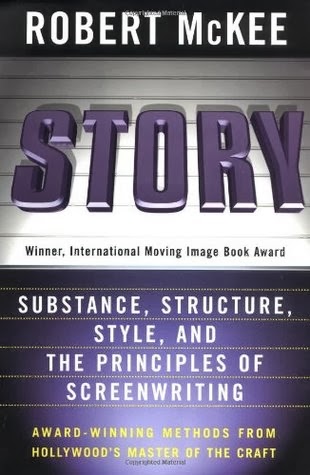
I’m a big SAVE THE CAT groupie. SAVE THE CAT was written by Blake Snyder who often quotes sources of inspiration. One of these sources Synder quotes is Robert McKee's book STORY. 


The full title is STORY: Substance, Structure, Style, and the Principles of Screenwriting. Screenwriting for me translates to story writing (since I think in terms of books), and McKee is brilliant on the subject—talk about having Ah-ha moments! Sometimes ideas are simple, but we as writers get lost in language, ideas, humor, voice, etc., we forget to focus on structure.

McKee says every scene in your story must have a value at stake. 


At the beginning of each scene, ask yourself what value is at stake in my character's life. A value could be love, life, acceptance, a belief system, family foundation, friendships, etc. Determine the value at stake in the scene and then ask: How is the value charge at the beginning of the scene different from that value changed by the end of the scene. Think of these charges as positive or negative charges. 

Different scenes can have different values at stake, but the charge always has to change in every single scene or the scene has no place in your story.

TAKE AWAY:
********If the value condition does not change from the beginning of the scene to the end of the scene then nothing meaningful in the scene took place.********** If that's the case, delete or rewrite the scene.

Blog Archive