Welcome!

Welcome to the Bookshelf Detective, a site packed with tricks and tips for readers and writers of children's literature. Thank you for visiting!
Cheers,
Kim Tomsic
Showing posts with label SCBWI. Show all posts

Tuesday, April 8, 2025

Top 15 Tips for Your Path to Publication


Congratulations on pursuing your writing and publishing dreams. Let’s go!


1.             READ READ READ! Read A LOT of books in the genre in which you want to be published, and make sure you read a lot of current books. When you find a book you love, spend extra time trying to identify: 

    • two “tricks” the author used to get you (the reader) to root for the protagonist and the protagonist’s goals, 
    • and and notice when and how the theme gets set up..


2.             Keep a running list of comp titles: *Publishing is a business, and publishers will want something to compare potential revenue to. Stay aware of your genre and note what books might be comparable titles to your story so you can be ready when it’s time to pitch. 

3.             Follow the hashtag #MSWS which stands for Manuscript Wish List. That’s where agents list the type of manuscripts they’d like to read. Watch social media for pitch events and mentorship opportunities.

4.             Learn about PAY. #PublishingPaidMe was created on Twitter by L.L. McKinney and spearheaded by McKinney and Tochi Onyebuchi. You can find and view the public, anonymous spreadsheet link on Melanin in YA’s blogsite or here, brought to you by The Transparency Project.

5.             Join or form a critique group with writers who write and read in your same genre (e.g., if you write YA fantasy, critique with fellow YA fantasy writers).

6.             Join  SCBWI aka Society of Children’s Book Writers and Illustrators. It’s an organization of authors and illustrators who help other authors and illustrators. You will learn so much about craft and professionalism by participating in SCBWI events.

7.             ENGAGE Attend a conference or webinar. It will close the learning gap quickly. If you do, make sure you sign up for a one-on-one critique.

8.            Hold yourself accountable: Join 12x12 which was formed by Julie Hedlund. What is it: "12 x 12 is an inclusive and supportive learning community of picture book authors and illustrators at all experience levels. You’ll get accountability, encouragement, and resources to support you in achieving your goal of writing one new picture book draft each month (or at least writing more than you would on your own)."

9.             If you want to write picture books, read Ann Whiteford Paul's revised and expanded edition Writing Picture Books. If you are writing a novel, check out books on structure like Save the Cat Writes the Novel by Jessica Brody.

10.         BIC: Get your “Butt In Chair” and write every day. Have a goal of how many words a day you plan to write—and by the way, word count is the lingo of the writing world. It's not about page count, but instead word count.   

11.          Keep a Collections Journal of ideas, words, names, smells, phrases, etc.

12.          Connect/Community : See if someone in your area hosts a writer connect (a writer get-together)—a free event with a monthly topic. Topics can be anything from novel structure, character development, etc. You’ll find this easily if you join SCBWI.

13.         READ BLOGS: My blog is PACKED with advice on things like making a revision checklists, how to write a query letter, how to use back matter, etc. Scroll on through to read my tips (aka Three Parts of a Query Letter).

14.         Get Social: I stay busy with Instagram. However, many kid-lit authors now use Blue Sky (I haven’t checked it out yet).

15.         Be a good Literary Citizen: See what’s happening in Writer's Digest. If you’re advanced in the writing and query process, you might even subscribe to Publishers Marketplace. There, you’ll be able to see which agent represents xyz book and which publisher bought it and for around how much money. Check out The Horn Book magazine. Read School Library Journal if you have time.

BONUS! Take one of my classes at UCLA Extensions or wherever I might be speaking!


Other posts you might want to click on:

3 Parts of a Query Letter and 5 Parts of the Hook Paragraph - Your Guide to Connect with a Literary Agent

The Ultimate Editing and Revising Checklist! (53 points!)

5 Pro-Tips About Back Matter

The Mistake to Avoid When Writing Your Story

11 Mistakes to Avoid When Querying a Literary Agent

7 Quick and Easy Tips for Writing Dialogue Tags

What's a HIGH CONCEPT hook?


Publishing 101 

Thursday, March 13, 2025

3 Parts of a Query Letter and 5 Parts of the Hook Paragraph - Your Guide to Connect with a Literary Agent


Agents receive hundreds of queries per month. Want to be noticed? Present a clean, easy-to-read letter


that follows the agent's guidelines. Live in the paradox of writing a robust but short letter. Keep it down to three paragraphs that are easy to skim. A scannable letter follows the formula of

THE HOOK

THE BOOK

THE COOK.

HOOK: The “hook” paragraph includes 5 important components:


1.       Say why you chose that agent (WHY them in particular). One short and sweet sentence is enough.  

    2.      Word count

    3.      Genre (e.g., middle grade fantasy, contemporary YA, narrative nonfiction picture book, etc.)

    4.      Title of your manuscript (capitalized)

    5.      Hook (aka name comp titles) – a comp is used to fast-forward a reader’s understanding of what you are pitching. Don’t compare yourself to obscure books or little-known writers because that does not achieve your goal of creating a quick set-up in the reader's brain. Do a lot of research! Find comps. They help hook an agent. 


EXAMPLE in order of the five components: 

Dear Rossi,

I enjoyed your interview in Writer's Digest and reading about your desire to represent nail-biting middle grade novels that feature strong STEM girls. Please accept this query for my 31,000-word spooky middle-grade manuscript, THE HAUNTING OF HAMLET MIDDLE SCHOOL. Fans of Ellen Oh’s Spirit Hunters meets Aimee Lucido’s Emmy in the Key of Code will also be fans of this story.  

THE BOOK:  The “book” paragraph succinctly tells four things about your manuscript: 


  1.  your flawed protagonist 
  2. their goal
  3. the stakes 
  4. the theme
Write your "book" pitch as one compelling paragraph with those four parts in mind. You will not reveal the ending unless the agent’s guidelines ask you to include a synopsis (a synopsis tells the full story—the beginning, middle, and ending). The “book” paragraph might read like a jacket flap. Keep in mind, it is to entice the agent to open the manuscript.


THE COOK
: The “cook” paragraph is about you as it relates to writing. Remember, keep it concise and professional for the win. You don’t have to have publishing credit to write your cook paragraph. If you are a member of SCBWI, say so. If you are taking writing courses, mention that. If you are an active member of a critique group, you can even mention that. If you are pitching a nonfiction book, mention your credentials to write that book (e.g., you are writing a space nonfiction and you work for NASA, mention that).

Here is an example of a short-and-sweet “cook” paragraph:

By day, I teach coding for the University of California Berkeley, by night I take creative writing courses through UCLA Extensions.  I am an active member of SCBWI and belong to two critique groups. As per your submission guidelines, I’ve pasted the first ten pages in the body of this email.

Thank you for your consideration.

Sincerely,

Gold D. Locks

Phone

Email address

P.S. Check out a current list of agent interviews on Natalie Aguirre's blog, Literary Rambles.

Wednesday, July 5, 2023

4 Success Stories - How a Children's Book Writing & Illustrating Conference Launched the Careers of Four Authors and Illustrators

Conferences are kingmakers. It’s true! Talk to published authors and illustrators, and you'll discover that more often than not an attendee’s career moved into hyper-drive after taking part in a conference. A conference is where you meet people with a shared passion, and you develop new neural pathways for craft. Ideas bubble to mind, and important connections are made. Many publishing hopefuls met their agent or editor attending breakout sessions, getting critiques, or selecting the right seat at an open-table luncheon. 


Illustration courtesy of Brooke-Boynton Huges
Illustrator Brooke Boynton Hughes attended SCBWI's International conference in California more than a decade ago. She entered her portfolio in the illustrator showcase, didn't win but got noticed. In fact, she signed with agent Marietta Zacker and landed a book deal that same year! Furthermore, Brooke signed up for the one-on-one portfolio review. She received feedback throughout the conference weekend and learned nuanced details about craft. When she returned to the event the following year (2013), she walked away as the Portfolio Showcase Honor Award winner and the Mentorship Award winner! In 2014, she received the Portfolio Honor Award at SCBWI's Winter Conference in New York. 

    Brooke's success didn't come from one conference. She says, 

I think the most important part about attending conferences is the chance to have one-on-one portfolio critiques and the opportunity to learn about your craft.  I attended six or seven international conferences and three or four regional conferences before I was published and before my portfolio was recognized in the showcase."  
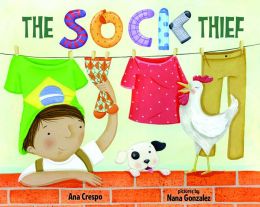
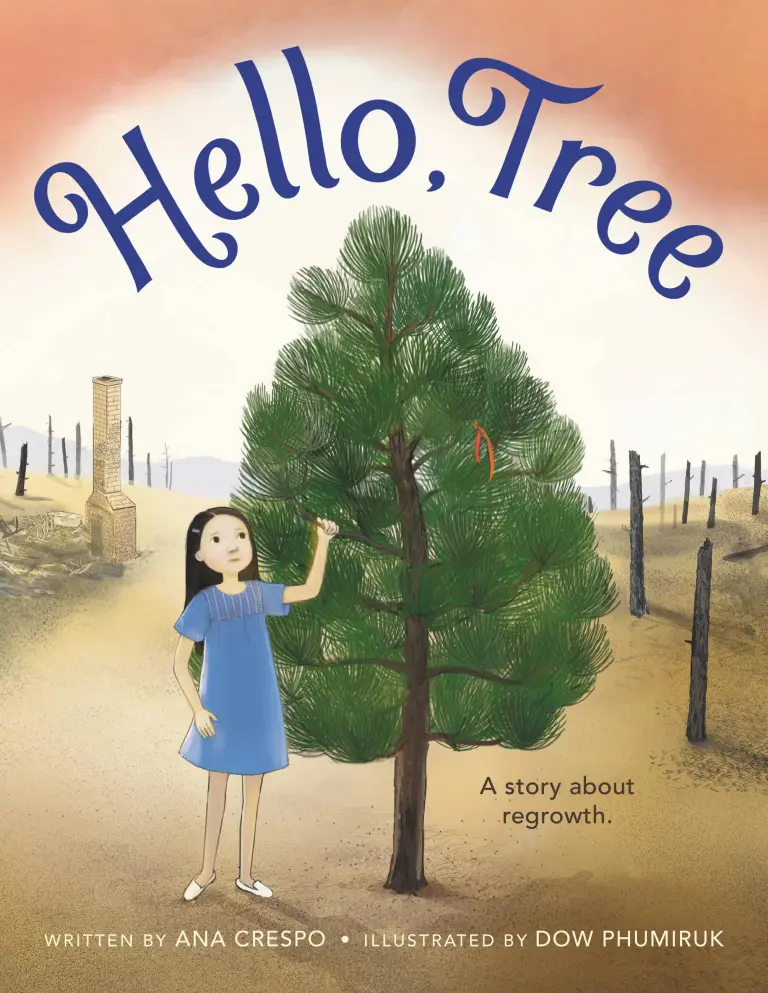
Now her illustrations are published in books with Beach Lane, Disney Hyperion, and Random House.Author turned agent Ana Crespo met her editor, Kelly Barrales-Saylor who was then an editor with Albert Whitman and Co. (she is now an editor with Sourcebooks) during the regional Rocky Mountain SCBWI conference. Ana signed up for a manuscript critique and landed a feedback timeslot with Kelly. After listening to Kelly’s edit suggestions and taking ample notes during workshops, Ana was armed with ideas to improve her writing. Ana went home, reworked and edited her story, then queried Kelly who bought and published The Sock Thief. Ana went on to sell four books to Albert Whitman in a series called JP BOOKS, MY EMOTIONS AND ME. During another conference, she met Alvina Ling Executive Editorial Director of Little Brown Books. Alvina later published Hello Tree, illustrated by Dow Phumiruk.


I met my editor, Melissa Manlove of Chronicle Books, at an SCBWI conference, and let’s just say it involved an unofficial scavenger hunt, an Aperol Smash, and a failed pitch. But that failed pitch was part of a connection, and in the end I received a business card and an email address. A year-and-a-half later I worked on the craft points I’d learned at the conference, I worked with my critique group, I read and drafted, and then I sent a query letter about a new manuscript—here’s where I cue the drum roll and build to a frenzy—I got a YES! That’s how I sold the award-winning picture book, THE ELEPHANTS COME HOME

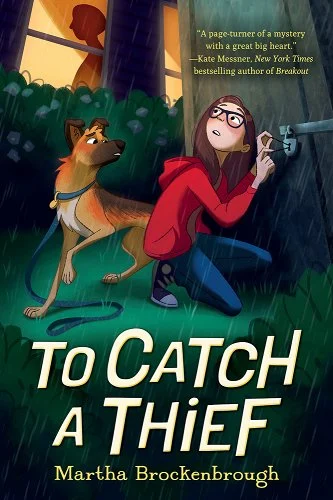
If the above three stories haven't convinced you that conferences are kingmakers, here’s one more. Author Martha Brockenbrough met the editor of her debut picture book The Dinosaur Tooth Fairy at a conference. His name - Arthur Levine of Arthur A. Levin at Scholastic (he is now an editor and founder of Levine Querido). Martha says in an interview with SCBWI, “Truly. Every picture book I’ve ever sold has come directly from my time at an SCBWI conference”. Martha has since sold many picture books and highly-praised novels. Her latest middle grade novel, To Catch a Thief, is out now!

Tuesday, June 13, 2023

5 Quick Reasons Why Reading Connects You with Literary Agents, Authors, and Editors


If you’re planning to attend a local event, regional gathering, or even an international publishing conference, I strongly urge you to READ! Reading the faculty members’ books prior to the event will give you more bang for your buck!

Connecting with Authors and Attendees: Reading select books in advance is a great way to connect with what is said in the keynote speeches and breakout sessions, and it provides a common ground with fellow attendees. 

Connecting with Agents: Read books written by the agents' clients - especially the agents whom you'd like to connect with. Reading an agent's clients' books is a great starting point to vet if an agent might be a good fit for you. You'll get a sense of their taste, and you might see the agent acknowledged in the back of the book. Furthermore, reading an agent's clients book offers material for nice conversation starters. If you like the agent, another step to vet them is by checking out what they're looking for on their manuscript wish list at #MSWL

Connecting with Editors: Furthermore, read books the editors on the faculty have worked on. Get to know an editor's taste and style. When you land in an elevator or bump into an editor at a conference-sponsored coffee or cocktail party, you'll have something authentic to talk about that is "them" focused.

I’ve been to dozens of SCBWI conferences. Every year, I’m thankful I did my self-imposed homework—it's worth the effort. 


Here are the top five reasons reading books written/edited/or agented by conference faculty will give you a RICHER, MORE TEXTURED conference experience:

Mem Fox reading to the audience! 
1.      You'll enjoy keynotes on a deeper level, because you’ve already crawled inside the author’s
head. Instead of looking at a stranger standing at the podium, you’ll feel like you’re listening to a friend. When a speaker refers to their book in a keynote or break-out session, you’ll be connected and understand the “inside” jokes and references. Do you have to read books before coming—No. Do the speeches feel more engaging and meaningful if you do—Absolutely, yes!

2.      You have conversation starters and a better opportunity to connect with the faculty, not to mention connecting with fellow attendees. I can't tell you how many times I've turned a stranger into a friend, because we both gushed over a faculty member's book. 
Reading your way to lasting friendships!
3.      You look like a professional. Reading the work of relevant speakers shows that you care about what’s happening in the publishing industry. You show that you are a good literary citizen. Furthermore, it’s a great way to vet which publishing professionals might be a good fit for you. Other ways to stay on top of what's happening in the publishing industry is subscribing to a free weekly update in Publisher's Lunch (by Publisher's Marketplace).

4.      You get exposed to books and genres you may not have considered—this helps rev-up the creative juices. Who knows - perhaps your own work will benefit.

5.      Great writers are readers first! 


Thursday, January 26, 2023

Top Four Things to Ensure Your Successful Publishing Path!


Connecting with other writers is critical to your success


Straight talk - My creative writing skills 🌻blossomed once I joined a critiquing group. In fact, I don't believe I would have ever reached publication without a critiquing group. 

Why Join a Critiquing Group: 

As I participated and prepared to give my colleagues feedback, I had to critically and professionally think through the specifics of what worked and what didn't in my critique partners' manuscripts.  I had to intelligently articulate the specifics of why these elements did or didn't work, and I had to use craft-centered language. 

Here's the surprise - It was easier for me to notice what felt delightful or what didn't land in someone else's work than in my own - even when I had the same successes or errors. But as I continued to critique with others, my editing and revising neural pathways grew. I had developed skills to see from new angles. 

Now, when I look back at my work, you guessed it—I'm able to find heaping piles of opportunities, and I still work with my critiquing partners who artfully point out my blind spots. 


Top four.
I did four things that I believe were critical to my publishing success:

  1. Read. Read. Read books in my genre
  2. Joined a critiquing group (joined two!)
  3. Joined a professional organization within my genre. For me, that was the SCBWI, a professional writing organization that focuses on the craft of writing and the business of publishing children's books. For you, it might be the Science Fiction Writers of America, Romance Writers of America, or some other group. 
  4. Engaged with a community of writers on social media (you can find me on Instagram @kimtomsic ).


Good Luck!
Cheers,
Kim

P.S. Check out Craft in the Real World by Matthew Salesses for ideas to use within your critique group.

Tuesday, July 31, 2018

Preparing for a Writing Conference


Don't wear your regular "uniform"!😅
1.      How to Dress:  Dress for a conference in business casual. You want to be relaxed, but yoga clothing isn't the right outfit for this event.Conferences are packed with long days and exciting classes and sessions. You’ll want to feel comfortable, confident, and professional. Sometimes rooms are hot and sometimes they’re over air-conditioned, so be  dressed for all options. Specifically, I like to wear casual dress pants or even a nice pair of jeans and a shirt/blouse that I feel good in, plus I bring a light jacket or sweater. If you didn’t break the bank paying for the conference, buy yourself something cute, so you can add to your confidence quotient!

2.     Question Two:  What three things I wish I knew before going to my first conference:  
  • Make Authentic Connections:  Do investigative homework on people with whom you'd like to connect (the faculty), so you can have authentic conversations—that means something deeper than "please love my work". For example, you may research the faculty on the internet and find out that Mr. Blue loves yoga and so do you—Awesome! There’s a connection! Mrs. Green grew up on Mars and so did you—Bingo! Another connection. Mrs. Orange’s favorite show is "My Cat from Hell" and what? So is yours!  The faculty members are humans (shocker, right 😊), and at conference events where everyone wants a piece of them, they are craving real conversation. It's nice for both you and them. Plus, when you follow up with a query, it makes it easy for that faculty member to remember you. You’ll open your letter with a reminder, “Dear Mrs. Green. It was fun meeting you at XYZ conference and discovering we both attended Rocket Middle School on Mars.”
  • Be prepared with questions: If you've signed up for a one-on-one critique, go into it like a business meeting rather than a hope for an offer of representation. That sort of hope leaves you nervous and jittery, so instead, approach the meeting like you would with anyone else who you’d hire to consult. THAT MEANS show up prepared with a list of questions about your work—for example, questions I’ve asked in the past (since I write kid-lit) included "Can these words be used in a middle grade novel?" and "Is this skewing middle grade or young adult?"  or "Am I achieving the inciting incident quickly enough?" or questions on voice or plot points or  "Can you recommend any comparable titles?" For me, it helps to know which current books my project would be shelved next to; for you it might be which books you could look at as mentor texts. Other questions could include, "What do you recommend as next steps" and—the biggie—"Would you be interested in seeing more?" Why not go for that question—but save it for last so it doesn’t mess with your brain. It’s okay if they say no.
  • Remind Yourself: a “Pass” from an individual is not a Rejection from the Entire Industry   Every book is not everyone’s cup of tea. J.K. Rowling’s Harry Potter was rejected by 12 publishers before it was picked up. Kwame Alexander’s book, The Crossover, was shopped for almost seven years before it was published. It ended up winning the Newbery Award and easily became a New York Times Bestseller! Bruce Cameron’s novel, A Dog’s Purpose, was rejected by one publisher after the next because the year before, Marley and Me was released, and so since Marley and Me was a smashing success, publishers thought they couldn’t compete. Publishers rejected A Dog’s Purpose with a note saying it was “too similar”—but then a new and naïve assistant editor found the manuscript in the slush pile and championed it to publication. The novel soared to the top of the New York Times Bestseller’s list. So there you have it. A “pass” from one person is not a rejection from the entire publishing industry. You must be diligent in reminding yourself that taste is subjective. The PARADOX: it’s also important to listen to what the critiquer has to say. They are industry professions and have solid and sound advice—it’s why you sign up for a one-on-one critique. Here is the guidance I received from two brilliant ladies, Anna-Maria Crum and Hilari Bell: If one unbiased critiquer gives you advice, you can consider it and then keep it or toss it if the advice speaks to you; if two unbiased critiquers who are not speaking to one another give you the same advice, you must seriously consider; if three unbiased critiquers who are not speaking to one another give you the same advice, you must make the change in your manuscript.     
  • Come Prepared:
    Buy a special notebook and pens/markers—I’m a paper nerd and love doing this before a conference! Bring these items to your critique and write down key points. You think you'll remember what you're critiquer says, but the time flies by and you'll wish you took notes. I promise! Also, take notes during conference sessions—your brain is going to tell you that everything you hear is so life-changing that of course you'll remember it, but trust me when I say you won’t! Not only do I take notes at every conference, but I took fantastic notes at my first event and still enjoy referring back to those tidbits today.  
  • CONFESSION—And why I give you this advice: I didn’t take notes at my first one-on-one critique, because I was so star struck and hopeful that the editor would want to publish my manuscript. I stayed in a daze the entire critique time, and so I didn't walk away with ways to improve my manuscript. Prepare for your critique like you would any business meeting. Accept that it is highly unusual for an offer to be made on the spot—not because your writing and projects isn’t brilliant, but because so much more goes into an agent’s decision to represent than just the single project.
  • More on Agents:  Finding the right agent/author (or agent/illustrator) relationship is critical, because essentially, it’s a life-long match. As such, the agent needs to vet you and it’s important that you vet them. The vetting process can be like dating, both parties are considering the working relationship and an offer of representation is the marriage proposal. New authors tend to want “someone—anyone” to get their work out there, but you should consider that agents come in all forms. Take time at a conference to meet and talk to agents to discover their style and determine if that is the right style for you. For example, some agents are editorial and they'll work to help you edit the manuscript prior to submitting to publishers—I personally wanted and needed that kind of agent (shout out and mad-love for my agent, Jen Rofé!). Some agents are not editorial—that works better for many of my friends. Some agents are new and energetic but have not fully established their reputation. How do you feel about that? Some agents have HUGE names because they have major clients. You’ll need to decide if that’s important to you. As a newbie, if you land with that type of agent, it might mean you end up as their lowest priority, or it might mean the agent has tons of experience and big-time clout and can take you and your work far (I’ve seen both happen to authors).  For me, as I attended conferences and met agents or listened to them on agent panels, I discovered who would be right for me and who would be a horrible match.
3.     Have I participated in seminars/intensives offered at conferences, and what seminar/intensive was the most helpful?

YES! I’ve participated in a few after-conference intensives (usually a three-hour seminar) and I’ve chosen different ones led by all levels of professionals—agents, editors, and authors. For me, the most useful intensives have been the author-led workshops. What is best for you depends on what stage you’re at in your writing and publishing process. Early in my process, I attended a three-hour roundtable where participants read the first five pages of their manuscript and received instant feedback from the agent. That was extremely informative —not because of the feedback I received on my work, but because hearing feedback on fifteen different projects helped me grow my own writing. At that point in my writing career, I found it easier to discover or recognize mistakes when it didn’t feel personal, and then I used that knowledge to fix my own writing problems. Another seminar I attended was “How to do School Visits” with Suzanne Morgan Williams and Bruce Hale—Wow! That was fantastic and so helpful since The 11:11 Wish was due to release soon, and I had no idea how to handle school visits. Another workshop I attended was with award-winning author Linda Sue Parks. It truly helped me dig into my work and improve my craft.  My favorite thing about seminars/intensives is how they small and personal feeling, since they are usually limited to a small handful of participants.
4.      How did you refine your pitch 
Time to SHARE YOUR PITCH


Practice with people. Practice with strangers. Practice with your barista. Say, “I’m writing a book, can I tell you about it?” And then be prepared to talk for thirty seconds, saying something substantial that will hook the listener’s interest. It’s tough. You write a 50,000 word manuscript, and then you need to be able to cull it down to something meaningful and with meat in a few short sentences. The book Save the Cat by Blake Snyder has an entire section about pitches. Read it! He says to read current movie pitches and he says pitching to strangers while you’re in line at a coffee shop or grocery store can be your best gauge of true interest. It can also help you become less nervous when it really matters. If you practice your pitch to a stranger and their eyes glaze over, you’re not ready, but nothing is lost. If you say it and the person asks you questions, awesome! You’ve captured their interest. I might get this quote wrong, but Andrea Brown, founder of the Andrea Brown Literary Agency, likes to say a pitch should be like a skirt: long enough to cover everything, but short enough to keep it interesting. Keep the listener engaged and curious. For fiction, I love to start crafting my pitch with the Save the Cat formula: On the verge of a Stasis=Death moment, a flawed protagonist Breaks into Two; but when the Midpoint happens, he/she must learn the Theme Stated, before All Is Lost.
5.       Is there anything else?
Yes! Read the faculty members’ work (their books, their clients’ books) prior to attending a conference. Here’s my article on WHY this is so important: http://kimscritiquingcorner.blogspot.com/2016/07/top-five-reasons-reading-prepares-you.html

Carry a water bottle,  bring healthy snacks to keep your energy up, and treat yourself with kind words, a grateful heart, and believe you are deserving of good things to come!


Blog Archive