Welcome!

Welcome to the Bookshelf Detective, a site packed with tricks and tips for readers and writers of children's literature. Thank you for visiting!
Cheers,
Kim Tomsic
Showing posts with label illustrator. Show all posts

Saturday, October 26, 2024

53 Sure-Fire Ways to Make Your Picture Book Manuscript Ready for Submission: The Ultimate Editing and Revising Checklist!


53 Tricks to Make Sure Your Picture Book is Submission Ready: Kim's Editing and Revising Checklist

By Kim Tomsic

Huzzah! You've written a picture book, you've worked with a critique group, and now you're wondering if it's ready to submit. Work through this checklist. Revise and edit if necessary. Then bring this checklist to your next critique meeting, so they can help you see the cleanest answer to each of the following: 


Is My Picture Book Ready? Final Checklist:

Did you keep your story’s theme/ “aboutness” present and alive in the beginning, middle, and end? Name what your story is about________________________

If you are writing about a character, do you have reasons for readers to identify with the character (will readers root for this character because of sympathy, empathy, likability, competency, super-power quality)?

Is this story for a child?


Is there a placeholder for the child’s emotions?

Is there a hook and is the hook compelling (this applies to both journey stories and concept books – remember a concept book is an “early learning concept” like the alphabet, shapes, colors, numbers, seasons, days of the week, etc.)?

Is there a reason for the reader to become invested during early pages?

If your story has a character, is the reader able to track the character’s emotions/how the character feels during the story?

If you are writing a hero’s journey, do you have a clear reason why TODAY is the day that sends the hero on the journey? Why must the story question or story problem be answered TODAY of all days? _________________________________ If you can’t answer this, your readers might ask, “So what? Why does any of this matter right now? Why not just do it another day?”

Is there a clear goal?

Are there meaningful stakes (what is at risk or what happens if the protagonist doesn’t achieve their goal)?

Is there room for a ticking timeclock in your story; and if so, have you used it to the best of your abilities?

Are you bringing a new and vibrant angle to a story that has been told before? If you are


creating a concept book or journey, what fresh and new ways are you adding to the conversation? ______________________________________

If you are creating a concept book or a journey, is there a piece of YOU that you can uniquely bring to this story?

(Journey and Concept) Does this story have BOTH meaning and music (a captivating, meaningful story told with fresh and delightful words) such that the reader wants to open this book a second, third, and fourth time?

Do the verbs in your story match the vibes you are trying to create (if not, upgrade those verbs)?

Is your story a piece of theater that the reader can perform for the child? Does your story have performance quality for the read aloud (e.g., pace + important page turn moments matched with gorgeous language or funny language or rhythmic or musical language or onomatopoeia or something else)?

Do you have rising action and/or rising tension or an escalation?

Did you reach a clear midpoint in the story and at the right pace?

Did you delete all darlings?  “Darling” words/lines or “darling” characters are ones that if deleted, nothing about the story would change. *Note – a darling might be something taking up too much real estate in your story without contributing as a “foil” or to the aboutness, story beat, emotional state, character reveal and reason to root, stakes, goal, or rising tension. A darling might also be something that takes your readers down an unintended different path.  

Have you checked the pace of your story by making a pb dummy? My favorite picture book dummy templates are provided for FREE by author/illustrator Debbi Ridpath Ohi. 

Here is Debbie Ridpath Ohi's link to her Free Dummy Templates.


After you make your dummy have you searched for ways to be more concise?

Have you successfully included more “showing” moments than “telling” moments? Have you made decisions around each moment to note if it is best to show, tell, or show and tell?

Have you highlighted your manuscript to see if you have a good balance of action + dialogue? You can track more than that, too; you might see if you have too much exposition and if so, consider how you might transform some of it into action and dialogue.

Have you searched “to be” verbs (am/ is/ are/ was/ were) to see if you can upgrade some of these into action verbs?

Did you choose strong and fresh verbs (yes – so many checkboxes around verbs, and that’s not an accident. That’s to show how important they are)?

Did you delete any unnecessary intensifiers or filler words (just, always, usually, very, etc.) – the key is “unnecessary”. If the word goes away and nothing changes, you don’t need it.

Have you considered each time you say “began” or “started” and considered deleting. Try the sentence without that hesitation word (for example, I began to run vs. I ran; I started to rush up the stairs vs. I bolted up the stairs) and see if you achieve the same vibe.

Does your protagonist or narrator have a flaw and/or would the story benefit if your


character was flawed or slightly flawed (know-it-all, persnickety, bossy, nosy, stubborn, grumpy, selfish, proud, braggy, miserly, spendthrift, lacks boundaries, etc.)?

Do you have the right narrator and/or the right protagonist?

  Have you considered your story in a variety of ways (1st person, second person, 3rd person, prose, verse) to make sure you have the best vehicle for this story?

If you are choosing rhyme, have you made sure to avoid “Yoda-speak” and/or awkward


sentences. Delete anything that sounds forced or backwards for the sake of rhyme –aka make sure you don’t have forced rhyme. The must be the star of the book over the rhyme.

If you are choosing rhyme, have you tried a scansion test to track if your rhythm/meters are on pointed your story?

Here is a link on what is scancion and "how to scansion" from Master Class.

For any story - is each sentence the right length for the moment? Make sure you aren’t cramming several ideas into one sentence. Avoid overly long sentences, especially at the beginning when a reader is just discovering the story – try your best not to go past 17 words in a sentence unless there is a compelling reason to do so (e.g., perhaps a long sentence is purposeful to add to the mood, energy, comedy, hysteria, or character’s personality).

Are you (mostly) using invisible tags over effusive dialogue tags? Would the characters


shine brighter and the story flow smoother if the tags become invisible - e.g., he said/she said/they said (these are called “invisible tags”). Most writing advice says invisible tags are the way to go – sure, you can do something different occasionally; but if you do it on every page, it might weigh down your story.

Are you making sure to delete stage directions that can be left to the illustrator? A stage direction can be a wasteful use of storytelling text (and you only have a 500-word budget).  An example might be something like, “Madeline opened the door, walked down the hall, and turned left.” You don’t have to say this since the illustrations will orient the reader. Delete a stage direction when it doesn’t add any meaning or music to the scene, character reveal, plot, or theme enhancements.

Are you making sure to hold on to a stage direction when it adds to the pace and delight of the read aloud performance (e.g., slowing down the pace and stretching it out in a dramatic moment).

Are you leaving space for the illustrator to be creative?


Can you delete any or all illustration notes? Trust illustrators to their craft and try not to step in their lane.

Are you making sure that your story can be enjoyed and understood even by the most active child who is listening in the back of the library or classroom during story time? (Yes – it’s important to have space for the illustrator, but don’t let the pendulum swing too hard. It is also important that the text captivates, connects, and engages the listener).

Are you trusting your reader rather than overwriting? Remember, a picture book is a balance of the writer, the illustrator, and the readers – each bring something to the experience.

Have you tracked your transitions (concept and journey stories)? Take another look and see if you are using the best transitions possible to thread moments together (bridges) that flow naturally while still shining a light on the trajectory of your story’s aboutness?

  Have you searched for moments when the exposition can be better delivered through dialogue instead?

Is your character in agency – driving the plot and or affecting the world around them (journey story).

Is the aboutness present in Act I?

Is the aboutness present in Act II and is your break into act ii a “squeeze the toothpaste”
moment?

Is the aboutness present in Act III?

Are you leaving space for the reader’s brain to work such that you are not delivering a story that is that is too “on the nose”? 😊Discoveries and engagement are parts of reading enjoyment.

Did you avoid being didactic, lesson-y and/or preachy?

Is the emotional state at the beginning of the story different than at the end of the story (the situation or the protagonist in a journey story; the sense of wow or awe or knowledge at the end of a concept book)?

Have you avoided unsatisfactory repeating (this is different than poetic and purposeful


repeating)? Go line-by-line (or perhaps paragraph by paragraph) and ask yourself if the line/paragraph achieves any of the following. Does it:

·       reveal character (revealing something about character to contribute to the reasons to root for this character in terms of sympathy/ empathy/jeopardy, likability, competency or power)

·       or does it contribute to moving the plot forward in a new way that hasn’t yet happened

·       or does it appear in the right order in terms of rising action

·       or does it illuminate goals or stakes

·       or is the repeat intentional to add musicality or emphasis or a refrain

·       or does it enhance the “aboutness” or theme of the story with meaning (aboutness) and music (the best choice of words)?

Do you feel satisfied by the “so what” questions like why does this story matter and why will it be meaningful to a reader and why does it matter right now?

Have you ended on a surprising yet inevitable note or discovered a “wow” ending or provided an ending that will keep the reader thinking about the story even after the last page has been turned?

Were you able to achieve everything above in 500 words or less?

P.S. A few parting tips:

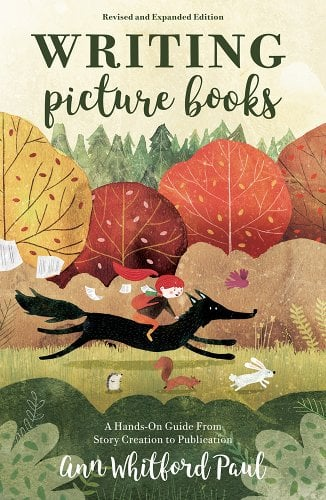
Have you read Ann Whitford Paul's book, On Writing Picture Books: The Revised and Expanded Edition? If not you should!

Have you looked for mentor texts? That helps, too.

Have you been reading and reading and reading in the genre that you'd like to be published? If yes, A+ to you!

Tuesday, July 31, 2018

Preparing for a Writing Conference


Don't wear your regular "uniform"!😅
1.      How to Dress:  Dress for a conference in business casual. You want to be relaxed, but yoga clothing isn't the right outfit for this event.Conferences are packed with long days and exciting classes and sessions. You’ll want to feel comfortable, confident, and professional. Sometimes rooms are hot and sometimes they’re over air-conditioned, so be  dressed for all options. Specifically, I like to wear casual dress pants or even a nice pair of jeans and a shirt/blouse that I feel good in, plus I bring a light jacket or sweater. If you didn’t break the bank paying for the conference, buy yourself something cute, so you can add to your confidence quotient!

2.     Question Two:  What three things I wish I knew before going to my first conference:  
  • Make Authentic Connections:  Do investigative homework on people with whom you'd like to connect (the faculty), so you can have authentic conversations—that means something deeper than "please love my work". For example, you may research the faculty on the internet and find out that Mr. Blue loves yoga and so do you—Awesome! There’s a connection! Mrs. Green grew up on Mars and so did you—Bingo! Another connection. Mrs. Orange’s favorite show is "My Cat from Hell" and what? So is yours!  The faculty members are humans (shocker, right 😊), and at conference events where everyone wants a piece of them, they are craving real conversation. It's nice for both you and them. Plus, when you follow up with a query, it makes it easy for that faculty member to remember you. You’ll open your letter with a reminder, “Dear Mrs. Green. It was fun meeting you at XYZ conference and discovering we both attended Rocket Middle School on Mars.”
  • Be prepared with questions: If you've signed up for a one-on-one critique, go into it like a business meeting rather than a hope for an offer of representation. That sort of hope leaves you nervous and jittery, so instead, approach the meeting like you would with anyone else who you’d hire to consult. THAT MEANS show up prepared with a list of questions about your work—for example, questions I’ve asked in the past (since I write kid-lit) included "Can these words be used in a middle grade novel?" and "Is this skewing middle grade or young adult?"  or "Am I achieving the inciting incident quickly enough?" or questions on voice or plot points or  "Can you recommend any comparable titles?" For me, it helps to know which current books my project would be shelved next to; for you it might be which books you could look at as mentor texts. Other questions could include, "What do you recommend as next steps" and—the biggie—"Would you be interested in seeing more?" Why not go for that question—but save it for last so it doesn’t mess with your brain. It’s okay if they say no.
  • Remind Yourself: a “Pass” from an individual is not a Rejection from the Entire Industry   Every book is not everyone’s cup of tea. J.K. Rowling’s Harry Potter was rejected by 12 publishers before it was picked up. Kwame Alexander’s book, The Crossover, was shopped for almost seven years before it was published. It ended up winning the Newbery Award and easily became a New York Times Bestseller! Bruce Cameron’s novel, A Dog’s Purpose, was rejected by one publisher after the next because the year before, Marley and Me was released, and so since Marley and Me was a smashing success, publishers thought they couldn’t compete. Publishers rejected A Dog’s Purpose with a note saying it was “too similar”—but then a new and naïve assistant editor found the manuscript in the slush pile and championed it to publication. The novel soared to the top of the New York Times Bestseller’s list. So there you have it. A “pass” from one person is not a rejection from the entire publishing industry. You must be diligent in reminding yourself that taste is subjective. The PARADOX: it’s also important to listen to what the critiquer has to say. They are industry professions and have solid and sound advice—it’s why you sign up for a one-on-one critique. Here is the guidance I received from two brilliant ladies, Anna-Maria Crum and Hilari Bell: If one unbiased critiquer gives you advice, you can consider it and then keep it or toss it if the advice speaks to you; if two unbiased critiquers who are not speaking to one another give you the same advice, you must seriously consider; if three unbiased critiquers who are not speaking to one another give you the same advice, you must make the change in your manuscript.     
  • Come Prepared:
    Buy a special notebook and pens/markers—I’m a paper nerd and love doing this before a conference! Bring these items to your critique and write down key points. You think you'll remember what you're critiquer says, but the time flies by and you'll wish you took notes. I promise! Also, take notes during conference sessions—your brain is going to tell you that everything you hear is so life-changing that of course you'll remember it, but trust me when I say you won’t! Not only do I take notes at every conference, but I took fantastic notes at my first event and still enjoy referring back to those tidbits today.  
  • CONFESSION—And why I give you this advice: I didn’t take notes at my first one-on-one critique, because I was so star struck and hopeful that the editor would want to publish my manuscript. I stayed in a daze the entire critique time, and so I didn't walk away with ways to improve my manuscript. Prepare for your critique like you would any business meeting. Accept that it is highly unusual for an offer to be made on the spot—not because your writing and projects isn’t brilliant, but because so much more goes into an agent’s decision to represent than just the single project.
  • More on Agents:  Finding the right agent/author (or agent/illustrator) relationship is critical, because essentially, it’s a life-long match. As such, the agent needs to vet you and it’s important that you vet them. The vetting process can be like dating, both parties are considering the working relationship and an offer of representation is the marriage proposal. New authors tend to want “someone—anyone” to get their work out there, but you should consider that agents come in all forms. Take time at a conference to meet and talk to agents to discover their style and determine if that is the right style for you. For example, some agents are editorial and they'll work to help you edit the manuscript prior to submitting to publishers—I personally wanted and needed that kind of agent (shout out and mad-love for my agent, Jen Rofé!). Some agents are not editorial—that works better for many of my friends. Some agents are new and energetic but have not fully established their reputation. How do you feel about that? Some agents have HUGE names because they have major clients. You’ll need to decide if that’s important to you. As a newbie, if you land with that type of agent, it might mean you end up as their lowest priority, or it might mean the agent has tons of experience and big-time clout and can take you and your work far (I’ve seen both happen to authors).  For me, as I attended conferences and met agents or listened to them on agent panels, I discovered who would be right for me and who would be a horrible match.
3.     Have I participated in seminars/intensives offered at conferences, and what seminar/intensive was the most helpful?

YES! I’ve participated in a few after-conference intensives (usually a three-hour seminar) and I’ve chosen different ones led by all levels of professionals—agents, editors, and authors. For me, the most useful intensives have been the author-led workshops. What is best for you depends on what stage you’re at in your writing and publishing process. Early in my process, I attended a three-hour roundtable where participants read the first five pages of their manuscript and received instant feedback from the agent. That was extremely informative —not because of the feedback I received on my work, but because hearing feedback on fifteen different projects helped me grow my own writing. At that point in my writing career, I found it easier to discover or recognize mistakes when it didn’t feel personal, and then I used that knowledge to fix my own writing problems. Another seminar I attended was “How to do School Visits” with Suzanne Morgan Williams and Bruce Hale—Wow! That was fantastic and so helpful since The 11:11 Wish was due to release soon, and I had no idea how to handle school visits. Another workshop I attended was with award-winning author Linda Sue Parks. It truly helped me dig into my work and improve my craft.  My favorite thing about seminars/intensives is how they small and personal feeling, since they are usually limited to a small handful of participants.
4.      How did you refine your pitch 
Time to SHARE YOUR PITCH


Practice with people. Practice with strangers. Practice with your barista. Say, “I’m writing a book, can I tell you about it?” And then be prepared to talk for thirty seconds, saying something substantial that will hook the listener’s interest. It’s tough. You write a 50,000 word manuscript, and then you need to be able to cull it down to something meaningful and with meat in a few short sentences. The book Save the Cat by Blake Snyder has an entire section about pitches. Read it! He says to read current movie pitches and he says pitching to strangers while you’re in line at a coffee shop or grocery store can be your best gauge of true interest. It can also help you become less nervous when it really matters. If you practice your pitch to a stranger and their eyes glaze over, you’re not ready, but nothing is lost. If you say it and the person asks you questions, awesome! You’ve captured their interest. I might get this quote wrong, but Andrea Brown, founder of the Andrea Brown Literary Agency, likes to say a pitch should be like a skirt: long enough to cover everything, but short enough to keep it interesting. Keep the listener engaged and curious. For fiction, I love to start crafting my pitch with the Save the Cat formula: On the verge of a Stasis=Death moment, a flawed protagonist Breaks into Two; but when the Midpoint happens, he/she must learn the Theme Stated, before All Is Lost.
5.       Is there anything else?
Yes! Read the faculty members’ work (their books, their clients’ books) prior to attending a conference. Here’s my article on WHY this is so important: http://kimscritiquingcorner.blogspot.com/2016/07/top-five-reasons-reading-prepares-you.html

Carry a water bottle,  bring healthy snacks to keep your energy up, and treat yourself with kind words, a grateful heart, and believe you are deserving of good things to come!


Tuesday, November 11, 2014

Author and Illustrator Debbie Ridpath Ohi Donating Signed & Doodled Book PLUS Social Media Platform Critique #KidLitForHaiti

KID LIT FOR HAITI:  Debbie Ridpath Ohi is donating two very unique auction items to ONE lucky winner: First, she will sign AND doodle (!!) a copy of any book she has illustrated (winner’s choice!—and shipped anywhere in the world). Second, this same winner will also receive a social media platform critique. The winning bidder will provide Debbie with basic info (she’ll provide a form by e-mail to help you) which will help her understand your goals. With the latter in mind, she will review your URLs and provide a two-page critique by e-mail within six weeks. Please note: Debbie's written critique will help you identify your needs and how to improve your social media platform—things you must execute; she will not be involved in the execution nor promotion.

Debbie has been creating websites and blogging since the early days of the Web. She is the founder of Inkspot, which was one of the first websites for writers, and had nearly 50,000 subscribers to her email newsletter. With 29,000 Twitter Followers and savvy insider skills, Debbie proves she knows social media and will surely provide great insight to one lucky auction winner!


BIO:
DebbieRidpath Ohi writes and illustrates books for young people in Toronto, Canada. Recent illustration projects include NAKED! by Michael Ian Black and Judy Blume classics reissued in chapter book and middle grade format by Atheneum Books For Young Readers/Simon & Schuster. Her illustrations also appear in NY Times Notable Children's Book, I'MBORED (author: Michael Ian Black, Simon & Schuster BFYR). Launching 2015: WHERE ARE MY BOOKS? (her debut as author AND illustrator).  For Debbie's other current and upcoming book projects with Simon & Schuster, HarperCollins and Random House: Debbieohi.com/books. Her blog for writers/illustrators: Inkygirl.com. Twitter: @inkyelbows.

This auction: is for a signed AND doodled copy of any book (winner’s choice) illustrated by author Debbie Ridpath Ohi (book can be mailed to anywhere in the world), plus a social media platform critique. The winning bidder will provide Debbie with basic info (she’ll provide a form by e-mail to help you) which will help her understand your goals. With the latter in mind, she will review your URLs and provide a 2-page critique by e-mail within six weeks. Please note: Debbie's written critique will help you identify your needs and how to improve your social media platform—things you must execute; she will not be involved in the execution nor promotion.

How do I bid?
Place your bid in the comment section by increasing the previous bid. Please include information about how I may contact you if you are the winning bidder; I can be reached for questions in the comment section here or at ktomsic@gmail.com

When does this auction for Debbie Ridpath Ohi's talent close?
**This Auction will close on December 15, 2014 at 11:59 Mountain Standard Time**

What are other items on the Kid Lit for Hait (#KidLitForHaiti) Auction?
To Visit a full list of all the auction items featured on Kid Lit for Haiti: PLEASE CLICK HERE

What happens if I win?
I will contact the winning bidder (remember to provide your contact information!). You will make your donation at this donation link and then you will email a copy of your receipt, your full mailing address, and your book choice to me at ktomsic@gmail.com. Then, I will forward your winning information to Debbie and she will ship directly to you, plus contact you to start your critique.

How do I know when new auction items are posted to this blog:

You can receive emails when new auction items are listed. Simply enter your email address in the upper left corner of this blog where it says "Follow by email". You will only receive an email when a new post is created on this blog.

Blog Archive