Welcome!

Welcome to the Bookshelf Detective, a site packed with tricks and tips for readers and writers of children's literature. Thank you for visiting!
Cheers,
Kim Tomsic
Showing posts with label theme. Show all posts

Saturday, October 26, 2024

53 Sure-Fire Ways to Make Your Picture Book Manuscript Ready for Submission: The Ultimate Editing and Revising Checklist!


53 Tricks to Make Sure Your Picture Book is Submission Ready: Kim's Editing and Revising Checklist

By Kim Tomsic

Huzzah! You've written a picture book, you've worked with a critique group, and now you're wondering if it's ready to submit. Work through this checklist. Revise and edit if necessary. Then bring this checklist to your next critique meeting, so they can help you see the cleanest answer to each of the following: 


Is My Picture Book Ready? Final Checklist:

Did you keep your story’s theme/ “aboutness” present and alive in the beginning, middle, and end? Name what your story is about________________________

If you are writing about a character, do you have reasons for readers to identify with the character (will readers root for this character because of sympathy, empathy, likability, competency, super-power quality)?

Is this story for a child?


Is there a placeholder for the child’s emotions?

Is there a hook and is the hook compelling (this applies to both journey stories and concept books – remember a concept book is an “early learning concept” like the alphabet, shapes, colors, numbers, seasons, days of the week, etc.)?

Is there a reason for the reader to become invested during early pages?

If your story has a character, is the reader able to track the character’s emotions/how the character feels during the story?

If you are writing a hero’s journey, do you have a clear reason why TODAY is the day that sends the hero on the journey? Why must the story question or story problem be answered TODAY of all days? _________________________________ If you can’t answer this, your readers might ask, “So what? Why does any of this matter right now? Why not just do it another day?”

Is there a clear goal?

Are there meaningful stakes (what is at risk or what happens if the protagonist doesn’t achieve their goal)?

Is there room for a ticking timeclock in your story; and if so, have you used it to the best of your abilities?

Are you bringing a new and vibrant angle to a story that has been told before? If you are


creating a concept book or journey, what fresh and new ways are you adding to the conversation? ______________________________________

If you are creating a concept book or a journey, is there a piece of YOU that you can uniquely bring to this story?

(Journey and Concept) Does this story have BOTH meaning and music (a captivating, meaningful story told with fresh and delightful words) such that the reader wants to open this book a second, third, and fourth time?

Do the verbs in your story match the vibes you are trying to create (if not, upgrade those verbs)?

Is your story a piece of theater that the reader can perform for the child? Does your story have performance quality for the read aloud (e.g., pace + important page turn moments matched with gorgeous language or funny language or rhythmic or musical language or onomatopoeia or something else)?

Do you have rising action and/or rising tension or an escalation?

Did you reach a clear midpoint in the story and at the right pace?

Did you delete all darlings?  “Darling” words/lines or “darling” characters are ones that if deleted, nothing about the story would change. *Note – a darling might be something taking up too much real estate in your story without contributing as a “foil” or to the aboutness, story beat, emotional state, character reveal and reason to root, stakes, goal, or rising tension. A darling might also be something that takes your readers down an unintended different path.  

Have you checked the pace of your story by making a pb dummy? My favorite picture book dummy templates are provided for FREE by author/illustrator Debbi Ridpath Ohi. 

Here is Debbie Ridpath Ohi's link to her Free Dummy Templates.


After you make your dummy have you searched for ways to be more concise?

Have you successfully included more “showing” moments than “telling” moments? Have you made decisions around each moment to note if it is best to show, tell, or show and tell?

Have you highlighted your manuscript to see if you have a good balance of action + dialogue? You can track more than that, too; you might see if you have too much exposition and if so, consider how you might transform some of it into action and dialogue.

Have you searched “to be” verbs (am/ is/ are/ was/ were) to see if you can upgrade some of these into action verbs?

Did you choose strong and fresh verbs (yes – so many checkboxes around verbs, and that’s not an accident. That’s to show how important they are)?

Did you delete any unnecessary intensifiers or filler words (just, always, usually, very, etc.) – the key is “unnecessary”. If the word goes away and nothing changes, you don’t need it.

Have you considered each time you say “began” or “started” and considered deleting. Try the sentence without that hesitation word (for example, I began to run vs. I ran; I started to rush up the stairs vs. I bolted up the stairs) and see if you achieve the same vibe.

Does your protagonist or narrator have a flaw and/or would the story benefit if your


character was flawed or slightly flawed (know-it-all, persnickety, bossy, nosy, stubborn, grumpy, selfish, proud, braggy, miserly, spendthrift, lacks boundaries, etc.)?

Do you have the right narrator and/or the right protagonist?

  Have you considered your story in a variety of ways (1st person, second person, 3rd person, prose, verse) to make sure you have the best vehicle for this story?

If you are choosing rhyme, have you made sure to avoid “Yoda-speak” and/or awkward


sentences. Delete anything that sounds forced or backwards for the sake of rhyme –aka make sure you don’t have forced rhyme. The must be the star of the book over the rhyme.

If you are choosing rhyme, have you tried a scansion test to track if your rhythm/meters are on pointed your story?

Here is a link on what is scancion and "how to scansion" from Master Class.

For any story - is each sentence the right length for the moment? Make sure you aren’t cramming several ideas into one sentence. Avoid overly long sentences, especially at the beginning when a reader is just discovering the story – try your best not to go past 17 words in a sentence unless there is a compelling reason to do so (e.g., perhaps a long sentence is purposeful to add to the mood, energy, comedy, hysteria, or character’s personality).

Are you (mostly) using invisible tags over effusive dialogue tags? Would the characters


shine brighter and the story flow smoother if the tags become invisible - e.g., he said/she said/they said (these are called “invisible tags”). Most writing advice says invisible tags are the way to go – sure, you can do something different occasionally; but if you do it on every page, it might weigh down your story.

Are you making sure to delete stage directions that can be left to the illustrator? A stage direction can be a wasteful use of storytelling text (and you only have a 500-word budget).  An example might be something like, “Madeline opened the door, walked down the hall, and turned left.” You don’t have to say this since the illustrations will orient the reader. Delete a stage direction when it doesn’t add any meaning or music to the scene, character reveal, plot, or theme enhancements.

Are you making sure to hold on to a stage direction when it adds to the pace and delight of the read aloud performance (e.g., slowing down the pace and stretching it out in a dramatic moment).

Are you leaving space for the illustrator to be creative?


Can you delete any or all illustration notes? Trust illustrators to their craft and try not to step in their lane.

Are you making sure that your story can be enjoyed and understood even by the most active child who is listening in the back of the library or classroom during story time? (Yes – it’s important to have space for the illustrator, but don’t let the pendulum swing too hard. It is also important that the text captivates, connects, and engages the listener).

Are you trusting your reader rather than overwriting? Remember, a picture book is a balance of the writer, the illustrator, and the readers – each bring something to the experience.

Have you tracked your transitions (concept and journey stories)? Take another look and see if you are using the best transitions possible to thread moments together (bridges) that flow naturally while still shining a light on the trajectory of your story’s aboutness?

  Have you searched for moments when the exposition can be better delivered through dialogue instead?

Is your character in agency – driving the plot and or affecting the world around them (journey story).

Is the aboutness present in Act I?

Is the aboutness present in Act II and is your break into act ii a “squeeze the toothpaste”
moment?

Is the aboutness present in Act III?

Are you leaving space for the reader’s brain to work such that you are not delivering a story that is that is too “on the nose”? 😊Discoveries and engagement are parts of reading enjoyment.

Did you avoid being didactic, lesson-y and/or preachy?

Is the emotional state at the beginning of the story different than at the end of the story (the situation or the protagonist in a journey story; the sense of wow or awe or knowledge at the end of a concept book)?

Have you avoided unsatisfactory repeating (this is different than poetic and purposeful


repeating)? Go line-by-line (or perhaps paragraph by paragraph) and ask yourself if the line/paragraph achieves any of the following. Does it:

·       reveal character (revealing something about character to contribute to the reasons to root for this character in terms of sympathy/ empathy/jeopardy, likability, competency or power)

·       or does it contribute to moving the plot forward in a new way that hasn’t yet happened

·       or does it appear in the right order in terms of rising action

·       or does it illuminate goals or stakes

·       or is the repeat intentional to add musicality or emphasis or a refrain

·       or does it enhance the “aboutness” or theme of the story with meaning (aboutness) and music (the best choice of words)?

Do you feel satisfied by the “so what” questions like why does this story matter and why will it be meaningful to a reader and why does it matter right now?

Have you ended on a surprising yet inevitable note or discovered a “wow” ending or provided an ending that will keep the reader thinking about the story even after the last page has been turned?

Were you able to achieve everything above in 500 words or less?

P.S. A few parting tips:

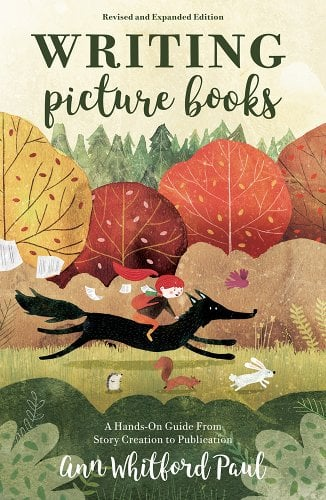
Have you read Ann Whitford Paul's book, On Writing Picture Books: The Revised and Expanded Edition? If not you should!

Have you looked for mentor texts? That helps, too.

Have you been reading and reading and reading in the genre that you'd like to be published? If yes, A+ to you!

Wednesday, October 9, 2024

The Mistake to Avoid When Writing Your Story


Hello! You're probably reading this because you are a writer. If so, I'll bet you've been asked, "What is your story about?" Knowing your story's aboutness and being able to talk about it in a couple of concise sentences says you're on the right track for delivering a focused story. 

What is “Aboutness”:

Some people call “aboutness” the theme. However, that word feels intimidating to me, so I


stick with talking in terms of  “aboutness”. Your story will be about something, right? Examples include friendship (Sophie’s Squash), boredom and conflict (The Longest Storm), problem solving (The Teacher’s Pet), navigating a new situation like a first day of school or moving (Evelyn Del Ray is Moving Away), answering the question “Where do babies come from?” (The Baby Tree), ingenuity and kindness (Extra Yarn), bravery (Truman), self-love and the power of words to hurt and heal (BIG), innovation and perseverance (Guitar Genius), curiosity and determinations (The Fire of Stars), trust and friendship (The Elephants Come Home), perspectives (Two Together), the environment and the interconnections of the natural world (A River of Dust: The Life-Giving Link Between North Africa and the Amazon) 
etc.

The above are picture book titles. My newest book (co-written with Mark Parisi) The Truth About 5th Grade is about friendship and perspectives. There are always two sides to every story!


Pro tip: THE MISTAKE to avoid 

Oftentimes, new writers believe picture books are about teaching a lesson. They are not.

Have an aboutness without hitting the reader over the head with a lesson. Entertain with interesting hooks, words, characters, and action. If a picture book comes across didactic or “lesson-y”, the young reader will probably tune out. Kids can smell preachy lessons from a mile away.


I appreciate how Ann Whitford Paul says “Children are wise enough to figure out what a story is about without an explicitly stated moral. We’re in the business of writing engaging stories, not teaching lessons” (Writing Picture Books, page 13).

Good luck with the story you are writing. 

Cheers,

Kim

Sunday, January 23, 2022

Heart in Children's Literature by Kim Tomsic


Any writer trying to tackle the art of composing a children’s story will agree—it’s tough work. Whether writing a 500-word picture book or a 75,000-word novel, writers face a juggling act of theme (without being didactic), character (without being overly cutesy), story (with the perfect pace), and more all in effort to create that sweet balance of delight, entertainment, meaning, and connection.     But what makes a story good? In
Celebrating Children's Books: Essays on Children's Literature
, Arnold Lobel says, “A good picture book should be true. That is to say, it should rise out of the lives and passions of its creators.” Perhaps this statement could be pushed a step further, so it reads: A good children’s book (picture book through young adult novel) should be true. That is to say it should rise out of the lives and passions of its creators and have a placeholder for a child to insert themselves and their emotions. A good book should have heart.
In author Kate DiCamillo’s 2014 Newbery speech, she said, “…[those] working on stories, bookmaking, and art are given the sacred task of making hearts larger through story.” But what is heart and how does an author write it into a story? To figure this out, I asked three experts for their thoughts on heart in children’s books: Author Beth Anderson, Senior Editor at Chronicle Books, Melissa Manlove, and Senior Editor at HarperCollins, Maria Barbo.
First meet Beth. Not only is Beth Anderson the author of several picture books, she also writes about emotional resonance in her blog, “Mining for Heart.” Beth says, “Heart” is the treasure I’m after whenever I start a new manuscript. What will make this story more than a reporting of events? What will make the child reader think about the world a little bit differently? What will bring emotional resonance? To me, heart is not the theme or focus nugget but is much deeper and more personal. It emerges when you process the research or story through your own life experiences and passions to find a unique angle or thread. “Heart” can be nebulous, elusive, downright torture to tackle, but it’s what makes a manuscript sing!”
            Beth’s statement screams many truths, (the torture!). She also wonders, “What will
make a child reader think about the world a bit differently?” 

Kimberly Reynolds, author of Children’s Literature: A Very Short Introduction, says, “Because children’s literature is one of the earliest ways in which the young encounter stories, it plays a powerful role in shaping how we think about and understand the world.” Reynolds’ statement echoes Kate DiCamillo. In essence, they are both saying that books play a powerful role that might affect the way children understand and think about race, religion, ableism, neurodiversity, gender identity and more. No wonder DiCamillo calls it a “sacred” task.

Helping a child think about the world a bit differently happens when an author succeeds at writing a story that gets under their skin. There, inside the pulse of the story is the opportunity for a child or young adult to connect, beyond mere amusement, so that the story seeps into their pores and stays long after the last page is read. To jump-start a pulse that pushes a story beyond entertaining-but-forgettable, a book must have 💙heart💙, and to achieve heart the writer must make the reader feel something.
            The Horn Book Magazine also covers the need for children’s stories to have heart and feeling-points. In a November 2012 article titled “Making Picture Books: The Words” by Charlotte Zolotow, Zolotow emphasizes how an emotional impulse to write for children should come out of a real place and says, “Many fine writers can write about children but are unable to write for them.” She says, “The writers writing about children are looking back. The writers writing for children are feeling back into childhood.” It is the feeling-points that writers must tap into if they want to reach a child’s heart.


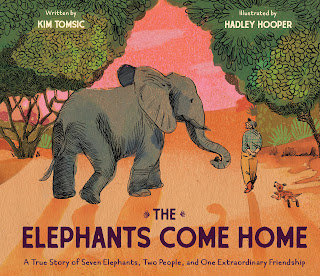
            The next step in my mission to understand heart took me to Senior Editor Melissa Manlove from Chronicle Books. I knew Melissa would be the perfect person to talk to, because she made me work to uncover the heart of The Elephants Come Home (Chronicle Books, 2021). Back in 2012, I approached Melissa with a true story about a man named Lawrence Anthony who rescued a herd of seven elephants in Zululand, South Africa--the elephants had broken out of every other wildlife sanctuary they'd lived at and had thus frightened many townfolk with their destruction. Now they had to be relocated again, otherwise they would be shot! Melissa and I were both captivated by the many details of this story, but something was missing—that nebulous “something” was the heart. It sat in the outskirts of my writing, but the heart was too buried to actually feel it. I had to work, to dig, to revise until I was able to identify the true piece of me that I was bringing to the story (for me, it was growing up as a military brat and being made to move from home to home, like the elephants).  Once I identified the heart I felt when I thought about this story, I knew I couldn’t shove it front and center because then the story would feel forced. Melissa says heart can’t be in the reader’s face. It needs to be like a treasure chest the reader works to uncover.


Actually, she says it more eloquently. Melissa says, “The writers I admire most tend to be ones that, as they draft, are following a feeling, a hunch, a question. They’re feeling out what seems right and what the story seems to want to be. And THEN from that, later, in the revision process, they figure out what that part of us that lives on story but doesn’t have words of its own to speak was trying to say.
And when you let the story come first, and let it show you by feel where the heart is, then the heart is truly buried in it, like buried treasure, and your story becomes a map for those who will follow you.”

The Elephants Come Home written by me and with gorgeous illustrations by Hadley Hooper, released in 2021 with Chronicle Books. Melissa pushed me to dig deep so that I could leave a treasure for readers to find.

Melissa is a master of theme and thesis and if you ever have the opportunity to attend one of her lectures, it will be the best gift you ever give yourself. For this article, I asked Melissa to expand on feeling points, and she explained that, “Many [stories are] disposable. And that’s because they’re entertaining in the moment, but they don’t mean anything. There’s nothing that stays with you afterward, nothing that nibbles at your imagination and pulls you back to them.” Even if a story is fiction, Melissa says a good story makes us “feel it is true.” Melissa explains that feeling in story is “the language-brain articulating what the story-brain had already known in feeling. A storyteller must evoke a universal feeling.” Melissa says for a story to go deeper, there needs to be “a human experience at the heart of that story that we all can relate to…and a truth about that human experience in the story.”
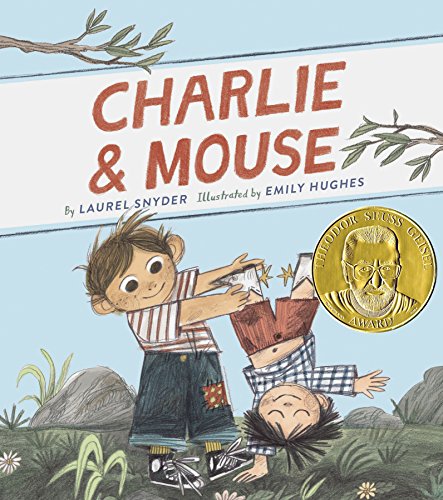
Charlie & Mouse: Book 1: Snyder, LaurelA great example of a human experience at the heart of a story we can relate to is Charlie and Mouse, edited by Melissa Manlove, written by Laurel Snyder, and illustrated by Emily Hughes. The starred review written by Elizabeth Bird in School Library Journal starts out with a negative tone, “Only the jaded should write reviews of children’s books.” The reviewer goes on to say, “If I am a parent and there is any danger AT ALL that my child is going to ask me to read and reread and reread again a piece of tripe that calls itself a children’s book, I at least want some forewarning. I have great love for the sardonic stripe of reviewer. Anyone who has honed their teeth on the literary darlings of sweetness & light.” Elizabeth Bird says she is sick and tired of reading overly-sweet books and goes on to add, “So I sometimes wonder if having my own kids has made me more inclined towards books with a glint of true emotion amidst the adorableness. With that in mind, I guess I could be forgiven for initially thinking that Charlie & Mouse wouldn’t work for me. Heck the eyeballs of these kids take up half their heads as it is. Yet when I read this story what I found was a quietly subversive, infinitely charming, eerily rereadable early chapter book not just worth reading but worth owning.” Though Bird set out to dislike Charlie and Mouse, she felt the heart and says, “my tolerance for the cutesy is distinctly low. So it was with great pleasure that I discovered that while the characters of Charlie and Mouse are undeniably cute, they are not cloying. They are not vying for your love. They are living their lives, doing what they want to do, and if what they do happens to be cute, so be it, but that is not their prerogative.”  Heart won the day.   
            I circle back to Kate DiCamillo, because Flora and Ulysses is a great example of a book with heart, and it was a very human and universal experience that led DiCamillo to write this Newbery Award winning bookthe experience of love, grief, and loss. DiCamillo says her truth rose out of her deep love for her mother who often asked who would take care of her Electrolux vacuum cleaner when she passed away. In January 2009, her 86-year-old mother fell, broke her hip, and died less than a week later. DiCamillo’s heart ached, and she grieved as painfully and deeply as anyone who loses a loved one grieves. In her 2014 Newbery speech, she says she wrote Flora and Ulysses because she “wanted to excavate that grief.” She says, “I wanted and needed to find my way to joy.” This was her truth, but she doesn’t lay it on the page so literally. The truth takes on new forms and shows up in her book through characters that would have made her mother laugh—Flora, the squirrel, the giant donut, and a vacuum cleaner (remember the Electrolux), and it’s not just any vacuum cleaner, but one that gives the squirrel superpowers!
The Newbery committee called Flora and Ulysses a story of hope, joy, and love. Through this book, readers experience real feelings filtered through DiCamillo’s characters while originating from her authentic human experience—her love and grief and also her hope to regain laughter and joy. This echoes back to what Melissa Manlove said, “there needs to be “a human experience at the heart of story that we all can relate to…and a truth about that human experience in the story.” In the end of Flora and Ulysses, readers discover that Flora’s father, George Buckman, has a capacious heart. One that is very large and “capable of containing much joy and much sorrow.” And this is parallel to the truth of DiCamillo’s heart, joy, and sorrow in her mourning process. Authentic feelings that showed up on the pages.

Senior Editor Maria Barbo from HarperCollins says, “Authenticity is key for emotional resonance. That thing you do in private that you think nobody else does—someone does it. A writer or artist has to make themselves vulnerable in that way—to share the secret, raw parts of themselves because relatability stems, in part, from specificity.” She adds a reminder, “The reader’s heart isn’t going to be in it if yours isn’t.” Maria is the editor for Bubbles...Up! a love poem to swimming, written by Jacqueline Davies illustrated by Sonia Sánchez. Each reader might find a different pulse point as they read, but without a doubt this story has heart.💙 
The experts agree—a good book should have heart. Melissa Manlove says, a “good story must feel true.” Maria Barbo says that a reader’s heart can’t be in it unless the writer’s heart shows up first. Beth Anderson challenges authors to find what will cause the child reader to think about their world view. Children’s Literature: A Very Short Introduction says, “Children’s literature can also be a literature of contestation, offering alternative views and providing the kind of information and approaches that can inspire new ways of thinking about the world and how it could be shaped in other, potentially better ways.”  Heart shows up when we process stories through life and literature experiences. Writers all have something that is deeply personal to share. We have something that, as Arnold Lobel says, “…can rise out of [our] lives and passions.” The real question is: are we willing to be vulnerable and write from an authentic place and share our feeling-points so the story can come alive for a child.

At the end of Kate DiCamillo’s Newbery speech, she said that as a child, she sat with books in her tree-house and could, “Feel the stories I read pushing against the walls of my heart.” For her, those stories traveled beyond the boundaries of mere entertainment and had a lasting pulse. Again, DiCamillo says those, “…working on stories, bookmaking, and art are given the sacred task of making hearts larger through story.” Writers can only do this if they dig deep and give of themselves so authentically that a book develops a pulse—a story that not only entertains but also has a placeholder for the child to insert themselves and their emotions. Children deserve stories that have heart.


Wednesday, February 15, 2012

How to Write a Synopsis: Advice from Industry Experts


Notes for Crafting a Winning Synopsis from Industry Experts:


Congratulations! You’ve written your 75,000 word master piece. Now in order to present it to industry professionals in a concise, enticing and engaging manner, you must par down your novel to one one-hundreth of its original size; approximately 750 words or less. There are many conflicting resources on formatting a synopsis, but the elements that are needed to compose a winning synopsis are agreed upon across party lines. Here’s my take on how to make sure you hit the highlights and other important facts.


WHAT TO INCLUDE IN YOUR SYNOPSIS: Make sure your synopsis covers the beginning, middle and the ending of your book. Don’t save your ending as a surprise. 2012 Children’s Writer’s & Illustrator’s Market a.k.a. CWIM (edited by Chuck Sambuchino) advises to make sure your synopsis includes hook, plot, theme, characterization, setting, conflict and resolution. The Writer’s Digest Guide to Query Letters by Wendy Burt-Thomas advises a synopsis should include “your book’s content, structure, tone and design if needed.” Furthermore Burt-Thomas says to “start your synopsis strong immediately, then fill in the details later.”

            The Fiction Writer’s Connection website has a great checklist for your synopsis. The list includes questions like:  Does your opening paragraph have a hook? Are your main character’s conflicts clearly defined? Have you hit your major themes and major plot points, and did you show how the conflict was resolved in the end?

            The Vivian Beck Agency also advises to start with a hook, and after you introduce your main character, they say to unveil your main character’s CONFLICT, MOTIVATION, and GOALS. The Body of your synopsis should include an ACTION, REACTION, and DECISION (check for these elements to suss out if you have an active or a passive main character).  Don’t forget to include the crisis and resolution to your story.

            Nathan Bransford (a one-time agent with Curtis Brown, and now published writer) says that a synopsis is not the time to detail every character in your story.  He says, “[a synopsis] needs to make the work come alive. If your synopsis reads like "and then this happened and then this happened" and it's confusing and dull, well, you might want to revise that baby.”

In regard to length, Nathan advises two to three pages, double spaced unless submission guidelines ask for something different.


CONFIRM THAT YOUR MAIN CHARACTER ISN’T A PINBALL: Read your synopsis and decide if your main character is responding to events, bouncing around like a pinball tossed in one precarious (perhaps exciting) direction after another, or if you’re main guy is driving the action. If he’s a pinball, then no matter how exciting the events may be, your guy is passive and that is not what the industry wants.

            Mary Kole from the Andrea Brown Agency often offers pitch-slam events at the conferences she attends. In a sit-down interview I enjoyed with Mary Kole at the SCBWI conference in Los Angeles, she offered a pearl of wisdom: make sure your main character is ACTIVE vs. PASSIVE. The advice seems obvious, yet so many writers have things happening to their main character vs. having the protagonist drive the story forward.


FORMATTING:  CWIM 2012 (Writer’s Digest Books) says to include your genre and word count on the upper right side, and your name, address, phone number and email address on the left side. Your title goes in all-caps in the center

Example:


First Last                                                                               Historical Fiction
1234 address                                                                           50,000 Words
City, State Zip
(303) 111-2222


MY FABULOUS BOOK TITLE HERE


Other formatting advice includes:

  • Don’t number your first page; begin numbering on second page;
  • Double space all text ,and use 12 point Times Roman with one-inch margins
  • Second page header is formatted like so: Your name/TITLE IN CAPS/Synopsis     2
  • The first time you introduce a character in the synopsis, have their name appear in all-caps (with normal formatting to follow);
  • And **open with a great hook and inciting incident.
  • Size-I keep hearing, “the briefer the better, but all elements must be there to sell your story.”  Guide to Query Letters  by Wendy Burt-Thomas says it’s typically one to two pages. 2012 Children’s Writer’s & Illustrator’s Market a.k.a. CWIM (edited by Chuck Sambuchino) has a glossary where synopsis is defined as “a page to a page and a half if single spaced” (odd definition since they also advise to double space your synopsis).
  • Write your synopsis in present tense
  • Use 12 point Times Roman


SYNOPSIS VS. QUERY: Make sure you know the difference between a synopsis and a query. A query letter is a single page, three paragraph letter that is meant to hook the reader into asking for more. The three paragraphs include The Book, The Hook, and The Cook. (1) Paragraph One: The book tells the title, the word count, and the genre. (2) The hook includes your logline and a few lines about your story (similar to what you might read on the jacketflap of a book). It does not tell your whole story.  (3) Paragraph Three: The cook is a paragraph about you, where you went to school, and any writing credentials you may have.

            The Synopsis, unlike your query, tells your entire story (beginning, middle, and end). The length of your synopsis will depend on agents/editors submission guidelines. You should practice writing a short, one page synopsis as well as a long, three to five page synopsis.


More Resources:


Blog Archive