Welcome!

Welcome to the Bookshelf Detective, a site packed with tricks and tips for readers and writers of children's literature. Thank you for visiting!
Cheers,
Kim Tomsic
Showing posts with label writing tips. Show all posts

Wednesday, October 16, 2024

5 Pro-Tips About Back Matter


5 Pro-tips on Back Matter

by Kim Tomsic

What is Back Matter:


Readers love back matter (so do editors)! Back matter is the information you find after the final page of the story (after "the end"). It’s something that teachers often use as a teacher's guide, and readers use when they are craving more information. Back matter is most often found in nonfiction; however, you can find it in fiction and concept books, too.

Why Have Back Matter:

You’ll likely find backmatter in nonfiction picture books or picture books that are based on a true story, because it’s impossible to pack all aspects of a true story into one picture book. Wise authors know that it serves picture book readers best to focus on a key aspect of the story experience rather than cover everything. The back matter is a space for the additional gems and nuggets that didn’t have a proper spot in the storytelling.


Five pro-tips that might help you when consider including back matter:  

1.        Back matter helps reviewers appreciate your story on a deeper level. For example, if your story takes place on the continent of Africa, you might include back matter to identify the country and/or uniqueness of the region as well as its biome.

2.       Back matter is not part of your word count when you submit.

3.       EasyBib is a wonderful website where you can create a properly formatted running bibliography while writing a nonfiction book.

4.       Back matter provides another reason for schools and libraries to want your book. Teachers and librarians use back matter material for additional activities and/or book displays.

5.       Some Examples of back matter that you might choose to include: 


o   Glossaries  Room for Everyone by Naaz Khan and Merce Lopez 

o   Author note/artist note - see Watercress by Andrea Wang and Jason Chin

o   "More About ___(subject matter) see Up in the Garden and Down inthe Dirt by Kate Messner and Christopher Silas Neal   (check out the entire series - it's wonderful!)

o   Afterword" Magic Ramen by Andrea Wang and Kana Urbanowicz 

o   Timelines - see The Great Stink: How Joseph Bazalgette Solved London's Poop Pollution Problem by Colleen Paeff and Nancy Carpenter. Based on my school visits and questions from children, kids LOVE timelines! 

o   Recipes - see Cooler Than Lemonade by Harshita Jerath & Chloe Burgett

o   Bibliography -  A Mind of Her Own: The Story of Mystery Writer Agatha Christie by Robyn McGrath and Liz Wong 

o   List of personal interviews and site visits -The People's Painter:


How Ben Shahn Fought for Justice with Art 
by Cynthia Levinson and Evan Turk 

o   Further reading suggestions Josephine by Patricia Hruby Powell and Christian Robinson 

o   Pronunciation guide Magic Ramen by Andrea Wang and Kana Urbanowicz).

Monday, December 4, 2023

11 Tips on How to Format Your Picture Book Manuscript or Novel Before Submitting to an Agent or Editor


Curious about how to format a picture book manuscript? How about a novel? The age of your reader might vary, but your formatting will remain consistent. Here are 11 tips to properly format your manuscript before submitting it to an agent or editor. Check out the two bonus tips I include at the end.


11 Formatting Tips Before You Submit

1.      double-space

2.     12-point font

3.     Times New Roman—this is a profession font choice (you don’t want this to be a distracting choice, nor do you want reading hard on the eyes).

4.     One-inch margins

5.     Add contact details. Include your name and contact information on the first page in the upper left corner:

Name

Email address

Mailing address

Phone number

6.    Center your TITLE and the manuscript's word count on the first page (your title will be written in all caps on the query letter; however, you can write the title on the actual manuscript by writting the first letter of each word with a capital letter)

Place your name and word count centered under the title:


Name

email@address.com

mailing

mailing

phone number


This is My Title and it’s Really Great


by Kim Tomsic (488 words)


7.     Include page numbers starting on the second page and forward. HOW: Select the “Insert”  and click “Page Number” and then choose one or the other - "Top of Page" or "Bottom of Page" -I prefer bottom) and select based on the positioning you like (usually "Plain Number 3", then type your title/last name, and then choose the box “Different First Page” so it starts numbering on the second page forward. It should be formatted like so:

This is My Title and it’s Really Great/TOMISC            Page 2


8.    Indent new paragraphs and/or new stand-alone lines within the manuscript. Also indent new lines of dialogue. 

9.     When you change which character is speaking, make sure you create a new line break and indent it.

10.                        Black ink (please don’t get distracting with colors).

11.  Use brackets [  ]  to indicate when something is in the illustrations and not in


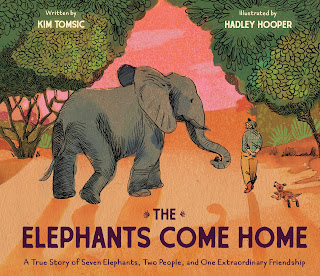
the text. For example my nonfiction book, The Elephants Come Home is a true story, and so the facts needed to remain factual. The elephants arrived during a downpour, it was part of the mood and tone, but I did not write it in the text. Therefore, I left a note for the illustrator [raining]. Avoid illustration notes unless absolutely necessary.


Hitting the Tab Key to Indent:


          Each line that comes after a purposeful line break will be indented like so. This means that the first line in the paragraph will be indented (as you see in this paragraph example). However, once you move on to a new line of text or new dialogue and hit the return key, you’ll indent the next paragraph or the dialogue that follows.

          “Now,” I say. “Does this make sense so far?”

          “Yes,” you say. “Tell me more!”

          And so I will 😊. You might want to read my post on dialogue (7 quick and easy tricks to format dialogue tags), dialogue tags, where to place the tags, how to add punctuation, and more. Let’s go! By the way, I am a card-carrying exclamation point abuser. However, I urge you to avoid getting carried away with punctuation in your manuscripts. Let your words carry the weight and meaning of your prose.


Sidenote for novelists
– the first paragraph of a new chapter is served in a block (the first line is not indented), but then each new paragraph after the first paragraph is formatted with the first line indented.     

Good luck!

 Kim

P.S. Here are two bonus notes:


An ellipsis is three evenly spaced dots (periods) and stands in for an unfinished thought or action. It looks like this

…


An em dash is when a character or thought gets interrupted or abruptly cut off for another reason like a car crash or a cake shoved into a mouth. The em dash name comes from the fact that it’s the typeset length of the letter “m”. It looks like this

—


Thursday, November 2, 2023

3 Ways to Ignite Readers' Connections With Your Characters and Give Them a Shoulder-to-Shoulder Experience

Story is about 

  • emotionally compelling characters
  • who face seemingly impossible hurdles 
  • because enormous stakes are on the line (thank you Christopher Vogler and Michael Hague)

WEARING THE PROTAGONIST'S SHOES: Readers want to be entertained and to feel something. They want to put their feet in the shoes of the protagonist and have an experience - brain science + Lisa Cron's book Wired for Story: The Writer's Guide to Using Brain Science to Hook Readers from the Very First Sentence has proven this. 

So let's deliver that! 

3 WAYS: Here are three ways you can pull your readers in for a shoulder-to-shoulder experience with your protagonist:


1.      


1.  HUG CLOSE: Delete words (when it makes sense) that keep the reader at arm’s length. To draw the reader closer, so that they have a shoulder-to-shoulder experience alongside your protagonist, consider deleting:

·       She heard

•       She saw

•       She felt

•       She knew

The reader does not want to be a spectator who is told what is happening and what the character feels, the reader wants an experience, they want all the feels.


Be judicious. Only remove (saw, heard, felt, knew) whenever reasonable. It’s not an “always” rule, it’s a try-it-and-see-if-you-give-your-reader-a-closer-experience exercise.


Questions to ask yourself:

·       Does keeping or removing such words make sense at that moment in your plot?

·       Is the reader being held at arm’s length?

·       How can I invite the reader closer?


2.      2.  REAL TIME: Put reader in “real” time. To prioritize the reader in storytelling, keep them


close and allowing them to have experiences at the exact same time as the protagonist(whenever possible).

 Putting a reader in “real time” allows the reader to experience an event alongside the protagonist, even if you’re writing in past tense.


For example, rather than saying:


"She heard snakes hissing in the castle turret … …” instead, put the reader  shoulder-to-shoulder with the protagonist, and let them hear the hissing at the same moment.


Example from The Very Last Castle by Travis Jonkers illustrated by Mark Pett.


“Hiss, Hiss, Hiss,”

“Snakes,” said Ibb’s grandfather.

Notice that not only is the reader experiencing the snakes at the same time as Ibb (even though the story is in past tense), but also the story transforms into more of a performance piece!


3.     
FEEL don’t NAME: Let readers feel emotions rather than hearing you, the author, name the emotion. Give us those gripping, exciting, threatening, heartfelt moments whenever possible by selecting strong verbs rather than by naming the experience. For example:


Instead of “He was excited” you might change to “He pumped his fist” or “He bounced from foot to foot.”  


Search your manuscript for “to be” verbs and see how you might transform those verbs to workhorses for your story.


STRONGEST CURRENCY IN STORYTELLING: “In storytelling, emotion is the


strongest currency. It lasts longer than novelty or tension, and it makes the rest of the story more engaging…” but for emotion to work, there “has to be something in the scene worth getting emotional over…Readers should witness characters reasoning and coming to conclusions, rather than simply hearing a summary of their thought process…
Readers need the context provided by thoughts and feelings. Without understanding what the character is thinking and feeling, they won’t know what to think or feel either.” Quotes from Narrating a Close Point of View and The Power of Close Perspective by Chris Winkle.

Don’t cork up the character’s feelings and don’t belabor feelings either. Pay attention to what the illustrator is going to deliver and note when simple and/or power verbs deliver the emotion!


Reminder: The Emotional Thesaurus: A Writer’s Guide to Character Expression  can help you with ideas for using body feels and/or movements for expressing emotion.  


Happy writing!


Cheers,

Kim


Sunday, January 23, 2022

Heart in Children's Literature by Kim Tomsic


Any writer trying to tackle the art of composing a children’s story will agree—it’s tough work. Whether writing a 500-word picture book or a 75,000-word novel, writers face a juggling act of theme (without being didactic), character (without being overly cutesy), story (with the perfect pace), and more all in effort to create that sweet balance of delight, entertainment, meaning, and connection.     But what makes a story good? In
Celebrating Children's Books: Essays on Children's Literature
, Arnold Lobel says, “A good picture book should be true. That is to say, it should rise out of the lives and passions of its creators.” Perhaps this statement could be pushed a step further, so it reads: A good children’s book (picture book through young adult novel) should be true. That is to say it should rise out of the lives and passions of its creators and have a placeholder for a child to insert themselves and their emotions. A good book should have heart.
In author Kate DiCamillo’s 2014 Newbery speech, she said, “…[those] working on stories, bookmaking, and art are given the sacred task of making hearts larger through story.” But what is heart and how does an author write it into a story? To figure this out, I asked three experts for their thoughts on heart in children’s books: Author Beth Anderson, Senior Editor at Chronicle Books, Melissa Manlove, and Senior Editor at HarperCollins, Maria Barbo.
First meet Beth. Not only is Beth Anderson the author of several picture books, she also writes about emotional resonance in her blog, “Mining for Heart.” Beth says, “Heart” is the treasure I’m after whenever I start a new manuscript. What will make this story more than a reporting of events? What will make the child reader think about the world a little bit differently? What will bring emotional resonance? To me, heart is not the theme or focus nugget but is much deeper and more personal. It emerges when you process the research or story through your own life experiences and passions to find a unique angle or thread. “Heart” can be nebulous, elusive, downright torture to tackle, but it’s what makes a manuscript sing!”
            Beth’s statement screams many truths, (the torture!). She also wonders, “What will
make a child reader think about the world a bit differently?” 

Kimberly Reynolds, author of Children’s Literature: A Very Short Introduction, says, “Because children’s literature is one of the earliest ways in which the young encounter stories, it plays a powerful role in shaping how we think about and understand the world.” Reynolds’ statement echoes Kate DiCamillo. In essence, they are both saying that books play a powerful role that might affect the way children understand and think about race, religion, ableism, neurodiversity, gender identity and more. No wonder DiCamillo calls it a “sacred” task.

Helping a child think about the world a bit differently happens when an author succeeds at writing a story that gets under their skin. There, inside the pulse of the story is the opportunity for a child or young adult to connect, beyond mere amusement, so that the story seeps into their pores and stays long after the last page is read. To jump-start a pulse that pushes a story beyond entertaining-but-forgettable, a book must have 💙heart💙, and to achieve heart the writer must make the reader feel something.
            The Horn Book Magazine also covers the need for children’s stories to have heart and feeling-points. In a November 2012 article titled “Making Picture Books: The Words” by Charlotte Zolotow, Zolotow emphasizes how an emotional impulse to write for children should come out of a real place and says, “Many fine writers can write about children but are unable to write for them.” She says, “The writers writing about children are looking back. The writers writing for children are feeling back into childhood.” It is the feeling-points that writers must tap into if they want to reach a child’s heart.


            The next step in my mission to understand heart took me to Senior Editor Melissa Manlove from Chronicle Books. I knew Melissa would be the perfect person to talk to, because she made me work to uncover the heart of The Elephants Come Home (Chronicle Books, 2021). Back in 2012, I approached Melissa with a true story about a man named Lawrence Anthony who rescued a herd of seven elephants in Zululand, South Africa--the elephants had broken out of every other wildlife sanctuary they'd lived at and had thus frightened many townfolk with their destruction. Now they had to be relocated again, otherwise they would be shot! Melissa and I were both captivated by the many details of this story, but something was missing—that nebulous “something” was the heart. It sat in the outskirts of my writing, but the heart was too buried to actually feel it. I had to work, to dig, to revise until I was able to identify the true piece of me that I was bringing to the story (for me, it was growing up as a military brat and being made to move from home to home, like the elephants).  Once I identified the heart I felt when I thought about this story, I knew I couldn’t shove it front and center because then the story would feel forced. Melissa says heart can’t be in the reader’s face. It needs to be like a treasure chest the reader works to uncover.


Actually, she says it more eloquently. Melissa says, “The writers I admire most tend to be ones that, as they draft, are following a feeling, a hunch, a question. They’re feeling out what seems right and what the story seems to want to be. And THEN from that, later, in the revision process, they figure out what that part of us that lives on story but doesn’t have words of its own to speak was trying to say.
And when you let the story come first, and let it show you by feel where the heart is, then the heart is truly buried in it, like buried treasure, and your story becomes a map for those who will follow you.”

The Elephants Come Home written by me and with gorgeous illustrations by Hadley Hooper, released in 2021 with Chronicle Books. Melissa pushed me to dig deep so that I could leave a treasure for readers to find.

Melissa is a master of theme and thesis and if you ever have the opportunity to attend one of her lectures, it will be the best gift you ever give yourself. For this article, I asked Melissa to expand on feeling points, and she explained that, “Many [stories are] disposable. And that’s because they’re entertaining in the moment, but they don’t mean anything. There’s nothing that stays with you afterward, nothing that nibbles at your imagination and pulls you back to them.” Even if a story is fiction, Melissa says a good story makes us “feel it is true.” Melissa explains that feeling in story is “the language-brain articulating what the story-brain had already known in feeling. A storyteller must evoke a universal feeling.” Melissa says for a story to go deeper, there needs to be “a human experience at the heart of that story that we all can relate to…and a truth about that human experience in the story.”
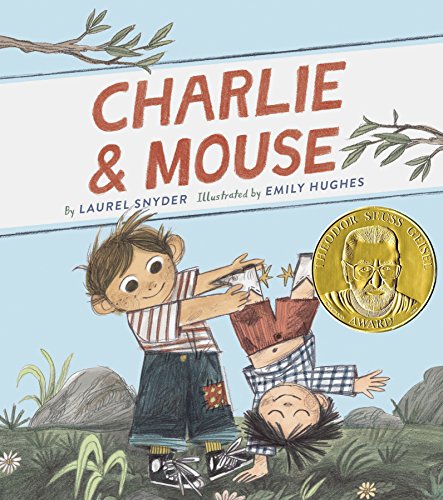
Charlie & Mouse: Book 1: Snyder, LaurelA great example of a human experience at the heart of a story we can relate to is Charlie and Mouse, edited by Melissa Manlove, written by Laurel Snyder, and illustrated by Emily Hughes. The starred review written by Elizabeth Bird in School Library Journal starts out with a negative tone, “Only the jaded should write reviews of children’s books.” The reviewer goes on to say, “If I am a parent and there is any danger AT ALL that my child is going to ask me to read and reread and reread again a piece of tripe that calls itself a children’s book, I at least want some forewarning. I have great love for the sardonic stripe of reviewer. Anyone who has honed their teeth on the literary darlings of sweetness & light.” Elizabeth Bird says she is sick and tired of reading overly-sweet books and goes on to add, “So I sometimes wonder if having my own kids has made me more inclined towards books with a glint of true emotion amidst the adorableness. With that in mind, I guess I could be forgiven for initially thinking that Charlie & Mouse wouldn’t work for me. Heck the eyeballs of these kids take up half their heads as it is. Yet when I read this story what I found was a quietly subversive, infinitely charming, eerily rereadable early chapter book not just worth reading but worth owning.” Though Bird set out to dislike Charlie and Mouse, she felt the heart and says, “my tolerance for the cutesy is distinctly low. So it was with great pleasure that I discovered that while the characters of Charlie and Mouse are undeniably cute, they are not cloying. They are not vying for your love. They are living their lives, doing what they want to do, and if what they do happens to be cute, so be it, but that is not their prerogative.”  Heart won the day.   
            I circle back to Kate DiCamillo, because Flora and Ulysses is a great example of a book with heart, and it was a very human and universal experience that led DiCamillo to write this Newbery Award winning book—the experience of love, grief, and loss. DiCamillo says her truth rose out of her deep love for her mother who often asked who would take care of her Electrolux vacuum cleaner when she passed away. In January 2009, her 86-year-old mother fell, broke her hip, and died less than a week later. DiCamillo’s heart ached, and she grieved as painfully and deeply as anyone who loses a loved one grieves. In her 2014 Newbery speech, she says she wrote Flora and Ulysses because she “wanted to excavate that grief.” She says, “I wanted and needed to find my way to joy.” This was her truth, but she doesn’t lay it on the page so literally. The truth takes on new forms and shows up in her book through characters that would have made her mother laugh—Flora, the squirrel, the giant donut, and a vacuum cleaner (remember the Electrolux), and it’s not just any vacuum cleaner, but one that gives the squirrel superpowers!
The Newbery committee called Flora and Ulysses a story of hope, joy, and love. Through this book, readers experience real feelings filtered through DiCamillo’s characters while originating from her authentic human experience—her love and grief and also her hope to regain laughter and joy. This echoes back to what Melissa Manlove said, “there needs to be “a human experience at the heart of story that we all can relate to…and a truth about that human experience in the story.” In the end of Flora and Ulysses, readers discover that Flora’s father, George Buckman, has a capacious heart. One that is very large and “capable of containing much joy and much sorrow.” And this is parallel to the truth of DiCamillo’s heart, joy, and sorrow in her mourning process. Authentic feelings that showed up on the pages.

Senior Editor Maria Barbo from HarperCollins says, “Authenticity is key for emotional resonance. That thing you do in private that you think nobody else does—someone does it. A writer or artist has to make themselves vulnerable in that way—to share the secret, raw parts of themselves because relatability stems, in part, from specificity.” She adds a reminder, “The reader’s heart isn’t going to be in it if yours isn’t.” Maria is the editor for Bubbles...Up! a love poem to swimming, written by Jacqueline Davies illustrated by Sonia Sánchez. Each reader might find a different pulse point as they read, but without a doubt this story has heart.💙 
The experts agree—a good book should have heart. Melissa Manlove says, a “good story must feel true.” Maria Barbo says that a reader’s heart can’t be in it unless the writer’s heart shows up first. Beth Anderson challenges authors to find what will cause the child reader to think about their world view. Children’s Literature: A Very Short Introduction says, “Children’s literature can also be a literature of contestation, offering alternative views and providing the kind of information and approaches that can inspire new ways of thinking about the world and how it could be shaped in other, potentially better ways.”  Heart shows up when we process stories through life and literature experiences. Writers all have something that is deeply personal to share. We have something that, as Arnold Lobel says, “…can rise out of [our] lives and passions.” The real question is: are we willing to be vulnerable and write from an authentic place and share our feeling-points so the story can come alive for a child.

At the end of Kate DiCamillo’s Newbery speech, she said that as a child, she sat with books in her tree-house and could, “Feel the stories I read pushing against the walls of my heart.” For her, those stories traveled beyond the boundaries of mere entertainment and had a lasting pulse. Again, DiCamillo says those, “…working on stories, bookmaking, and art are given the sacred task of making hearts larger through story.” Writers can only do this if they dig deep and give of themselves so authentically that a book develops a pulse—a story that not only entertains but also has a placeholder for the child to insert themselves and their emotions. Children deserve stories that have heart.


Wednesday, June 15, 2016

Fast Five: An Interview with Author Richard Peck

Fast Five with Richard Peck

by Kim Tomsic

It’s no secret I have been a longtime fan of Richard Peck—the author, the word wizard, the genius. Imagine my joy when the man who has been the single biggest influence in my writing career agreed to a phone interview! Here's how it went:

KT— As you know, I’m your biggest fan. In 2009, I decided to pursue a writing career, because I ran out of your books, and I craved more Richard Peck style tales to read to my son.  What/who influenced you to become a writer?
Answer: “Mark Twain.” When Peck was in fourth grade, his teacher gave him a copy of ADVENTURES OF HUCKLEBERRY FINN. Peck “knew that’s where [he] wanted to be.” Furthermore, Mark Twain was from his part of the country, Decatur Illinois, and seeing someone who was like him and from his area helped paint the possibility of becoming an author in young Richard’s mind. He wanted to be “words on the page,” and yet he waited—he studied literature, became a teacher, and when was 37 years old he wrote his first book. Why?  "To fill a need." He couldn’t find a book to satisfy the needs of his high school students (a contemporary story that reflected them), and so in 1971 he wrote DON’T LOOK AND IT WON’T HURT (it was later turned into a movie called Gas/Food/Lodging.)

KT—Mr. Peck, you possess the magical ability to write humor and heart in a story—I’m laughing, I’m crying, I’m buying your books for my friends. Your characters are real and fleshed out, so here’s my FREAKY FRIDAY question:  If you had to switch places for a weekend with one of your characters, who would it be and why?
With an air of whimsy, Mr. Peck said he would be Joey from A LONG WAY FROM CHICAGO, because Joey’s Grandma Dowdel is the grandma he always wishes he’d had. Very much like grandma Dowdel, Peck’s own grandma was six-foot plus, with a shock of white hair, and she wore Lane Bryant dresses. But unlike his own grandmother, Grandma Dowdel was nice. He said, “When we write as authors we don't write about our family, we write about the family we might have had.”

KT—At an event where I heard you speak, you talked about “first chapters” and how you rewrite your first chapter many times and still again after you’ve completed your manuscript. My biggest take-away was your statement, “The first page of a book is a promise to the reader.” You also said, “The first page is the last page in disguise.” What other elements do you believe make a successful first page?
Mr. Peck said authors often start in the wrong place. We need to find a place “to start nearer to the action. Hit the ground running. Don't start too early and don't wander around.” He also said, “The first page is the table of contents for your story. It has every element of the book; the reader just doesn't know it yet.”

KT—HABITS:  I look forward to reading your newest upper grade novel THE BEST MAN (Dial Books, September 20, 2016). First, I must know--did you write it on your electric typewriter?

RP: “Yes! I have to feel that page in my hands.” 

KT—Awesome. I remember hearing you say you type out your first page, pull out the paper, write notes all over it, and then when you can’t find any additional writing space (or you can no longer read your own writing) you start over—and you do this at least six times! Then when you get to the end of your manuscript, you return to the first page and write it again from scratch. What other writing habits do you have?
 Mr. Peck says that after he’s rewritten the first chapter six times and rewrites the tightest first page possible, he forces himself to remove twenty words from his first page. Twenty words, people!  The aspect Peck loves most about writing is dialogue. He says "A novel is conversation overheard.” His method for making dialogue lively is practicing his dialogue away from his desk. He also practices it standing up! He rehearses the lines and then acts them out with full movement,as if he’s in a play. If something strikes him, he rushes to his desk, types it on his IBM Selectric, and then his one-man show continues until the dialogue is electrified and alive.

KT—INSIDER INFORMATION: What is a little-known fact about you?
A little-known fact is that Richard Peck was a soldier during the war. Because he could type like the wind, he was assigned to be the chaplain’s assistant and part of his job as the chaplain’s assistant was to interview American soldiers who wanted to marry German brides. In the course of the interviews he would get to know the bride and groom and was often asked to serve as best man. The groom always buys the best man a present, so at the end of the war, Richard Peck was probably the only soldier who came home with 37 pairs of new cuff links!

Meet Richard Peck! 

Richard Peck will be a keynote speaker at the RMC SCBWI Letters and Lines Fall Conference September 17-19, 2016. He will also do a reading and signing of his latest book THE BEST MAN (Dial Books, September 2016) at Tattered Cover in Denver on September 20, 2016. THE BEST MAN has received a starred review from Kirkus, from Publisher's Weekly, from the Horn Book and others!


ABOUT THE BEST MAN from  the Penguine Random House website:
Newbery Medalist Richard Peck tells a story of small-town life, gay marriage, and everyday heroes in this novel for fans of Gary Schmidt and Jack Gantos

Archer Magill has spent a lively five years of grade school with one eye out in search of grown-up role models. Three of the best are his grandpa, the great architect; his dad, the great vintage car customizer; and his uncle Paul, who is just plain great. These are the three he wants to be. Along the way he finds a fourth—Mr. McLeod, a teacher. In fact, the first male teacher in the history of the school.

But now here comes middle school and puberty. Change. Archer wonders how much change has to happen before his voice does. He doesn’t see too far ahead, so every day or so a startling revelation breaks over him. Then a really big one when he’s the best man at the wedding of two of his role models. But that gets ahead of the story.

In pages that ripple with laughter, there’s a teardrop here and there. And more than a few insights about the bewildering world of adults, made by a boy on his way to being the best man he can be.
Hardcover
Published by Dial Books
Sep 20, 2016 | 240 Pages | 5-1/2 x 8-1/4 | Middle Grade (8-12)| ISBN 9780803738393

Blog Archive