Welcome!

Welcome to the Bookshelf Detective, a site packed with tricks and tips for readers and writers of children's literature. Thank you for visiting!
Cheers,
Kim Tomsic
Showing posts with label Writing. Show all posts

Saturday, December 30, 2023

11 Mistakes to Avoid When Querying a Literary Agent

Congratulations! You’ve completed and polished your manuscript. You’ve written your three-part query letter. Now, here are a few things not to do—no matter how tempted you are. Why? Because publishing is a business, and you want to showcase yourself as a professional.


11 Mistakes to Avoid When Query a Literary Agent by Kim Tomsic


1.     Don’t tell the agent that your mom, sister, classroom, and neighbor LOVED your book.

2.     Don’t call your manuscript a fiction novel (that’s like calling it a story story or a book story).

3.     Don’t submit to multiple agents WITHIN the same agency (but do send to your top five or ten agents at one time. Almost nobody expects an exclusive submission unless you’ve had that conversation).

4.     Don’t forget to ask your critique group to review it.

5.     Don’t pack your letter in an envelope and mail a query to a "green" office (and certainly don’t include rainbows and glitter!). Most agents only accept emailed submissions or online forms. Read their agency guidelines.

6.     Don’t skip the submission guidelines – notice if you are supposed to paste your manuscript pages within the body of the email, or if you are supposed to attach it as a Word Document. Don’t add attachments UNLESS the agent says they prefer to receive submissions that way.

7.     Don’t send a “Dear Sir or Madam” email and then email ten agents on the same outgoing message. Not only is it unprofessional and lacks the personal touch, but your email might also filter to their trash as spam. Avoid getting filtered as spam by refraining from adding special do-dads and gifs.

8.     Don’t misspell a name and please don't say "Dear Agent." Remember, address the letter to their name, spell it correctly, and let them know why you personally selected them.

9.     Don’t query an agent with a picture book manuscript if they only accept YA. Read their #MSWL

10.  Don’t query if they are closed to queries.

11.  Don’t query too soon. Slow down and make sure your manuscript is polished.

12.  Don’t worry! Be professional and let your writing do the talking.

Friday, December 29, 2023

3 Quick Tips on How to Write Dialogue Tags


"Let's chat about dialogue tags," she said.

"Okay!" I said. "I'm game."

I know, I know. Riveting conversation above.🤣

What is a dialogue tag? It's what you put after you close the quotes and designate the speaker.

Some tags you might have written or seen include:

...," he said.

...," she whispered.

...," they bellowed.

...," Kaia exclaimed.

...," Sharma whimpered.

And the list goes on. 

Firstly, no! Please try to stick with "said" and use the other examples sparingly. More on why below.

Secondly, formatting: Notice that there is a comma inside the quotation marks. The sentence ends after the tag. For example, "We are talking about dialogue tags," they said. If the statement ended in an exclamation point or a question mark, it would replace the comma. For example, "What are you talking about?" she asked. But look - "she" remains lower case. 

Thirdly, why dedicate a blog post to dialogue tags? 

There tends to be a lot of opinions on this topic. But remember, opinions are not rules. Here are my thoughts (and I'm not alone on this, so please feel the peer pressure😼): Using the tag "said" keeps the characters talking and the author out of the scene. What does that mean? It means when tags are used to add pomp and flourish to the prose, they demand attention and the dialogue takes second place to the tags. This happens when an author feels unsure that their words are doing the work, so they plant tags to carry the weight. 

Not always. Never always. But too many flourishy tags in a row can stifle flow. Uh-oh, there goes the suspension of disbelief. 

Links to an external site.


Style books and editors often prefer he said or she said or they said  or Stephen King said or Kim said, because such a tag is invisible. It's invisible because the reader can rush past the word "said" and stick with the moment and characters. With a rhythm of simple "saids", the tags fall away and the story remains front and center. 

On the other hand, if an author injects themselves on the page and shows off with a lot of effusive tags, the rhythm is interrupted, the reading slows down, and the reader is reminded that there is a clever author in the background. They are reminded that they are reading. Alas, they are robbed of the experience of being immersed in the magic and the moment with the characters.  

Brian Shawver in his book,  The Language of Fiction: A Writer’s Style Book, says, “Part of writing smoothly about a character involves moving the reader from the external events to the interior world of the character with elegance.”

This is not to say you'll never add extra flare to a tag. Simply consider choosing other tags sparingly as a way to allow the dialogue the chance to flow smoothly. Make strong word choices and verb choices so your tags don't need the bonus lift. 

Furthermore, sometimes you can leave a tag out altogether. Trust your readers. If they know who is talking, don't tag. For example, if there are only two characters on scene, there will be many sentences where the tag is unneeded.


Here's a blog from Mastercraft covering Five Tips for Writing Dialogue Tags


 If you’d like to read more on this topic, Master Class has an interesting article Links to an external site.. Mary Kole has an even better article on dialogue tags on the KidLit.com blogsite called How to Write Excellent Dialogue Tags 

Sunday, December 10, 2023

7 Quick and Easy Tips for Writing Dialogue Tags

Let's chat about dialogue tags - when to use them, where to place them, and how to format. Below you'll find five best-practice tips to look like a professional.

DIALOGUE TAGS:

          Dialogue is what your characters say. 

A dialogue tag is how you designate who is saying what (e.g., she says or Mom says). Use a dialogue tag whenever you need to make it clear who is speaking. If the reader knows who is speaking, then no tag is needed. For example, when only two characters are speaking, you won’t need to tag every single line. When your character has a distinct voice or distinct phraseology, you probably don't need to tag. When your character speaks while doing an action, you don't need to tag. More on that below.   


Tip One: JANE SAID vs. SAID JANE

Ideally, you will tag with he said, she said, they said, or Proper Noun said rather than placing the said before the pronoun or proper noun. This isn’t a rule. Sometimes one or two variations can feel fresh and welcome, but when you write “said Kim” rather than “Kim said” it takes on the old Dick-and-Jane book sound.


Tip Two
CHOOSE SAID (instead of exclaimed, declared, etc.)

Use “said” as an invisible word. You can also use “asked” here and there or “answered”. But it becomes too heavy handed when an author uses back-to-back lavish or effusive tags like, “Wow!” she exclaimed (or any of the like phrases). That doesn’t mean there’s not space for one or two specialized tags, just don’t use them like confetti.

Why “SAID” for the win: Using “said” disappears nicely and keeps the dialogue flowing, it puts the characters center stage, and it keeps the author’s presence from intruding on the page (which messes with the suspension of disbelief).  


Tip Three: PUNCTUATION

“Hello!” she says. “Are you reading this?”

“Yes,” you answer.

"Can you believe this post?" she says.

Notice that after the dialogue, the tag of he says or she says or they say (all pronouns) are not capitalized even when it follows an exclamation point or a question mark. If you’re using a tag, the sentence is over after the tag, and it ends in a period. If the character is asking a question, the question mark goes within the quotes, but the period comes after the tag, e.g.,

“How did this happen?” Dad asks.

Or

“How did this happen?” my dad asks.

Or

“How did this happen?” she said.


Obviously, when dialogue is followed by a proper noun, the proper noun will be capitalized as proper nouns always are, e.g.,  

“Hello,” Kim says.

Tip Four: My Mom vs. mom

Notice that when you refer to my mom, it is not a proper noun, but when you refer to Mom as a name (I asked Mom vs. I asked my mom), then it is a proper noun and capitalized. For example, all work:

“Dinner time!” Mom said. “We’re having fried rattlesnake.”

“Dinner time!” my mom said. “We’re having fried rattlesnake.”

“Dinner time,” my mom said. “We’re having friend rattlesnake.”


Tip Five: PLACEMENT (tags at beginning, middle, or end)

You should decide if you need a tag or not. If you do, choose the best tag placement (beginning, middle, or end) for your story and for the moment. Read your piece as a whole to make this decision.

Tag Placement Examples Round One:

BEGINNING

If you’d like the tag before the dialogue it will look like so:

My mom said, “Dinner time! We’re having fried rattlesnake.”

Or

Mom said, “Dinner time! We’re having fried rattlesnake.”

          MIDDLE

“Dinner time!” Mom said. “We’re having fried rattlesnake.”

“Dinner time!” my mom said. “We’re having fried rattlesnake.”

END

“Dinner time! We’re having fried rattlesnake,” my mom said.

“Dinner time! We’re having fried rattlesnake,” Mom said.

Tag Placement Examples Round Two:

BEGINNING

If you’d like the tag before the dialogue it will look like so:

She said, “You know we only wear vegan leather, right? I thought John told you.”

          MIDDLE

“You know we only wear vegan leather, right?” she said. “I thought John told you.”

END

“You know we only wear vegan leather, right? I thought John told you,” she said.


Tip Six: QUESTION MARKS, EXCLAMATION POINTS, AND COMMAS

If you are not using a question mark or an exclamation mark after the dialogue, BUT you are going to add a dialogue tag, then you will end the dialogue with a comma ,followed by quotes, followed by the dialogue tag, followed by a period. For example:

“Wow! It’s a gorgeous day,” she said.

“Wow!” she said. “It’s a gorgeous day.”

“How did you come to land on a star?” she asked.

“Harshita landed on a star,” she said.

“Amazing! You landed on a star,” she said.  

“You did it,” she said. “You landed on a star!”


Tip Seven: 
Replace a dialogue tag with an action:

When you put your character in action, you can simply end their dialogue with a period, and then write their action on the same line to indicate which character is talking. For example,


“It’s cold outside.” Mom wrapped a soft scarf around Anson’s neck. “Would you like mittens, too?”


“I didn’t eat the cookies.” Amita brushed crumbs from the corner of her mouth. “I swear.”


Notice in the above examples that you don’t need to say who said the dialogue lines. We know it is Mom in the first example and Amita in the second example, because they are the ones doing an action.


Let’s put it all together. Here’s a peek at what I turned in with my manuscript GUITAR GENIUS.


[SPREAD 1]

In a three-story schoolhouse near the Fox River in Waukesha, Wisconsin, children scrambled into the music room.

[SPREAD 2]

Tambourines shimmied, drums boomed, and bells clanged. Little Lester loved it all—the punchy pluck of banjo chords, the bright twinkle of piano keys, and the rise and fall of notes.

Lester couldn’t read the music sheets. Those tracks of squiggly lines and black dots didn’t make sense. But it didn’t matter. The fun part was all the sounds he could make.

[SPREAD 3]

At his after-school piano lesson, his teacher sighed and pinned a note to his shirt.

He skipped all the way home.

“What does it say?” he asked, grinning from freckle to freckle.

“Well,” Lester’s mother said gently. “It says you’ll never be musical.”

Lester’s shoulders sank. His eyes stung.

“Don’t listen to her.” His mother tore the paper into tiny pieces. “You are going to be great.”

“Really?”

“You can do anything you put your mind to.”

Lester thought about that.

[SPREAD 4]

He did a lot of thinking. One day while he was stuffing newspapers for his paper route, his buddy, Harry, showed up wrapping wire around an empty oatmeal can.

“What are you doing, Harry?”

“I’m building a crystal radio set.”

Well, that was interesting. So Lester gathered bits and parts [art: aluminum foil, telephone receiver] and built his own crystal kit. Then he wired it right to the bedsprings in his mattress for an antenna . . .

Out from his home-built radio floated the warm drawl of guitar strings. Wowza!


Happy writing

Cheers,

Kim

Monday, December 4, 2023

11 Tips on How to Format Your Picture Book Manuscript or Novel Before Submitting to an Agent or Editor


Curious about how to format a picture book manuscript? How about a novel? The age of your reader might vary, but your formatting will remain consistent. Here are 11 tips to properly format your manuscript before submitting it to an agent or editor. Check out the two bonus tips I include at the end.


11 Formatting Tips Before You Submit

1.      double-space

2.     12-point font

3.     Times New Roman—this is a profession font choice (you don’t want this to be a distracting choice, nor do you want reading hard on the eyes).

4.     One-inch margins

5.     Add contact details. Include your name and contact information on the first page in the upper left corner:

Name

Email address

Mailing address

Phone number

6.    Center your TITLE and the manuscript's word count on the first page (your title will be written in all caps on the query letter; however, you can write the title on the actual manuscript by writting the first letter of each word with a capital letter)

Place your name and word count centered under the title:


Name

email@address.com

mailing

mailing

phone number


This is My Title and it’s Really Great


by Kim Tomsic (488 words)


7.     Include page numbers starting on the second page and forward. HOW: Select the “Insert”  and click “Page Number” and then choose one or the other - "Top of Page" or "Bottom of Page" -I prefer bottom) and select based on the positioning you like (usually "Plain Number 3", then type your title/last name, and then choose the box “Different First Page” so it starts numbering on the second page forward. It should be formatted like so:

This is My Title and it’s Really Great/TOMISC            Page 2


8.    Indent new paragraphs and/or new stand-alone lines within the manuscript. Also indent new lines of dialogue. 

9.     When you change which character is speaking, make sure you create a new line break and indent it.

10.                        Black ink (please don’t get distracting with colors).

11.  Use brackets [  ]  to indicate when something is in the illustrations and not in


the text. For example my nonfiction book, The Elephants Come Home is a true story, and so the facts needed to remain factual. The elephants arrived during a downpour, it was part of the mood and tone, but I did not write it in the text. Therefore, I left a note for the illustrator [raining]. Avoid illustration notes unless absolutely necessary.


Hitting the Tab Key to Indent:


          Each line that comes after a purposeful line break will be indented like so. This means that the first line in the paragraph will be indented (as you see in this paragraph example). However, once you move on to a new line of text or new dialogue and hit the return key, you’ll indent the next paragraph or the dialogue that follows.

          “Now,” I say. “Does this make sense so far?”

          “Yes,” you say. “Tell me more!”

          And so I will 😊. You might want to read my post on dialogue (7 quick and easy tricks to format dialogue tags), dialogue tags, where to place the tags, how to add punctuation, and more. Let’s go! By the way, I am a card-carrying exclamation point abuser. However, I urge you to avoid getting carried away with punctuation in your manuscripts. Let your words carry the weight and meaning of your prose.


Sidenote for novelists
– the first paragraph of a new chapter is served in a block (the first line is not indented), but then each new paragraph after the first paragraph is formatted with the first line indented.     

Good luck!

 Kim

P.S. Here are two bonus notes:


An ellipsis is three evenly spaced dots (periods) and stands in for an unfinished thought or action. It looks like this


An em dash is when a character or thought gets interrupted or abruptly cut off for another reason like a car crash or a cake shoved into a mouth. The em dash name comes from the fact that it’s the typeset length of the letter “m”. It looks like this


Tuesday, November 11, 2014

Critique from SIX Superstars! #KidLitForHaiti

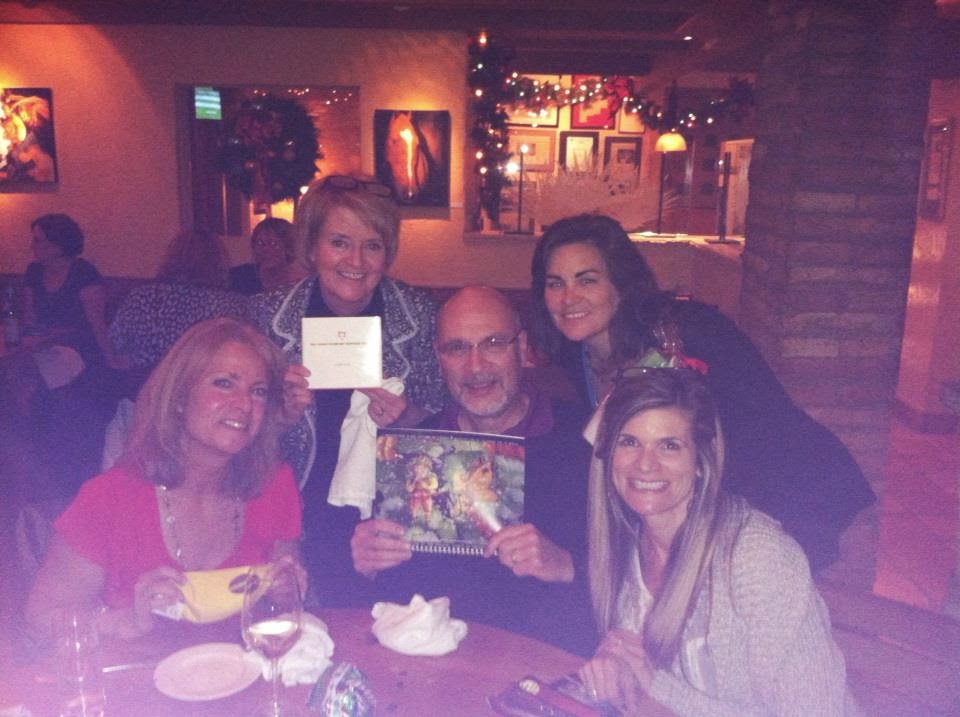
Elaine, Penny, Will, Sally, Kim (sadly, Jerilyn is not in this photo)
KID LIT FOR HAITI:  This auction is for a critique of the first ten pages of your manuscript (PB, MG, or YA) from both of my critiquing groups. That means you will receive feedback from a total of six people!

This auction: is for a pass to my critiquing partners—feedback from me and five others. Each of us come armed with a super-power—creativity, voice, plot, structure, grammar—you’ll get it all! You will submit the first ten pages of your manuscript (or one picture book manuscript). You’ll submit via email in Times Roman, 12 point font, double spaced, one inch margins. After you submit you will receive your six critiques within a month— six critiques! Get the feedback you need to gain insight in your work and take your craft to the next level. 

Who are my fabulous critiquing partners?
Elaine Pease is the award-winning author of four books. Her website can be found at www.peasepodbooks.com One of my favorite titles by Elaine is Tallie's’sChristmas Lights Surpise, A HolidayWhodunit! It’s a picture book with a clever mystery to solve! Elaine spends weeks on the road making school visits—she really has her finger on the pulse of what’s going on in classrooms. Her award-winning historical fiction middle grade GHOST OVER BOULDER CREEK is currently a finalist in the Youth One Book, One Denver 2015 program (and if you're familar with GHOST OVER BOULDER CREEK and would like to vote for it click here ).

Will Limón  has been published by Harper Collins. He is the founder of Will Limón's Plot Chart as well as the workshop Will Limón's Making Scenes Come Alive. If your plot or scene has a hole, Will can certainly identify and point it; he’ll steer you in the right direction. Will’s writing has received recognition—not only is he published in the adult market, his YA work-in-progess received honorable mention (2nd place) in a regional SCBWI scholarship award.  (P.S.  In addition to Will’s ingenuity and understanding of scene construction, Will is my go-to guy for grammar advice!).

Sally Spear is probably the most creative person I know—I swear wizards speak to her! Sally is the master of the picture book, but when we bring YA and Middle Grade novels to the critiquing group, Sally provides incredible feedback and insight from a completely unique angle. She has the keen ability to spot voice drops and narrator intrusion. My manuscripts always launch in a better direction after critiques from Sally.   

Penny Berman is both a kid lit writer as well as a screenwriter. She studied screenwriting at UCLA and currently has a project receiving a lot of interest in Hollywood (where everything is currently hush-hush, but I can brag that BIG names are involved). Penny is also in the final draft of one of the coolest middle grade novels you’ll ever read.  If you want your manuscript to scream with voice Voice VOICE, then Penny is your go-to gal.

Jerilyn Patterson is another master of voice and also an expert at turning a scene. And that’s not just my opinion, Jerilyn won recognition by being the first place winner of The Vicki Ferguson Memorial Scholarship where she entered the first ten pages of her manuscript and won free tuition to a regional SCBWI conference. Jerilyn is so amazing at writing and critiquing because she spends a lot of time studying craft—one of her favorite books is called SCENE AND STRUCTURE by Jack Bickham. She will use her creative skills and wealth of knowledge to provide you with the best feedback possible.

And Me (Kim Tomsic) I’ll critique my butt-off for you!

How do I bid?
Place your bid in the comment section by increasing the previous bid. Please include information about how I may contact you if you are the winning bidder; I can be reached for questions in the comment section here or at  ktomsic@gmail.com .

When does this auction close?
**This Auction will close on December 16, 2014** Bidding closes at 11:59pm MST This auction item has closed. Thank you!!

Click here to find out

What happens if I win?

I will contact the winning bidder (remember to provide your contact information!). You will make your donation at this donation link and then you will email a copy of your receipt to ktomsic@gmail.com . Then we will begin the process !

How do I know when new auction items are posted to this blog:
You can receive emails when new auction items are listed. Simply enter your email address in the upper left corner of this blog where it says "Follow by email". You will only receive an email when a new post is created on this blog.

Friday, February 7, 2014

A Smattering of Advice: How Writers Can Prevent Hours of Rewriting

A SMATTERING OF FIVE-MINUTE ADVICE that can save you hours of rewrite time:

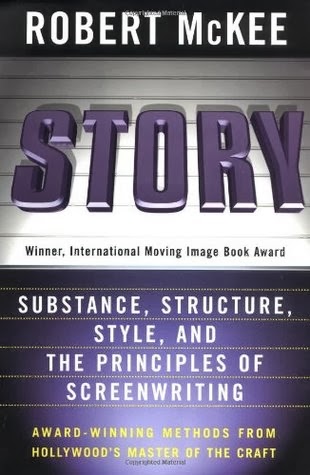
I’m a big SAVE THE CAT groupie. SAVE THE CAT was written by Blake Snyder who often quotes sources of inspiration. One of these sources Synder quotes is Robert McKee's book STORY. 


The full title is STORY: Substance, Structure, Style, and the Principles of Screenwriting. Screenwriting for me translates to story writing (since I think in terms of books), and McKee is brilliant on the subject—talk about having Ah-ha moments! Sometimes ideas are simple, but we as writers get lost in language, ideas, humor, voice, etc., we forget to focus on structure.

McKee says every scene in your story must have a value at stake. 


At the beginning of each scene, ask yourself what value is at stake in my character's life. A value could be love, life, acceptance, a belief system, family foundation, friendships, etc. Determine the value at stake in the scene and then ask: How is the value charge at the beginning of the scene different from that value changed by the end of the scene. Think of these charges as positive or negative charges. 

Different scenes can have different values at stake, but the charge always has to change in every single scene or the scene has no place in your story.

TAKE AWAY:
********If the value condition does not change from the beginning of the scene to the end of the scene then nothing meaningful in the scene took place.********** If that's the case, delete or rewrite the scene.

Blog Archive